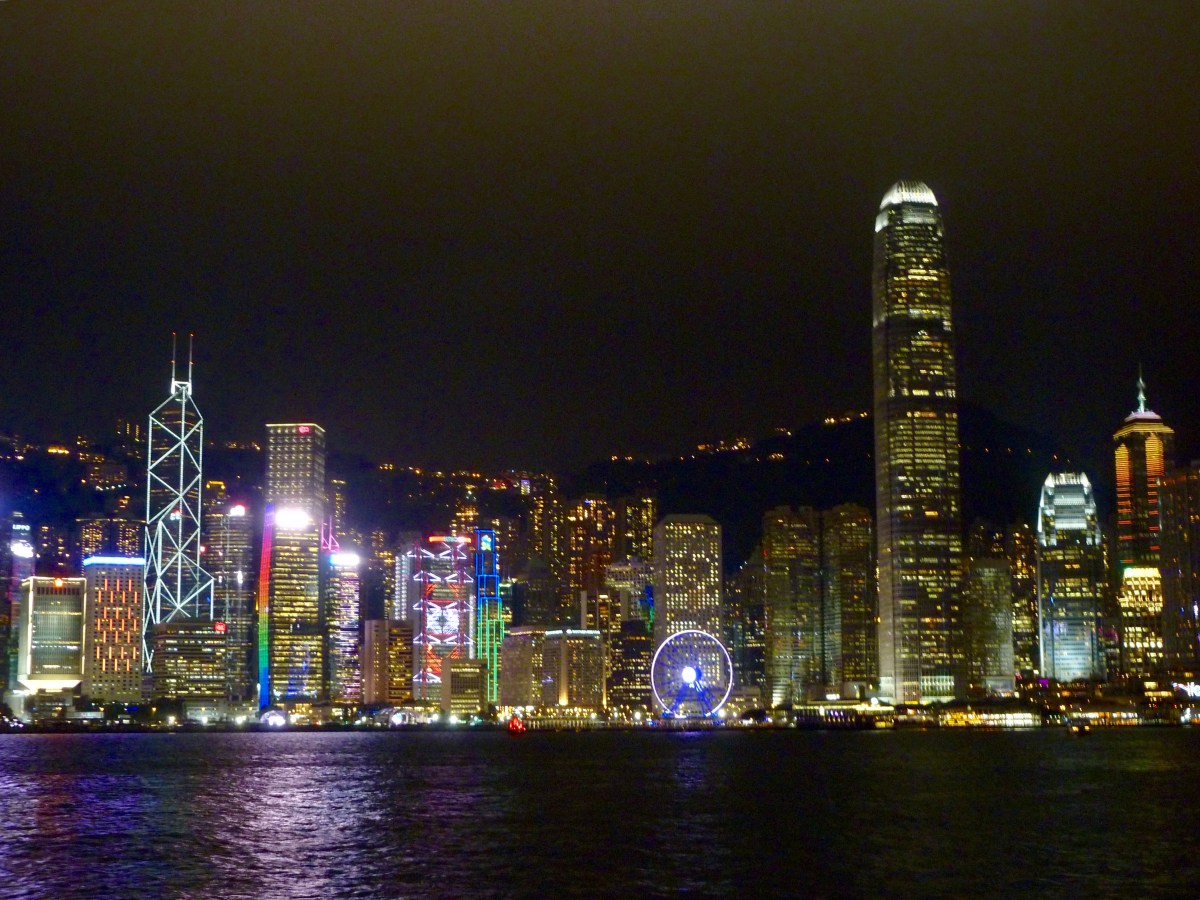
Hong Kong Phooey!

A 4:15 am wake up call is never any fun, especially when it entails a 30 min walk, a metro, a bus and then a plane! However, ending up in Hong Kong at the end of that isn’t too bad! My friend, Anna, moved to Hong Kong a few months ago, so we were looking forward to our first friendly face from home! We headed over to Soho for dinner with Anna, and two of her friends. Soho was buzzing and gave me a good snapshot of the busy social life that Hong Kong has to offer. After some yummy Vietnamese food, we hit the hay, exhausted after our early start! 
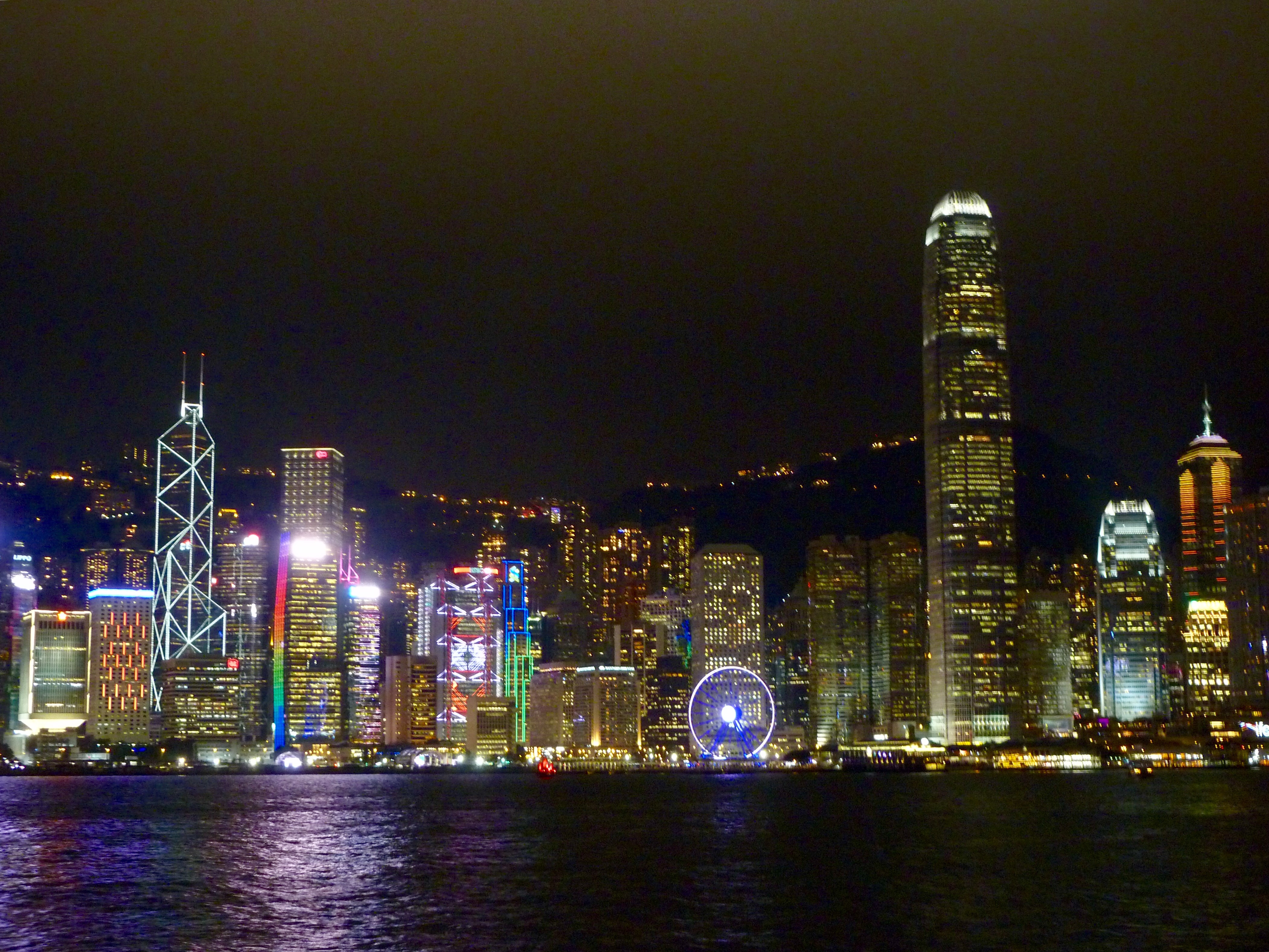

The next day we headed for Central to have a look at the shops. Hong Kong is a little overwhelming when you’re trying to find your way around, and certainly very different from the organised, well laid out Japanese cities we had been in. I think a shopping trip to HK may be required in the future…you could fill suitcases!! That evening we headed for Kowloon to see the famous Symphony of Lights. The skyscraper skyline is impressive enough when it’s not lit up, and spectacular when it is.
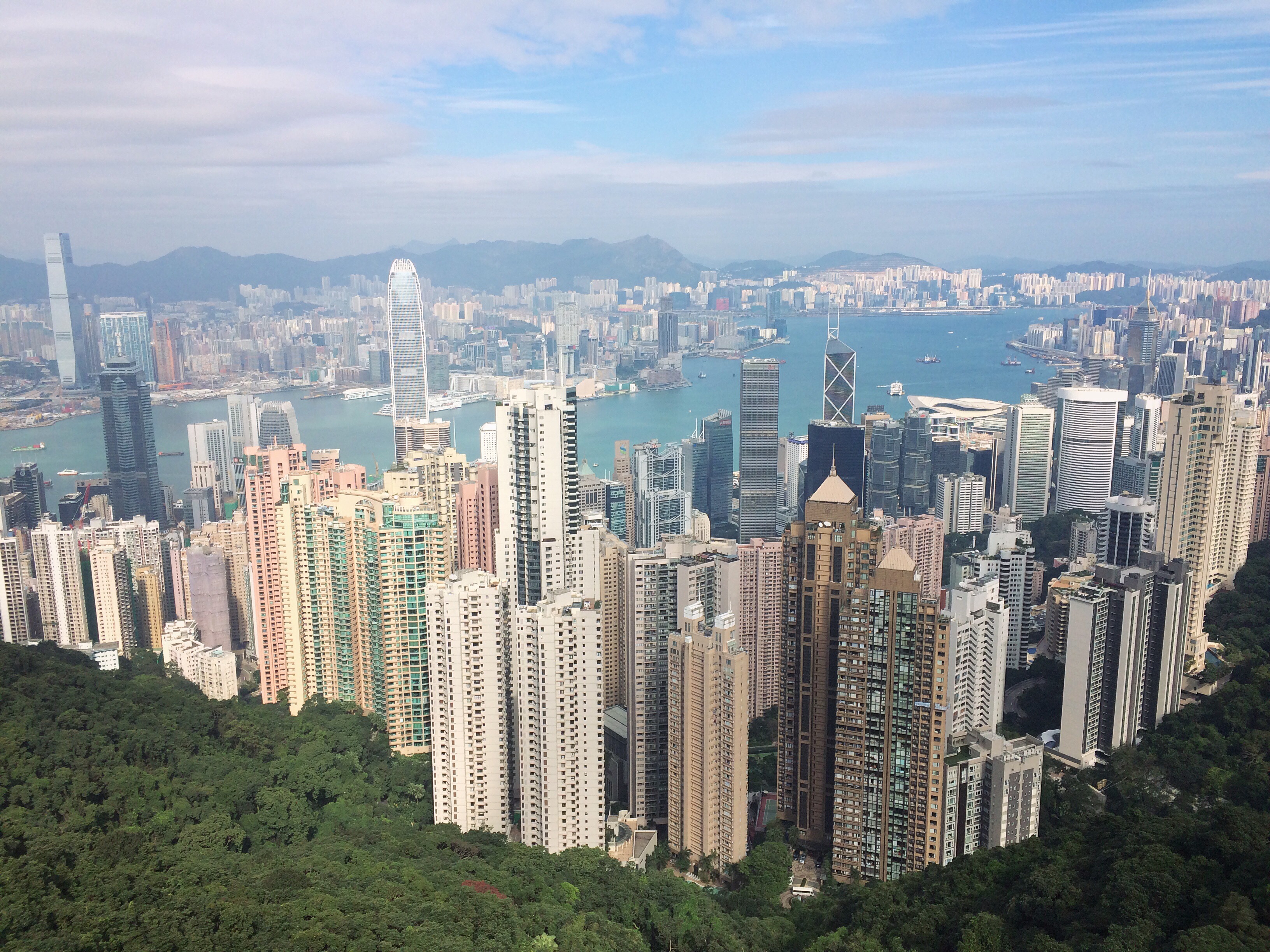
View from Victoria Peak

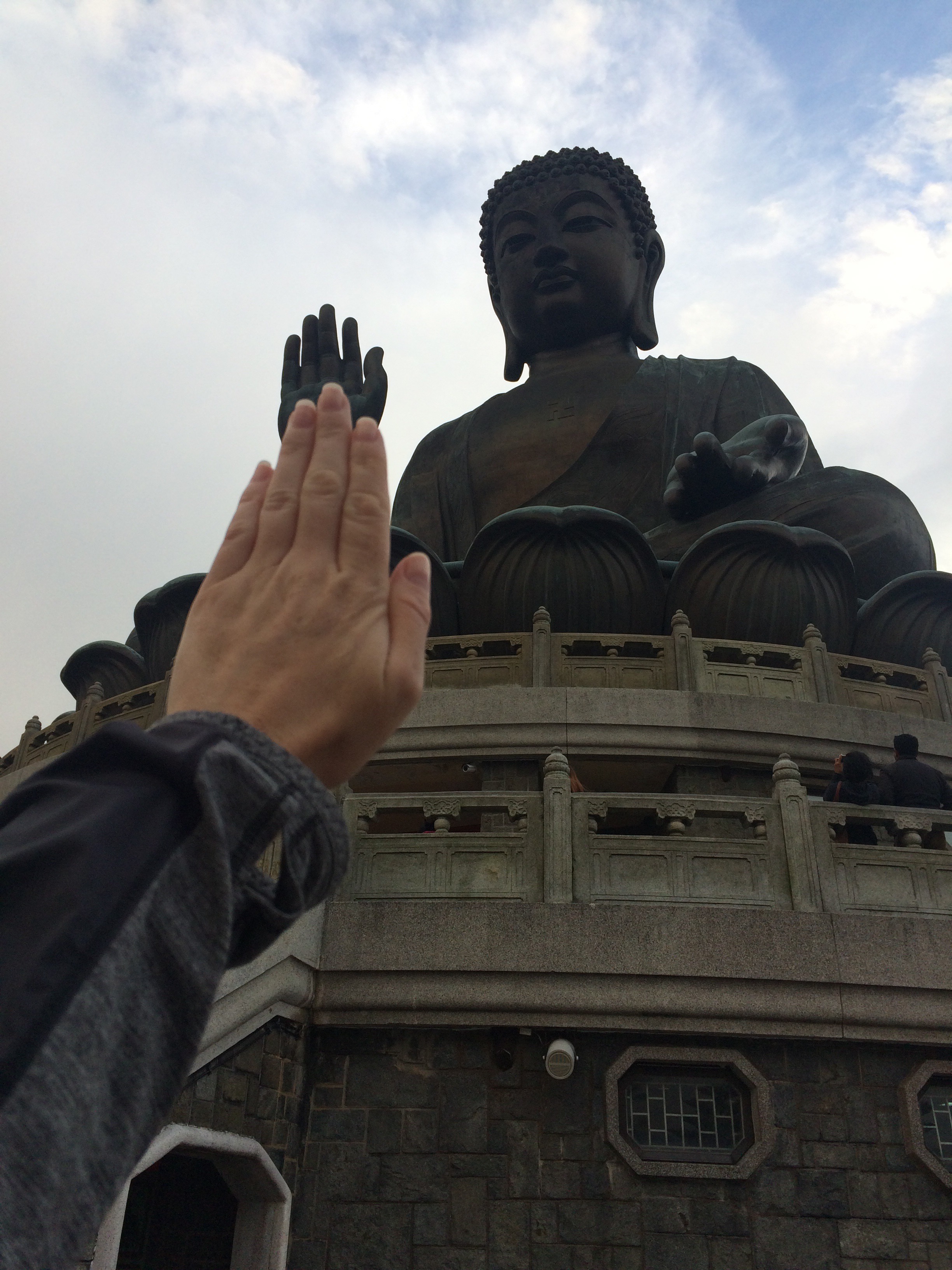
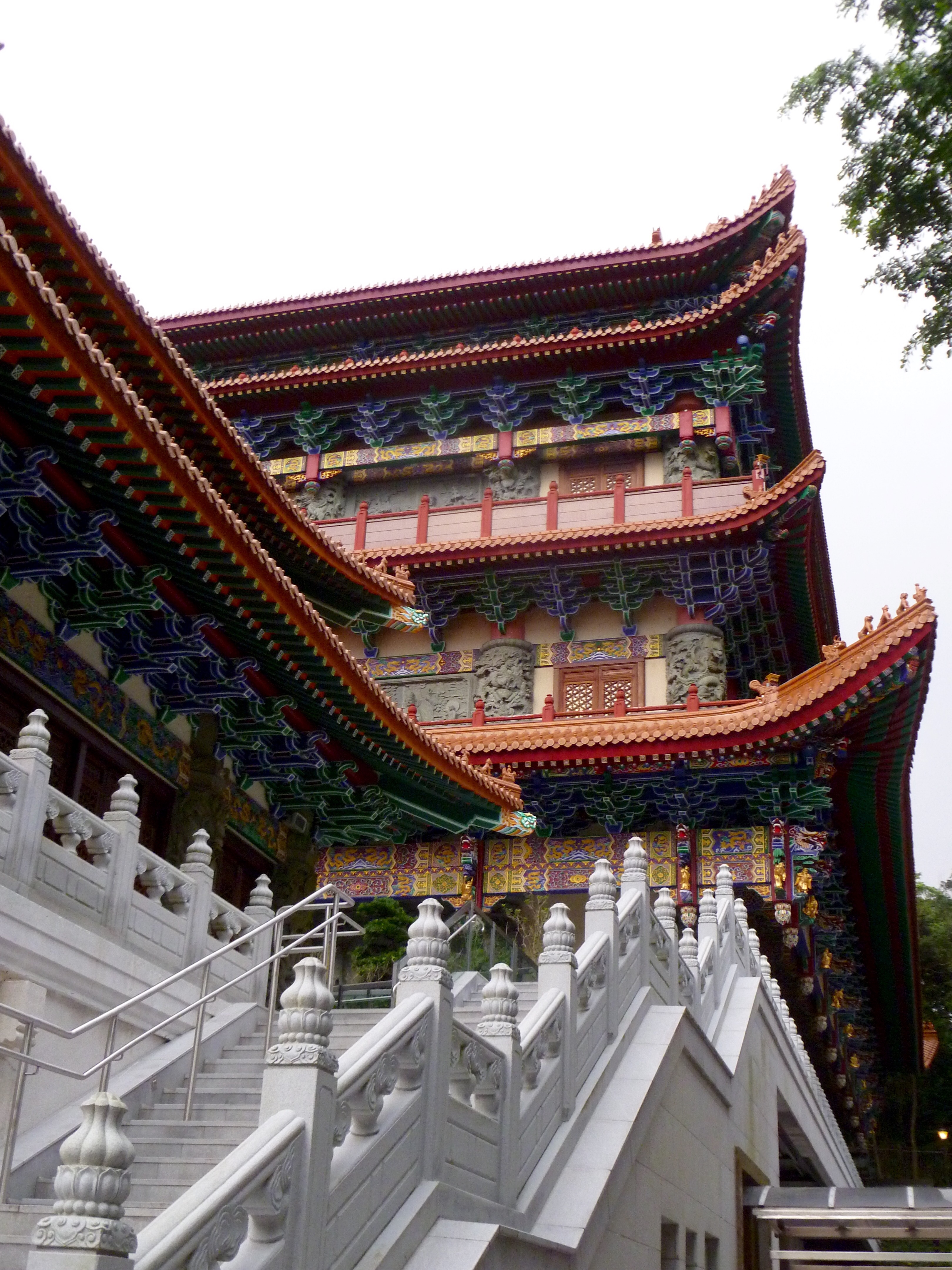
One of the must do activities in Hong Kong is to see the view of the city from Victoria Peak. Now normally we would walk up to the top of any park, but the Peak Team is an excellent way to get to the top. Despite queuing for what felt like eternity, we hopped on the tram and were hauled all the way to the top. It’s an impressive feat of engineering considering how steep it is! The views are more stunning than I expected and the sun came out just as we got to the top. Lucky us! 🙂 After another tram trip down we headed for the ferry to take us to Lantau Island, which has a 5.7 km long cable car that brings you to Tian Tan ‘Big Buddha’ and the Po Lin Monastery. The Buddha is, as promised, big! We had just enough time to get in the queue for the last cable car down, but had to queue for a second eternity of the day!! 

Hi-5 Big Buddha!
Po Lin Monastery
 

That evening we met Anna and her housemate Tanja again and went to Temple Street Night Market to check out the stalls. It’s a shame we didn’t need any socks, silk bags or phone cases, because they were plentiful. On our way to sample some local hotpot, we passed by the open air karaoke stalls and fortune tellers, but were too sober to partake in either! 
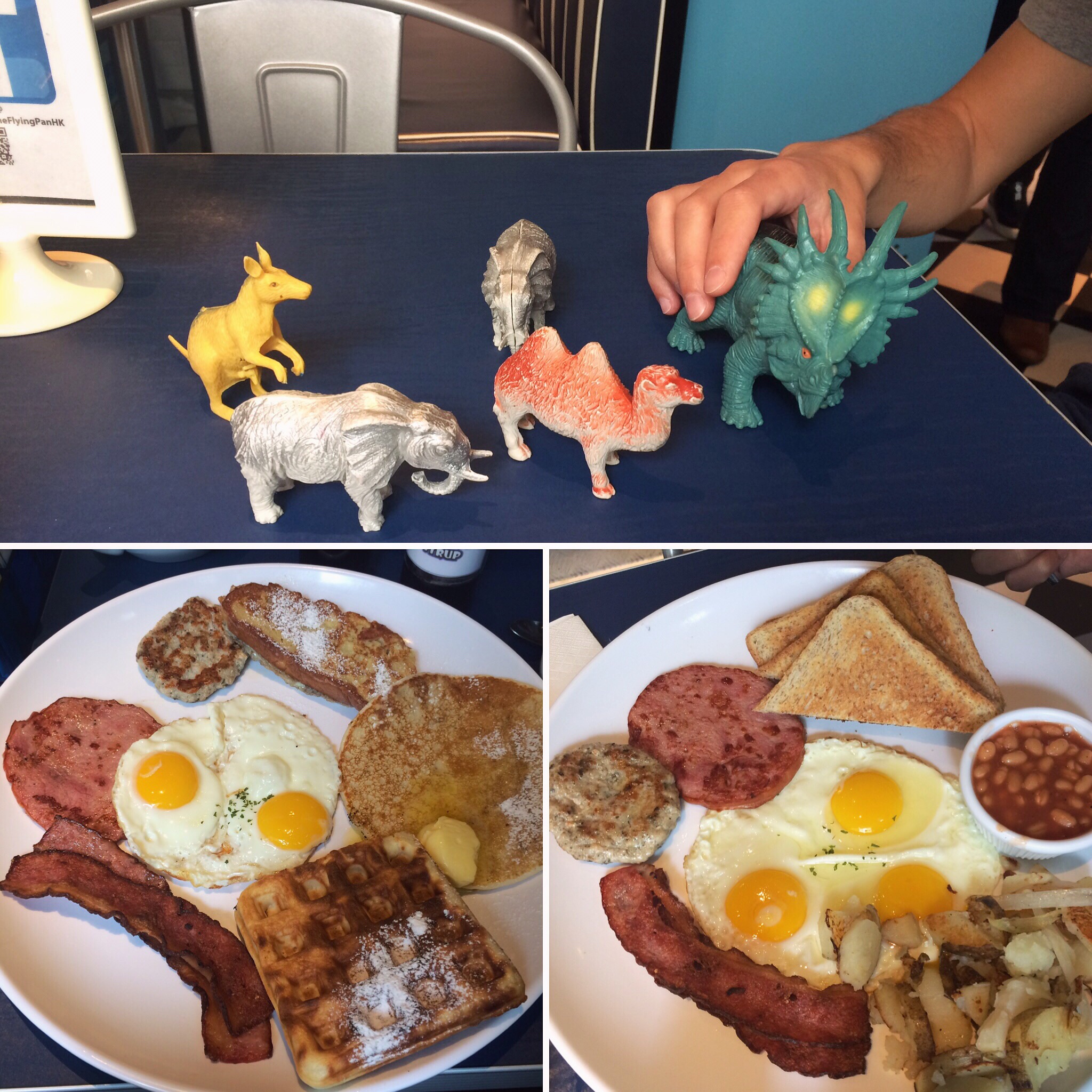
The weather was a bit rubbish on Saturday, so we headed to the outlet shopping centre at Tung Chung, but before that, we decided to get some brunch at The Flying Pan. This American style diner does the most obscenely large breakfasts, which left us slightly comatose and very full 🙂 Maybe high on the sugar we may have gone mad and purchased some running gear! It was so tempting to just kit ourselves out with all new stuff, but I showed great restraint, and just picked a new pair of shorts. The shopping centre was heaving with folks trying to pick up a bargain, most of them with empty suitcases ready to fill with their new purchases. 
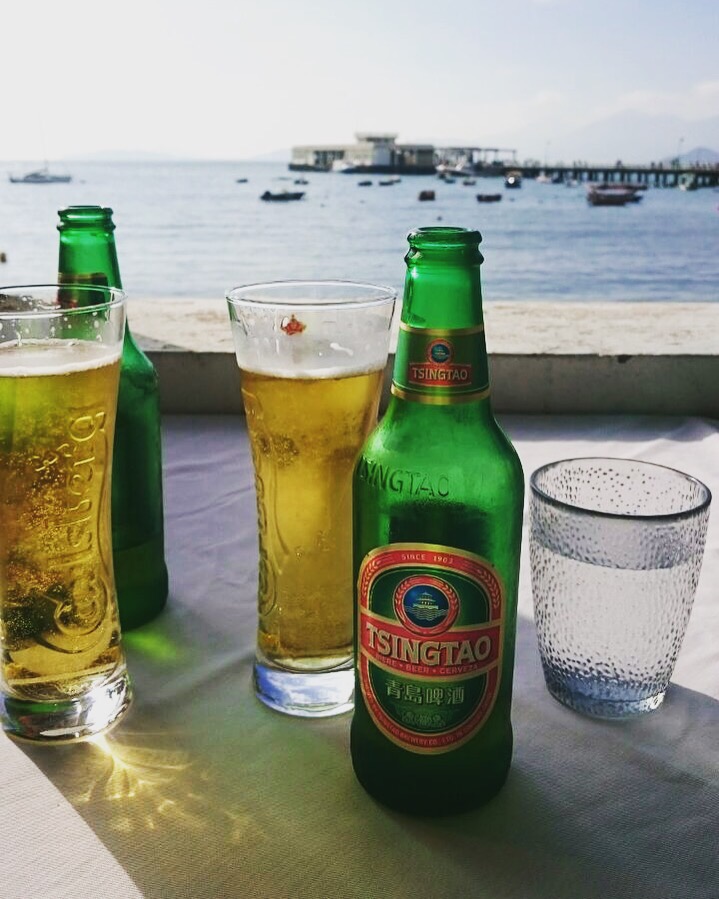
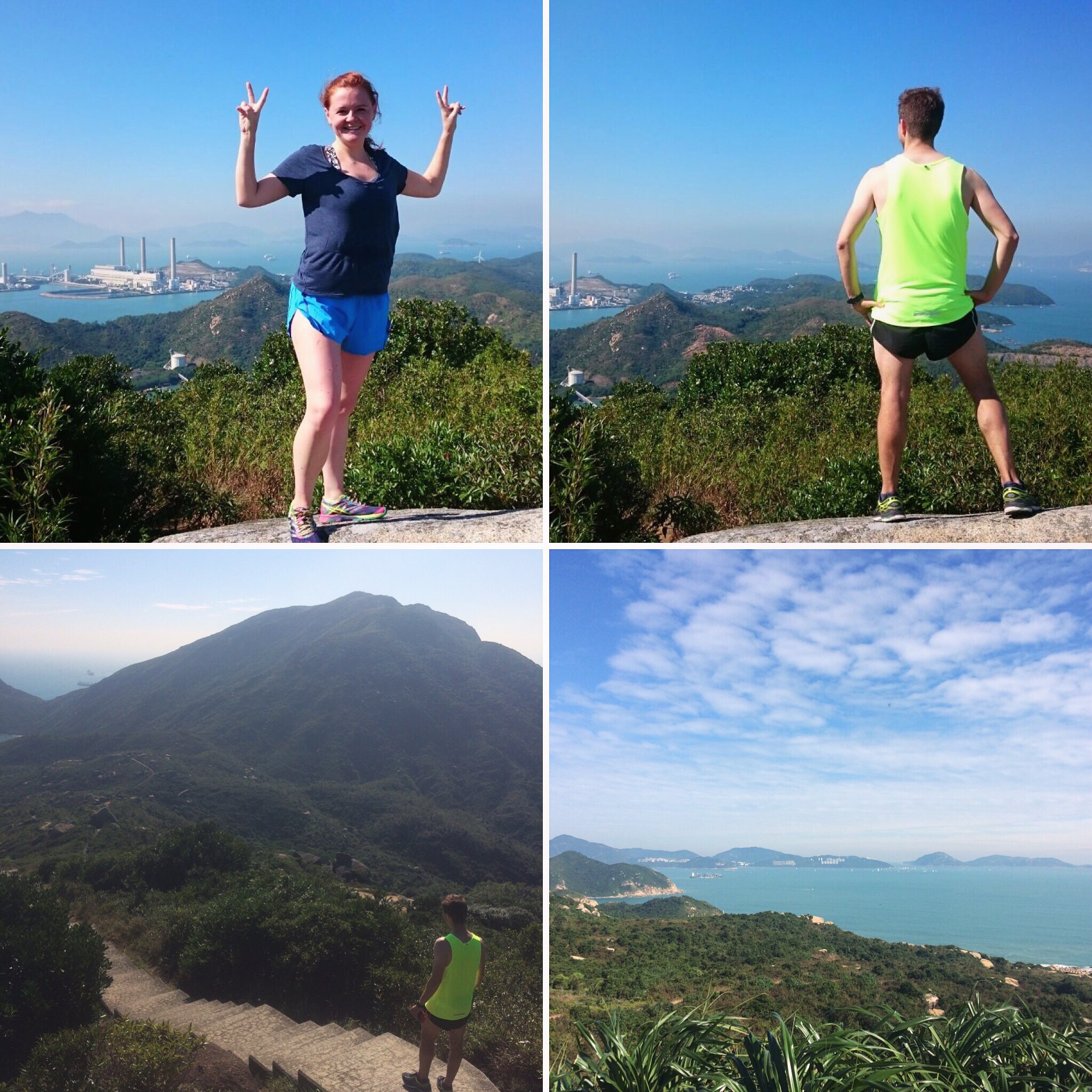
Since we now had new gear, we got the ferry the next day to Lamma island for a run. Graham has been cycling there before, and failed to mention that it’s basically just full of mountains! We came across some steps up to a peak and couldn’t resist a run to the top (may have required some walking). Despite nearly throwing up, the view from the top was worth the effort. We rewarded ourselves with lunch and a cold beer in Sok Kwu Wan village. 


That evening it was time to pack for our trip to Vietnam. Hanoi here we come!!

-F xx
Large Hairy Cats of Tokyo and Other Short Stories

After four days in Kyoto, we took our final Shinkansen train journey last Saturday morning. The journey to Tokyo took approximately three and a half hours – our longest train journey in Japan. Having spent days on trains in Russia, Fionnuala and I both found this rather amusing. After a couple of Metro journeys, we found our hostel in Asakusa, close to an ancient Buddhist temple called Sensō-ji.

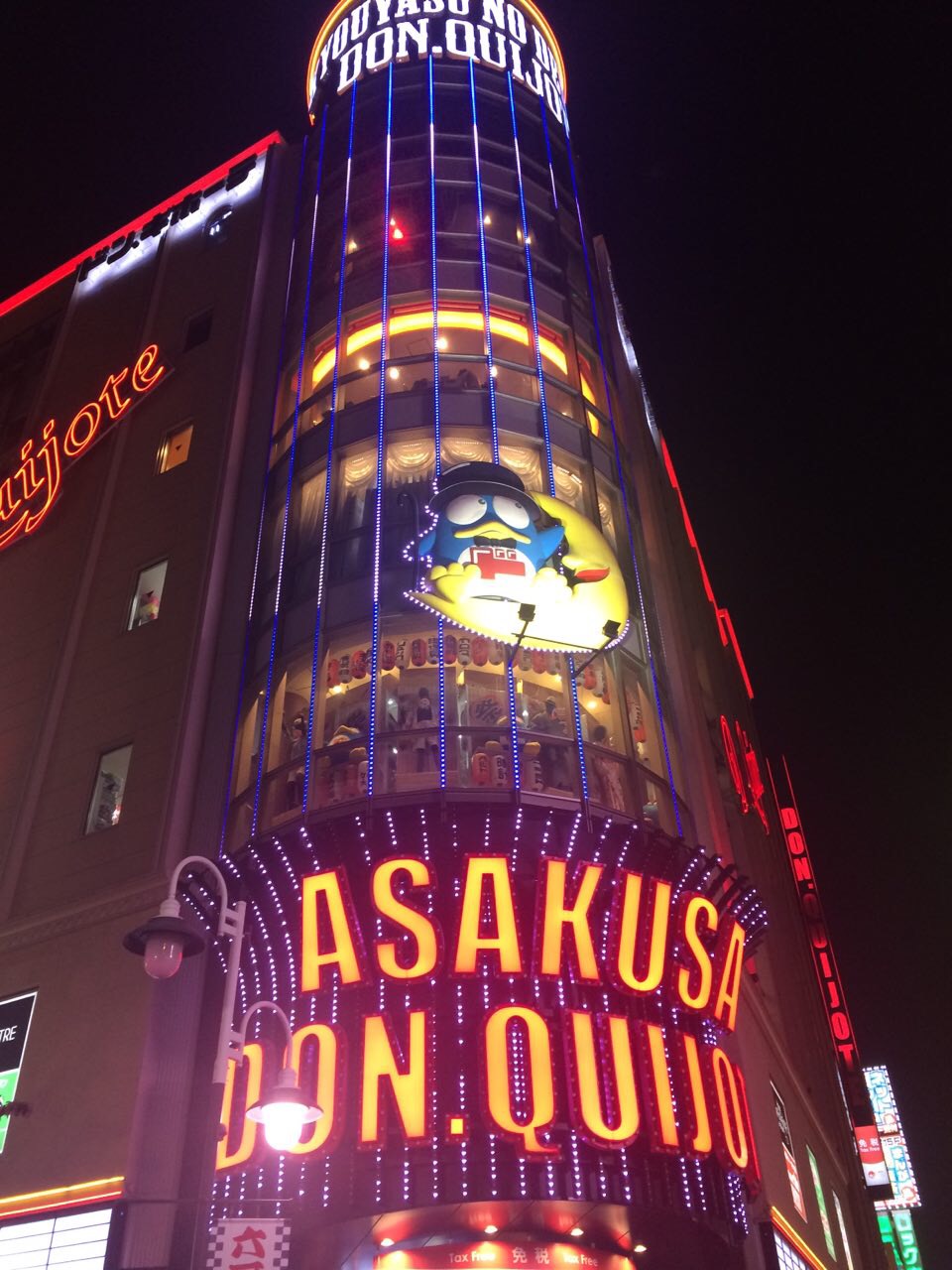
Having not eaten in a while, we headed out into the local area to find lunch. The streets were full of small shops and cafes, and several streets were lined with market stalls. We ate at a noodle bar, where, having placed our order at a vending machine outside, we handed printed tickets to the chef, who promptly served us delicious meat and noodles. During check-in at the hostel we were told where the nearest ATM, 7 Eleven and bars, etc, where. We were also told of a nearby convenience store where you can get “anything you want”. This seemed an odd thing for the hostel to tell us about, until we saw Asakusa Don Quijote for ourselves. We counted six floors filled with food, cosmetics, clothing, electrical goods, fancy dress outfits, a restaurant and lots of chocolate. We visited several times!

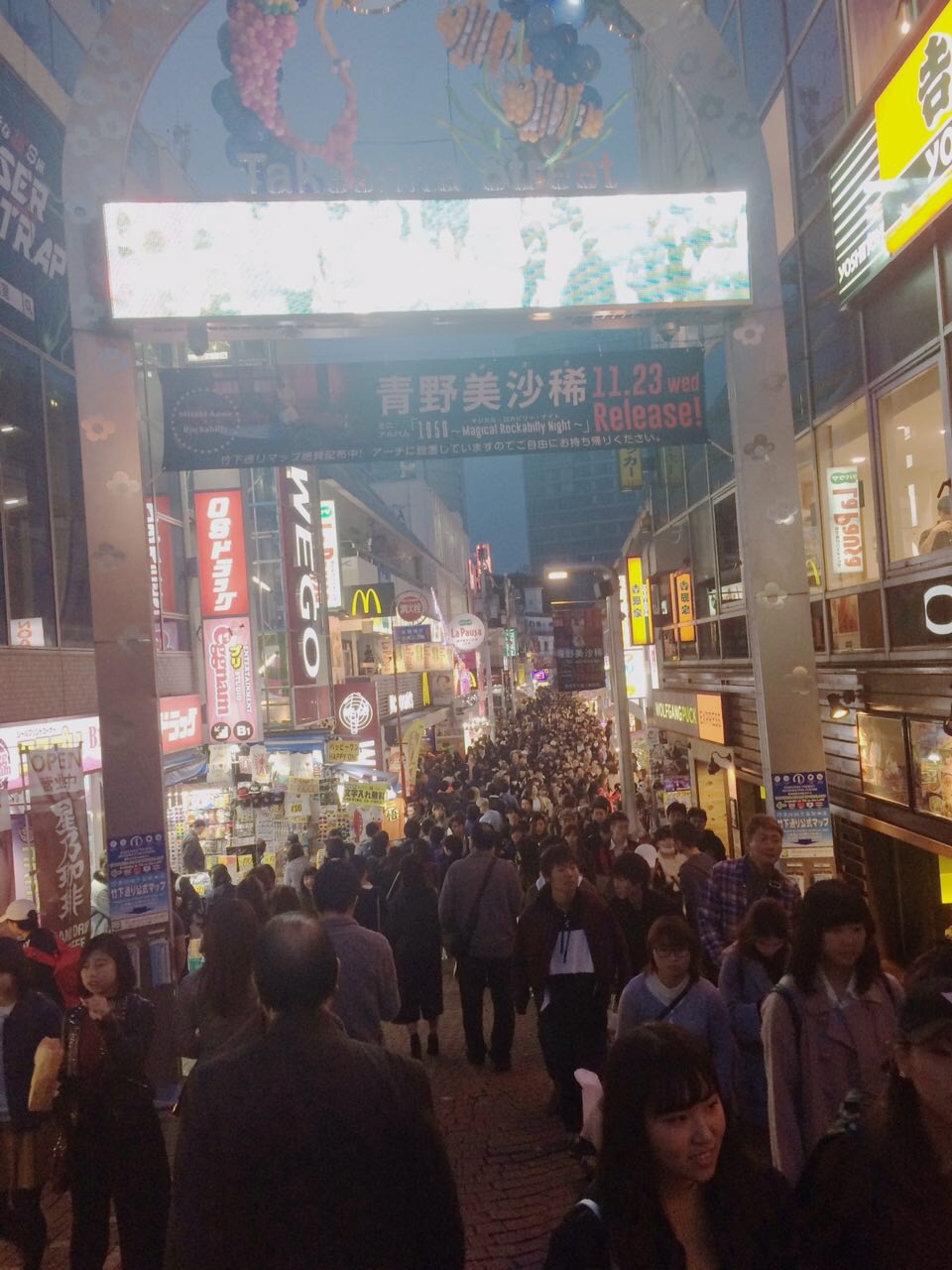
On Sunday we took the Metro to Harajuku, as we wanted to see the young people of Tokyo in their natural habitat: clothes shops! Firstly, though, we headed to Meiji Shrine, where we were fortunate enough to witness part of a wedding ceremony. Due to seeing many shrines and temples in the preceding days, we didn’t hang around long. We started our window shopping on Omotesando, a tree lined boulevard filled with high-end fashion stores. Feeling under dressed and a little financially inferior, it didn’t take us long to move onto Takeshita Dori, where hundreds of Tokyo’s teenagers slowly made their way from clothes shop to cafe to candy floss stall. Although quite a site to behold, I had expected to see more outrageous outfits. Instead, most people wore the jeans, trainers and t-shirt uniform of young people back home.


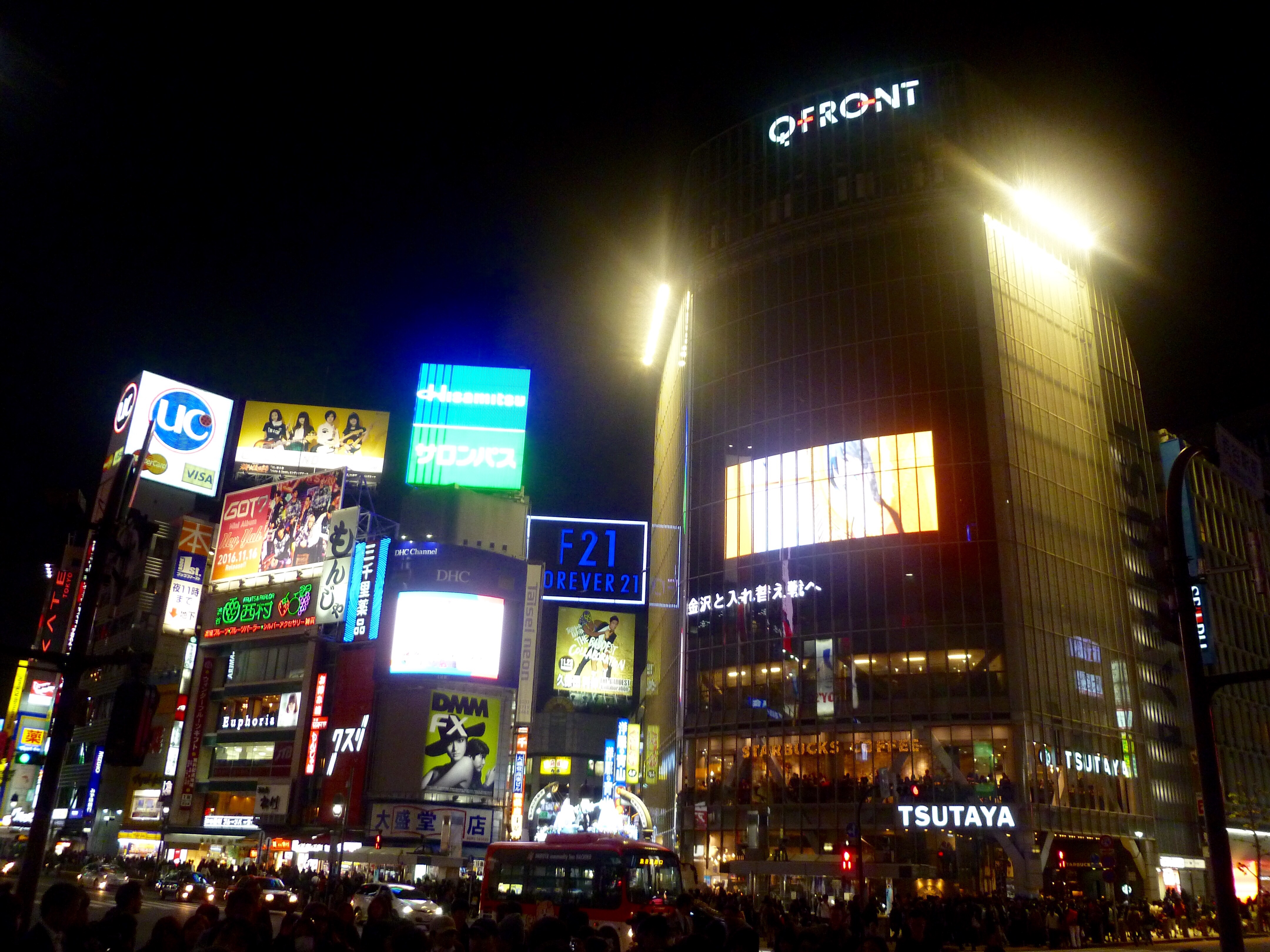
In the evening we walked from Harajuku to Shibuya. The Shibuya Crossing really is crazy. I would love to know the split of people crossing the road in order to get somewhere versus those crossing just for the sake of crossing. After a good walk around Shibuya, and a detour to Yebisu to see the Christmas lights and market, we were intrigued by a small crowd gathered a couple of streets from the crossing. As we approached, we noticed a man with a pushchair. In the pushchair were eight or nine large hairy cats. I can offer no explanation for this, but definitely thought it worth mentioning.

Monday morning was unplanned, and we ended up at Tokyo Imperial Palace just in time to see the Emperor of Japan arrive. Unfortunately, the gardens are closed on Monday, so we planned to return on Tuesday. As a long-time reader of Monocle magazine, I couldn’t miss the opportunity to eat lunch at the Monocle Cafe, located in the basement of Hankyu Men’s. The food was good, and the cafe itself was suitably pretentious! 

After lunch, we took the Metro to Miraikan, Japan’s national museum of emerging science and innovation. The museum was brilliant, and I wish we had allocated more time for our visit. Interactive exhibits on topics such as quantum particles, conductive polymers and retinal imaging displays make Miraikan much more than just another science museum. One of the main attractions is ASIMO, a robot demonstrating human-like movements. That was great, but my highlight was definitely the film The Man from the 9 Dimensions, which was screened in 3D onto the dome of the the 112 seat theatre. It was by far the best 3D film experience I’ve had, and something I would happily pay to see again. (www.miraikan.jst.go.jp/sp/9dimensions/en/)


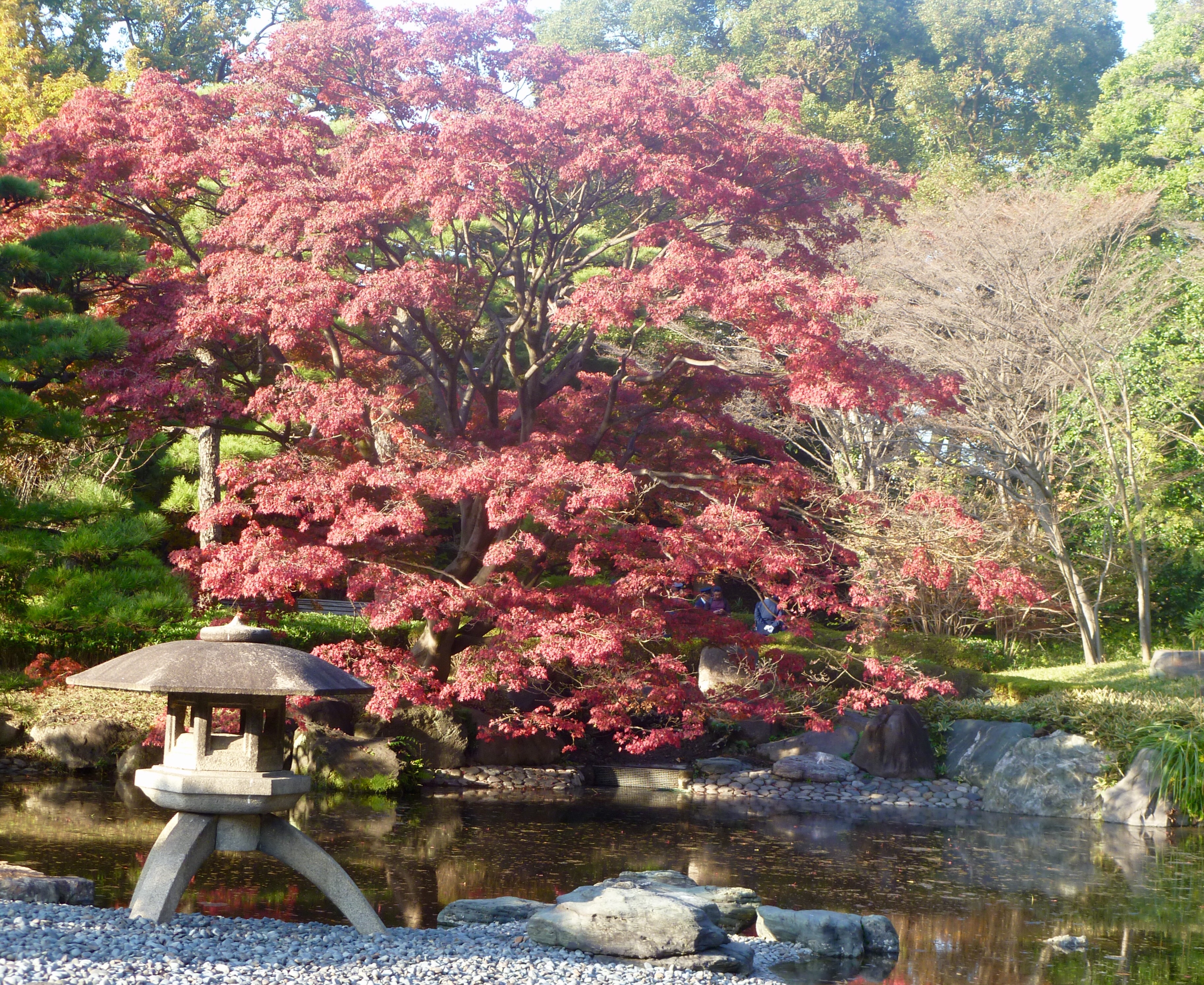
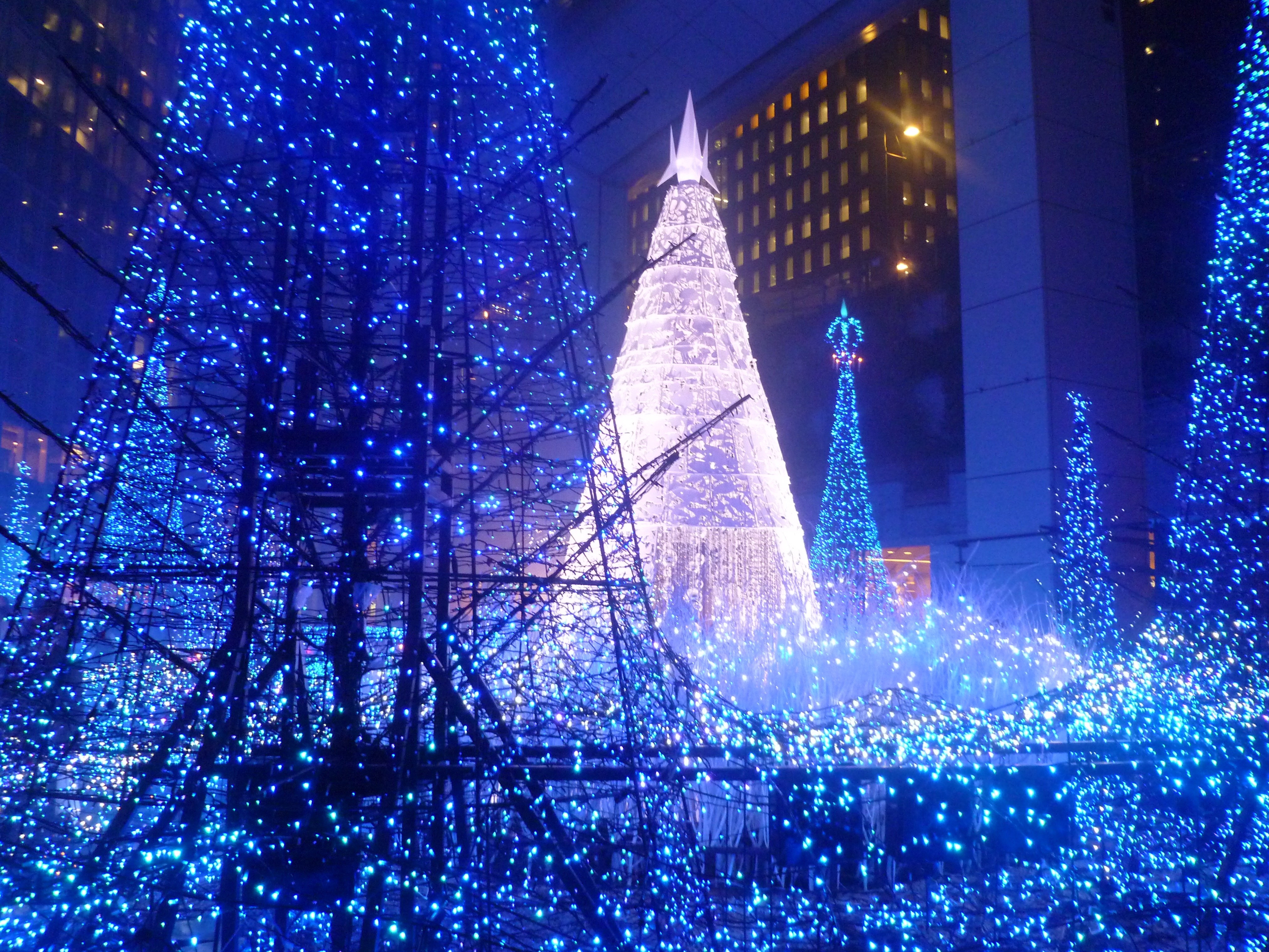
Tuesday was our final day in Tokyo, and our final day in Japan. Having seen so many things in the previous two weeks, we were in no hurry. The weather was great, so we walked around the gardens of the Imperial Palace, and took one last look at Japan’s stunning autumnal colours. We finished our day by taking in the Christmas illuminations at Caretta in Shiodome. The 250,000 LEDs felt like a fitting end to our time in Japan.

G

Kyoto. A Temple on every corner. 

There is SO much to see in Kyoto and it is considered the cultural capital of Japan. It is where Japanese people themselves visit to learn about their history and culture. And there are SO many tourists, it’s a little insane! 

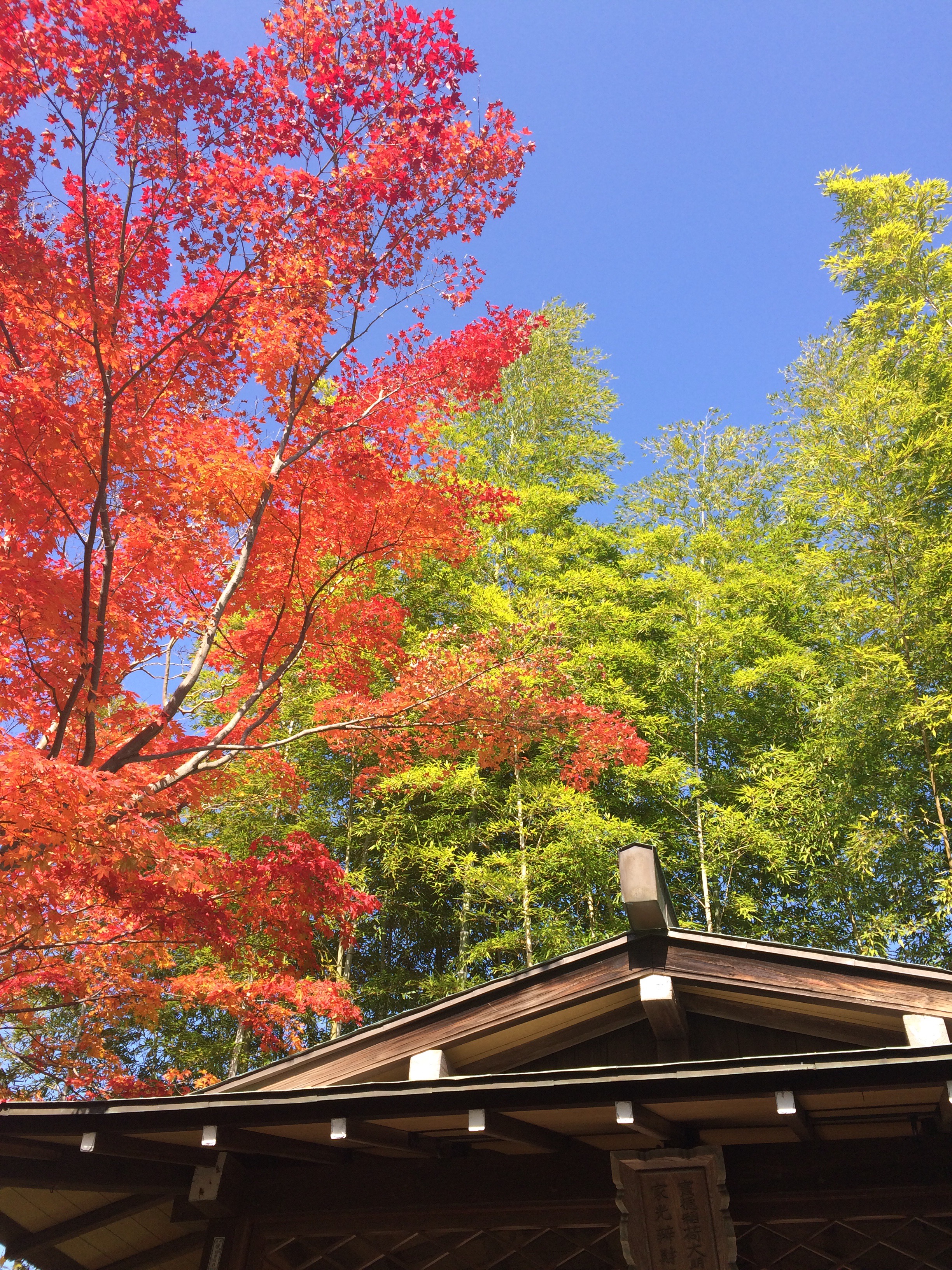
Within the city itself there are hundreds of temples and shrines; it seems that every time you turn a corner there is something beautiful to see. Our trip was only three days long, so we really only touched the surface of what this amazing city has to offer. Mid to late November is a fantastic time to visit as the autumnal foliage is in full swing. 


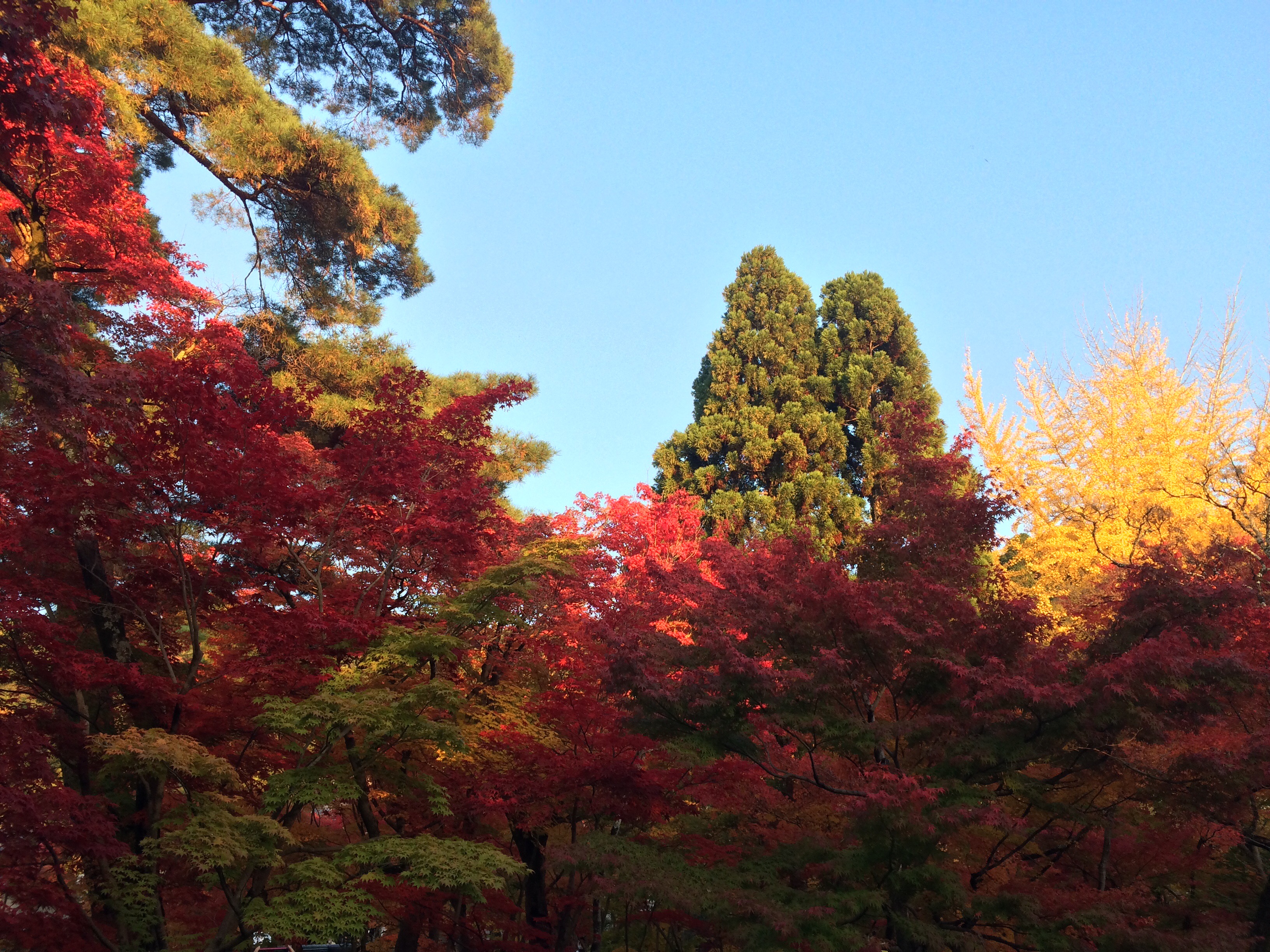
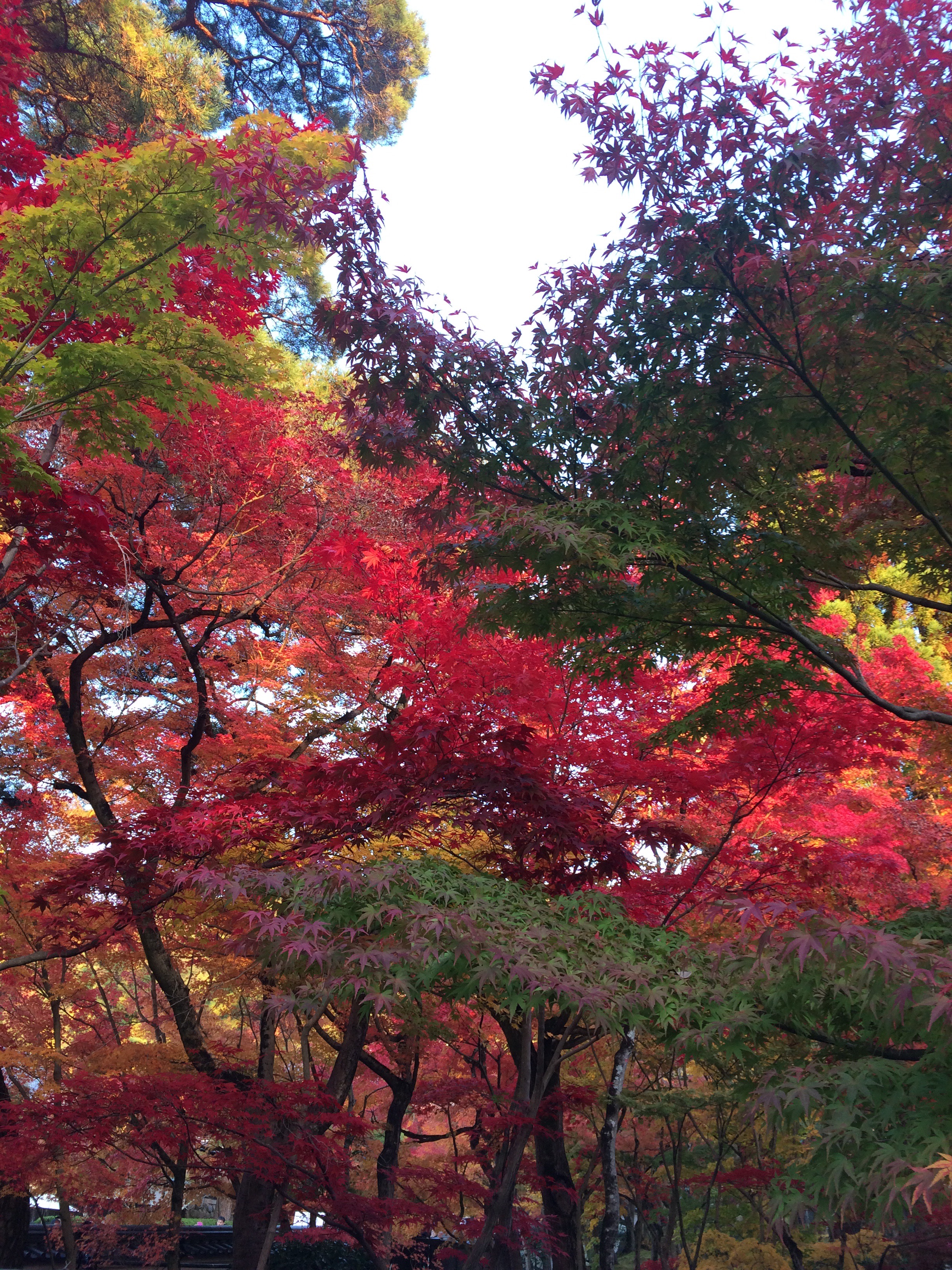
The first temple we went to was Kiyamizu temple and Jishu Shrine. There were hundreds of people around and it felt far from the usual serenity that you feel when wandering around the temples with the scent of incense in the air. We didn’t spend too long before we walked to some of the other temples, almost all as busy as the first! I do think we were spoiled by our experience in the rest of Japan when we often had the main halls of temples to ourselves to sit and admire our surroundings on the tatami mats. Nevertheless, the temples in Kyoto and their grounds were spectacular. In particular, the autumn leaves at Eikando temple were breathtaking.

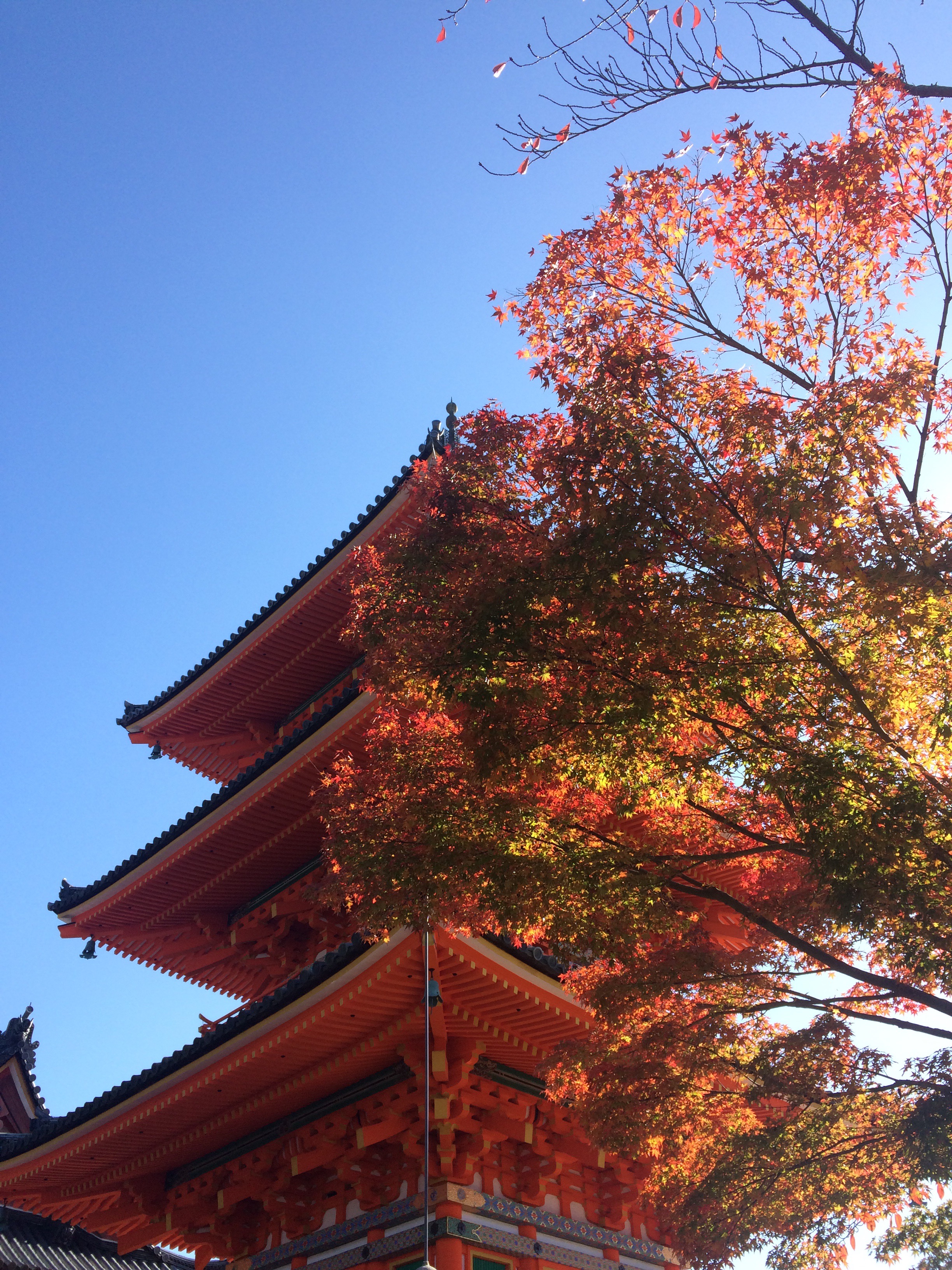
Tree or pagoda?!

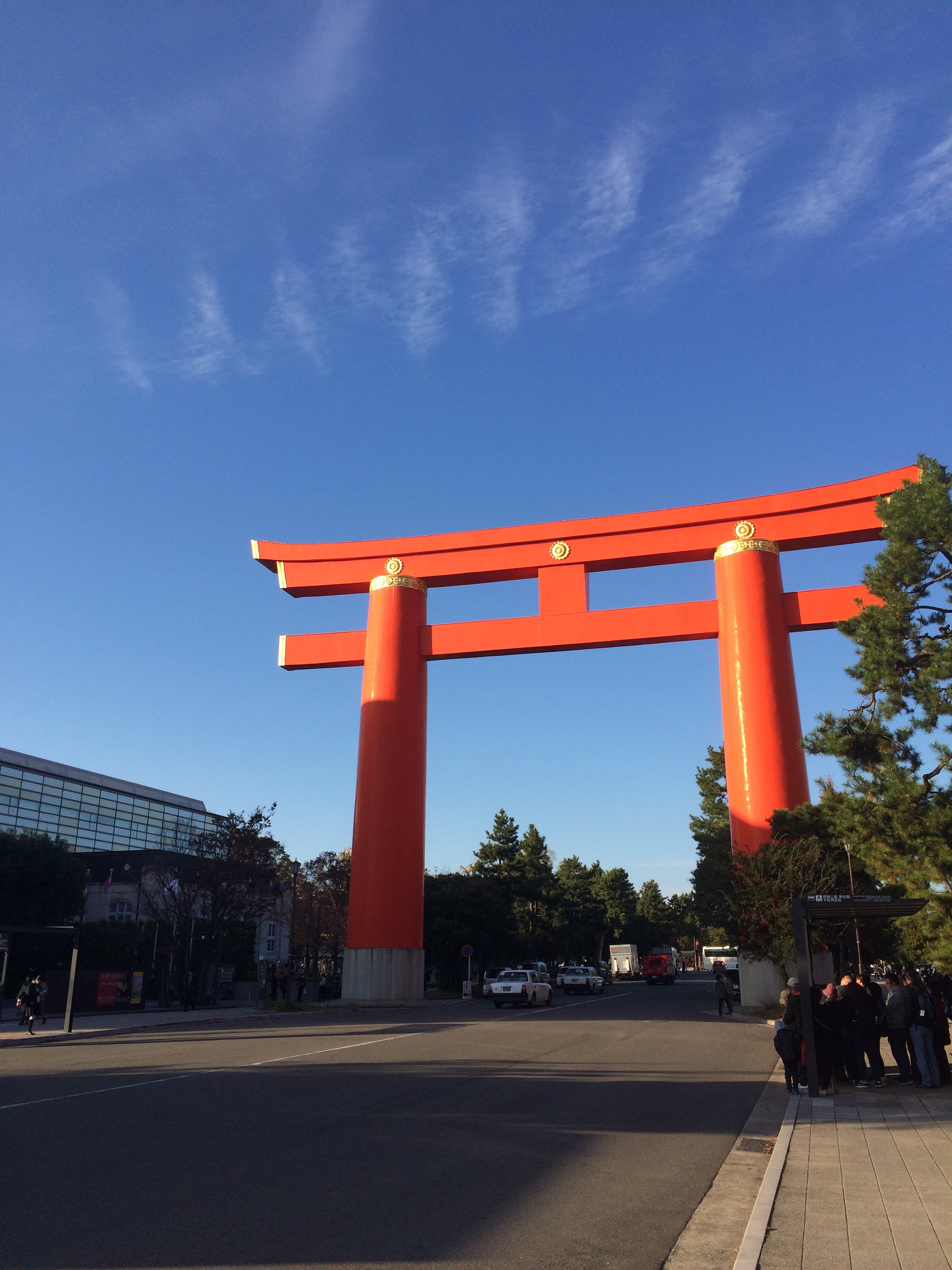
As we made our way to Shinto Heian shrine, as recommended by staff in the hostel, we didn’t expect to see the enormous tori (gate) that greeted us as we turned into the street. Sometimes a picture really doesn’t do a big gate justice!! 


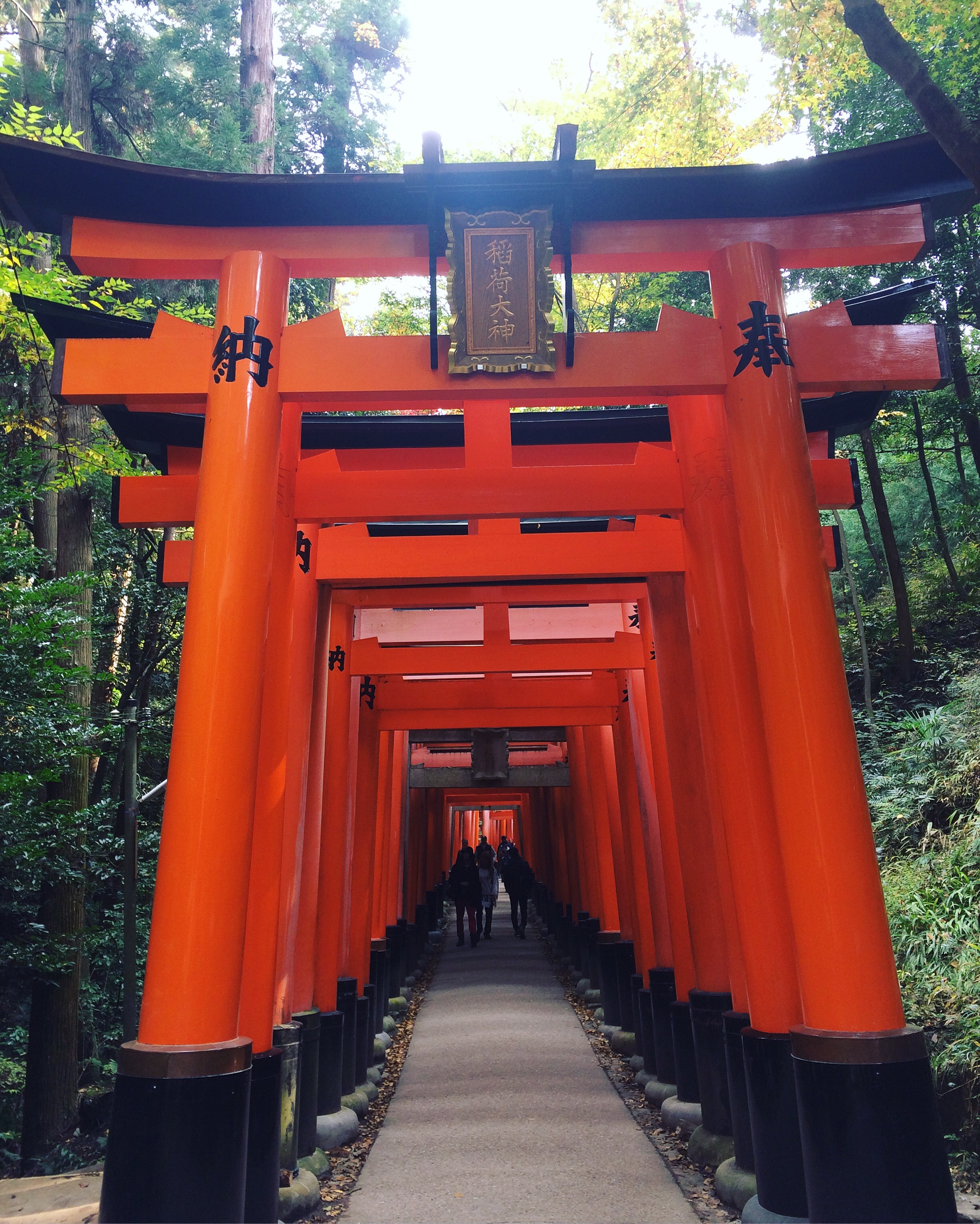
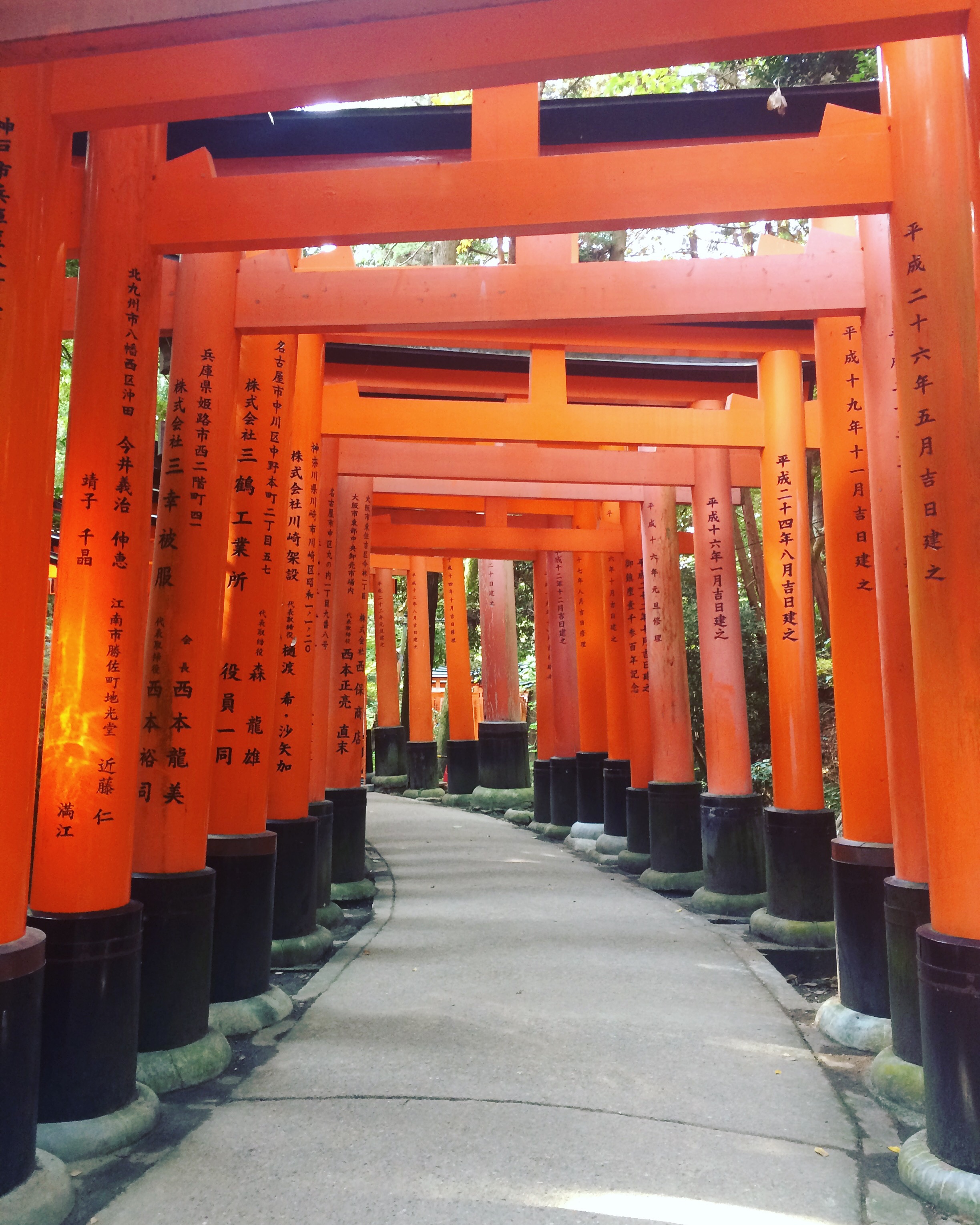
I was really excited to see the Fushimi Inari Shrine, as the thousands of vermillion tori which follow the mountain trails to the summit are a beautiful iconic image that, for me, symbolises Japan. We tried to get there early enough to beat the crowds, but they had the same idea as us. Despite this, we battled our way along the path and were rewarded as we passed the a tunnel of dense bright vermillion tori, that were a dream to photograph in the morning light. Most people will stop after the first collection of gates, because as you go further up towards the summit, the tori become less frequent. Naturally, we went to the top 🙂 


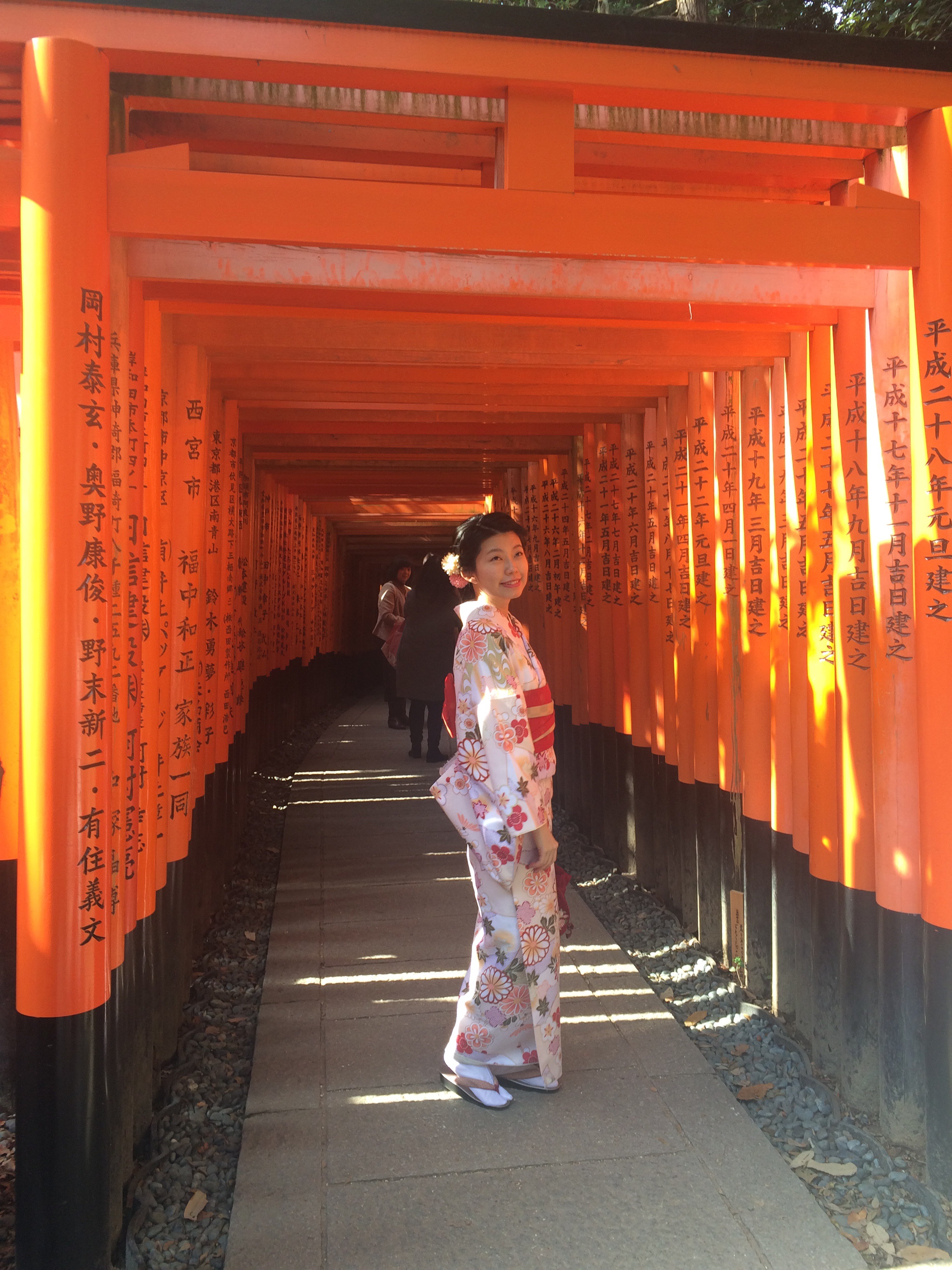
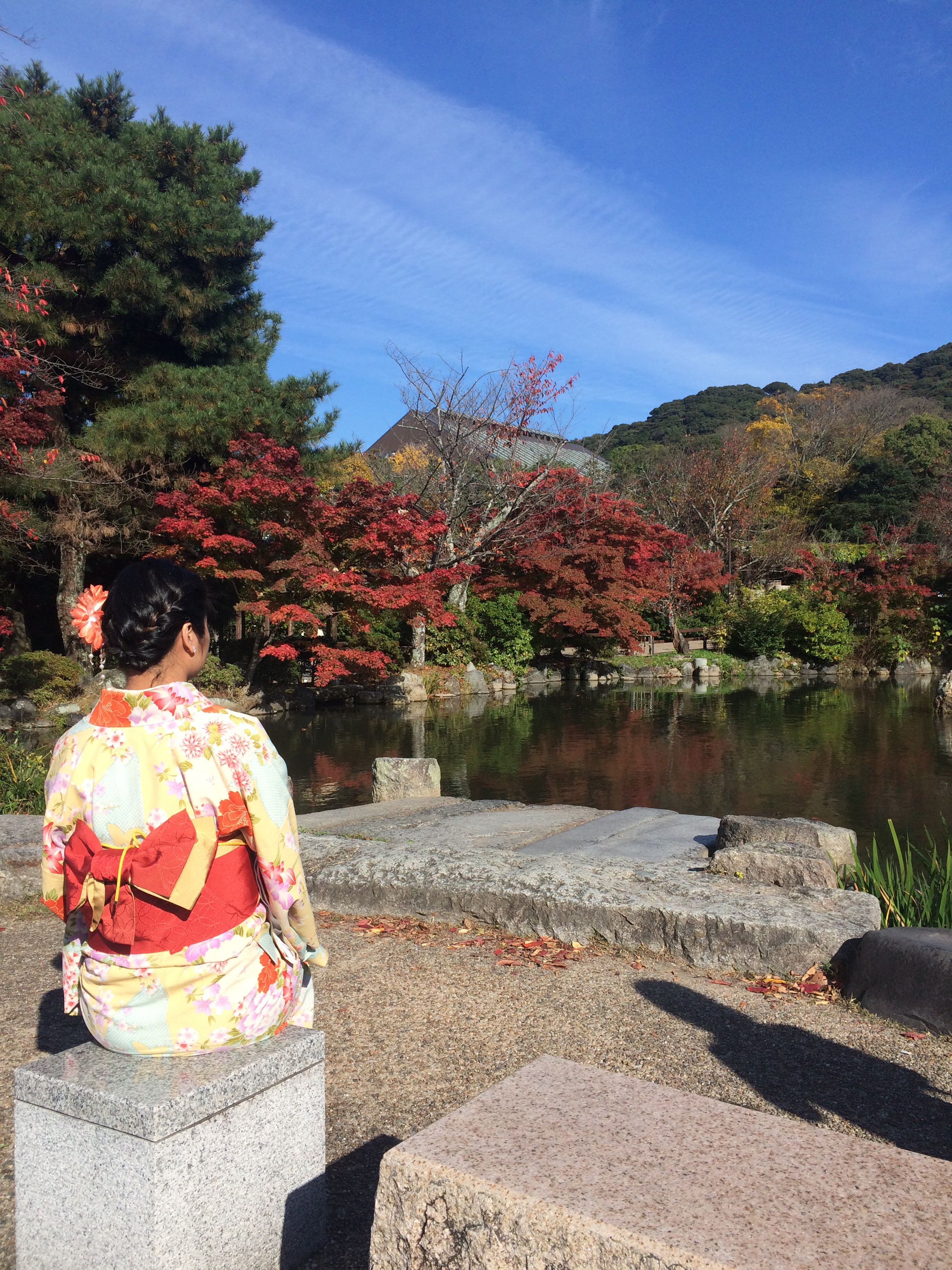
After a day of temple-ing we headed to Gion district, one of three Geisha districts in Kyoto. Geisha are actually known as Geiko in Kyoto and it is very rare to see one. There is only a hundred or so Geiko and an apprentice Geiko is called a Maiko. In western Japan a Maiko starts training at age 15. Geiko are traditional entertainers, whose skills include dancing, singing and conversation. In the evening, I am convinced I saw one in her white Kimono shuffling across one of the tiny lanes in Gion! But we were disappointed by not seeing a Geiko, as you see hundreds of girls in Kimonos wandering through the streets and temples taking pictures! 


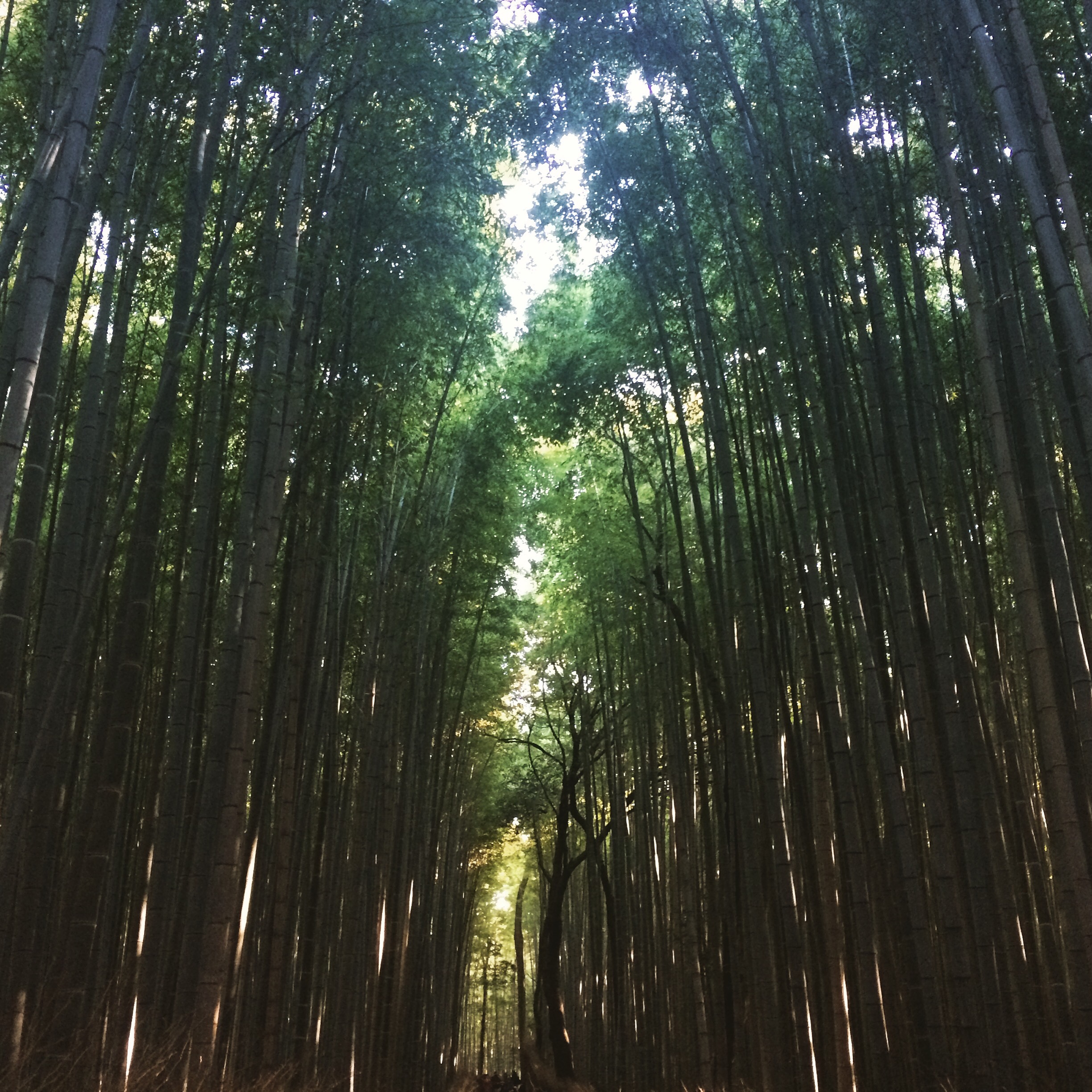
Having learned our lesson from our not early enough start at Inari, we got an early start to see Arashiyama, a town north of Kyoto with a beautiful bamboo forest that was nice and quiet in the early morning. We were followed the entire way though by a group of school kids, who were giggling and talking. Finally, one of them plucked up the courage to speak and all they wanted was a picture with us! 


We were thoroughly exhausted from our exploring in Kyoto, but we’re ready for the dizzy neon lights of Tokyo!!

-F xx
Osaka. Home of giant things. 

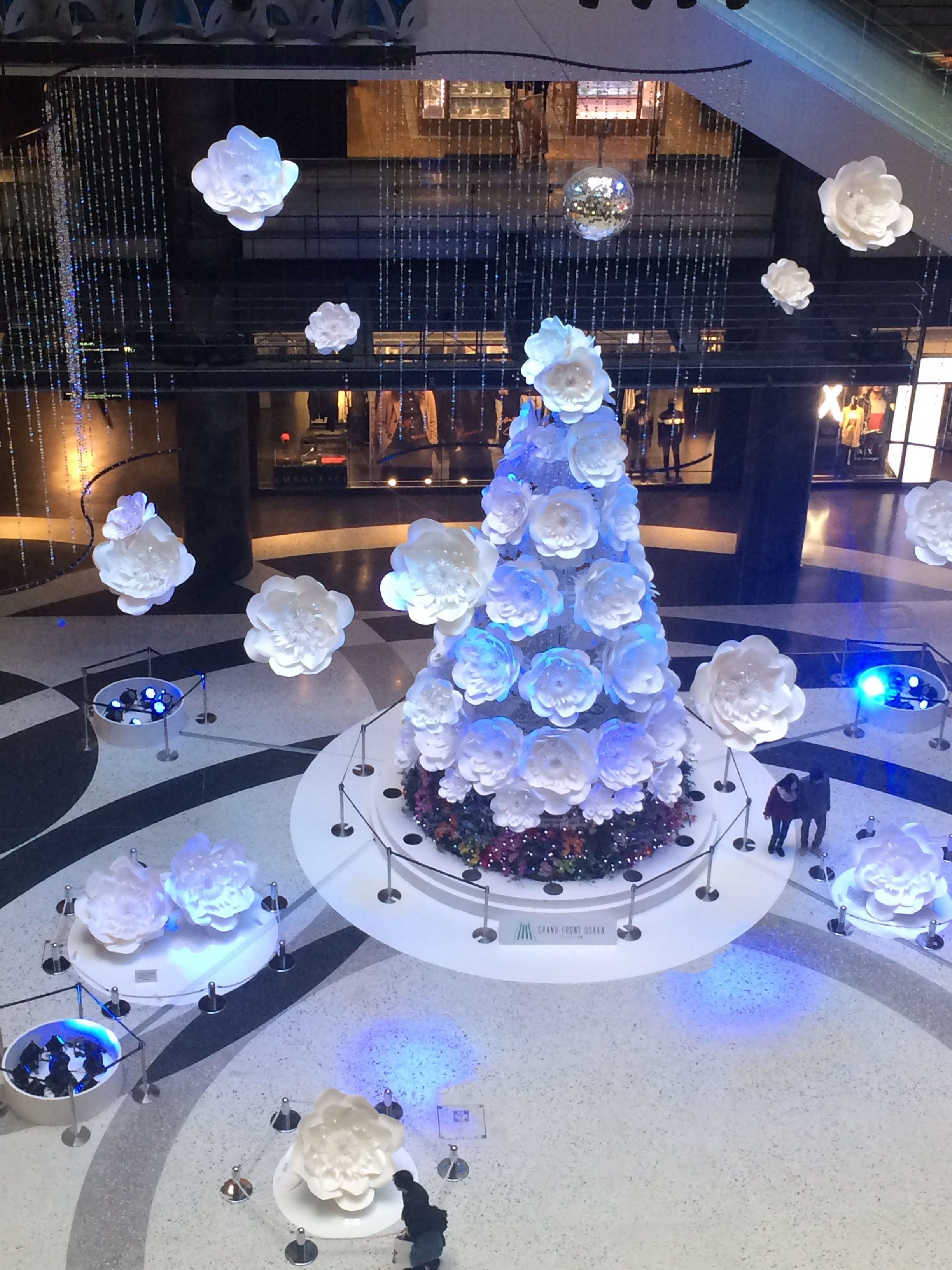
Our trip to Osaka from Naoshima island wasn’t very far, but did involve a ferry and five different train rides, including regional, Shinkansen and local! Our Japan Rail Pass is certainly being well used. Having checked into our really nice hostel with friendly staff, we headed out to the Kita neighbourhood to have a look at the Umeda Sky building, which is described in Lonely Planet as a space age Arc de Triomphe. It is a 40 story twin tower building with a connecting observation deck at the top. Impressive also was the humongous Grand Front shopping and office complex. We popped in for some lunch at a Korean restaurant, as Graham was missing Kimchi (fermented cabbage) and then headed back to the hostel to relax. 

Christmas has hit Osaka!

The hostel was called J-Hoppers Universal and must have been pretty new. Sparkling clean and with a really nice lounge and kitchen. The afternoon movie was Léon (so great) and after that we went to explore Dotomburi, the neon lit, colourful neighbourhood with throngs of people, restaurants, shops and stalls. Unfortunately, it was heaving down with rain, and suitably drenched despite our waterproof coats, we gave up and headed back to the hostel! 
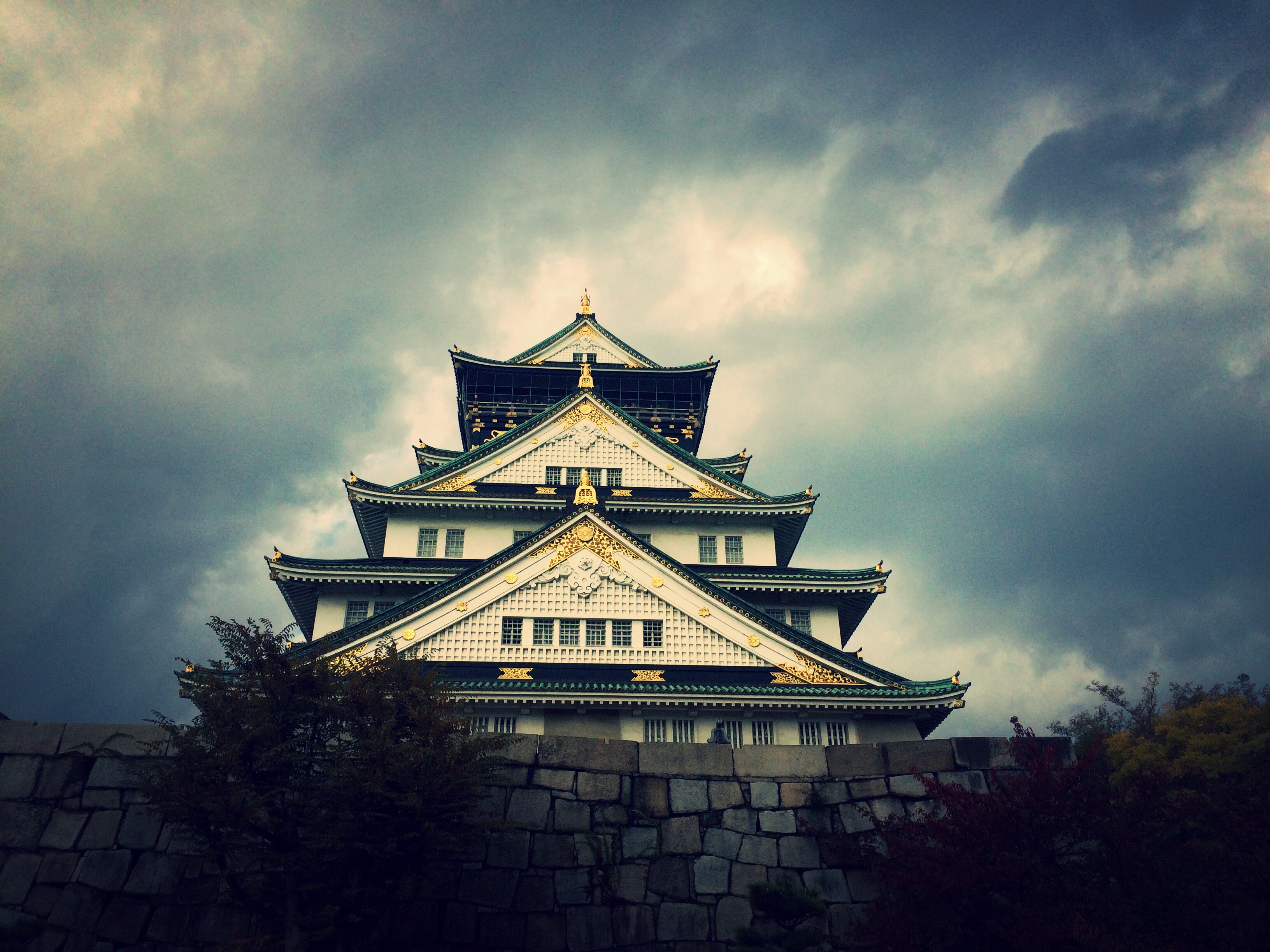
We treated ourselves to a relaxing morning of coffees and laundry the next day and with lovely dry, nice smelling clothes we headed off to Osaka castle. The original castle was built by General Hideyoshi who is credited with unifying Japan in the late 16th century and the castle give beautiful views out over modern day Osaka with autumn foliage. The current structure was reconstructed in 1931. 

Storm brewing at the castle
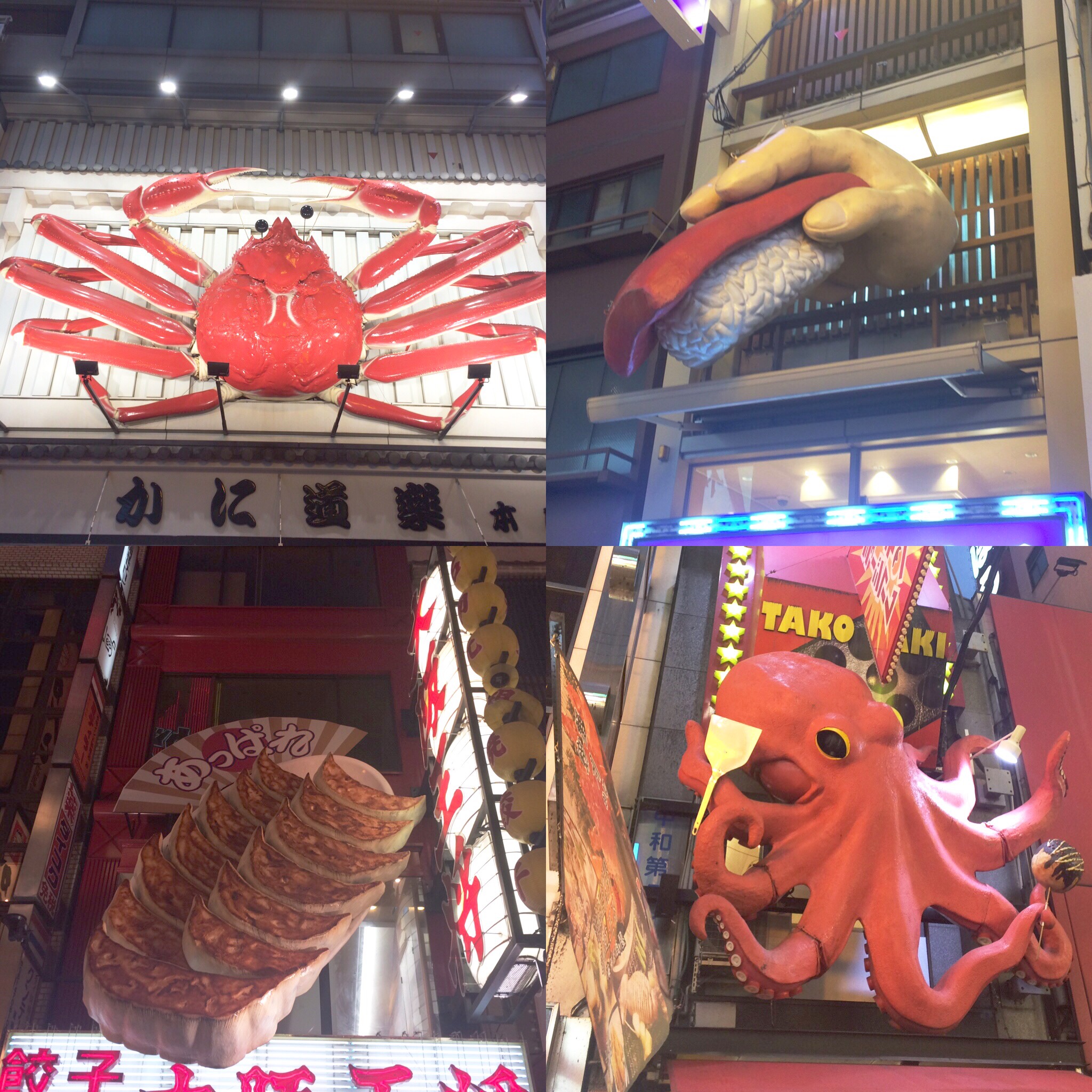
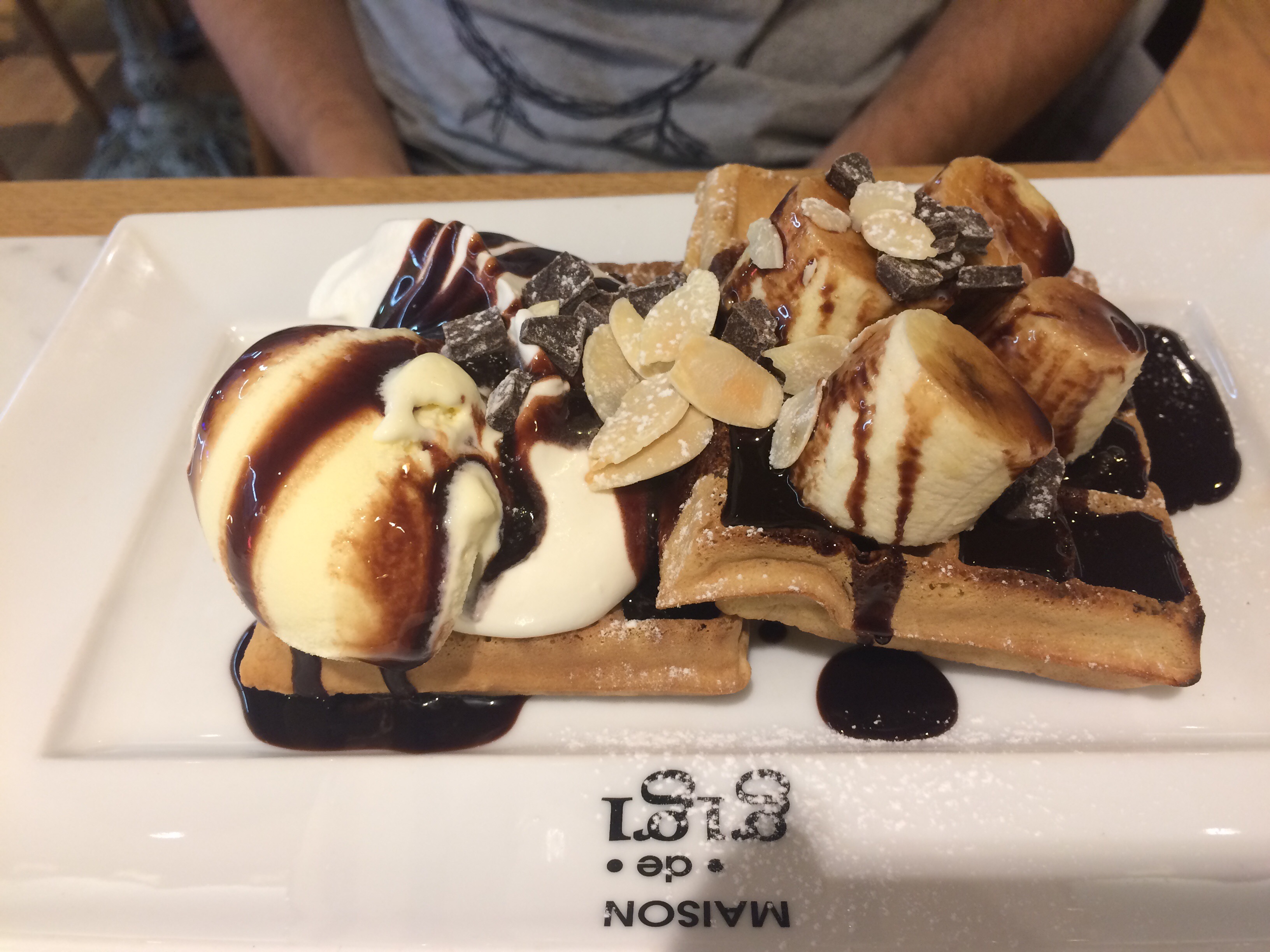
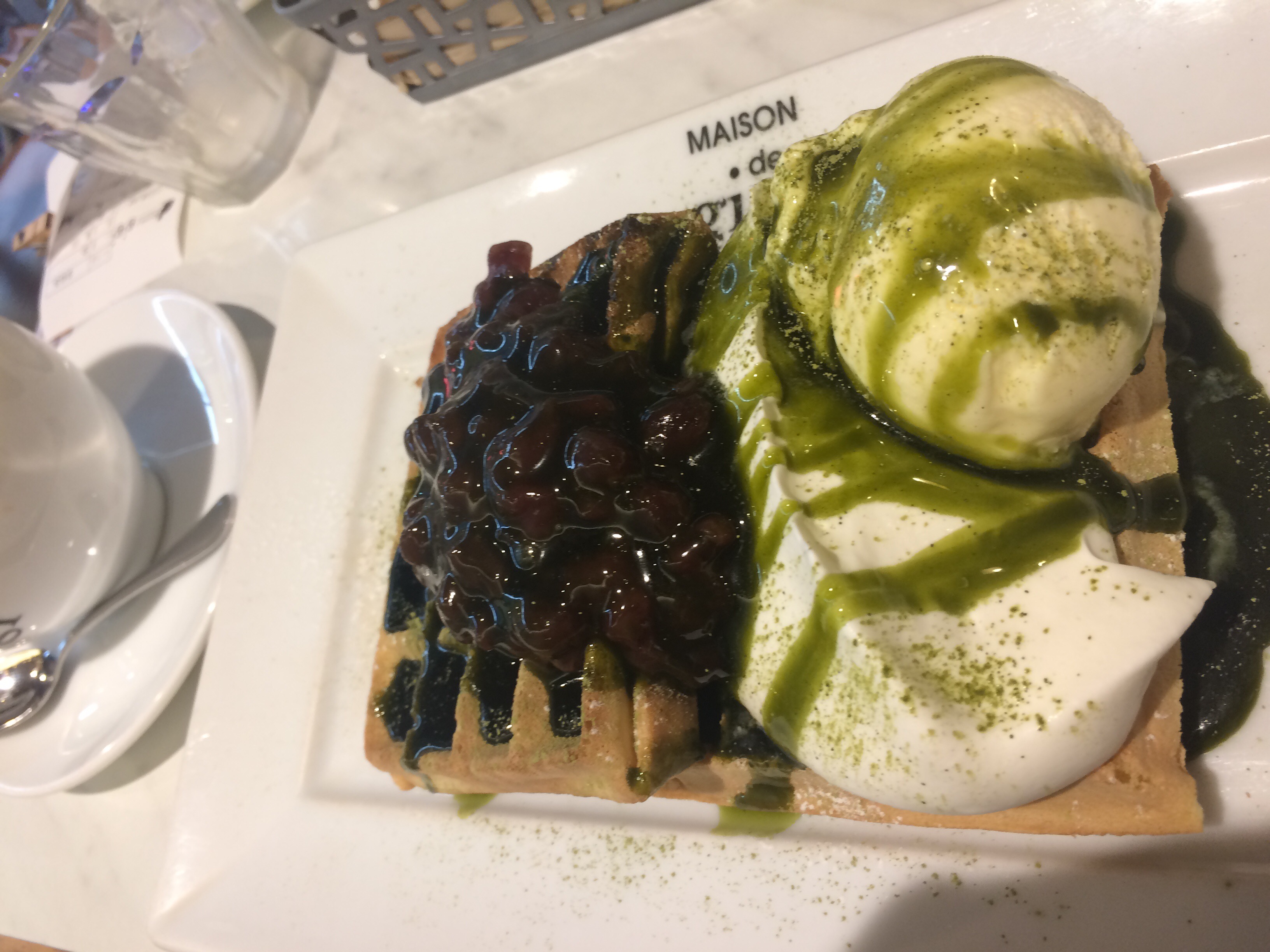
Determined to have a better look at Dotombori, we went back and discovered that it was even bigger than we had imagined the night before. I had read about the ‘big signs’ like the giant crab, big dragon and the giant hand holding a piece of sushi, so we snapped some pictures of those and continued on to Shinsaibashi-suji shopping arcade which is 8 blocks long! Graham has been scouting barber shops for the past few weeks and spotted one that looked trustworthy in the arcade. They didn’t scalp him and he emerged about 10 years younger, happy that his head was now much lighter! We celebrated by popping into a waffle shop and eating so much that we didn’t need any dinner that evening! 
Giant things!
Banana and chocolate waffles
Matcha and red bean waffle!
We were off to Kyoto the next morning, provided that the sugar coma from the waffles passed! 
-F xx
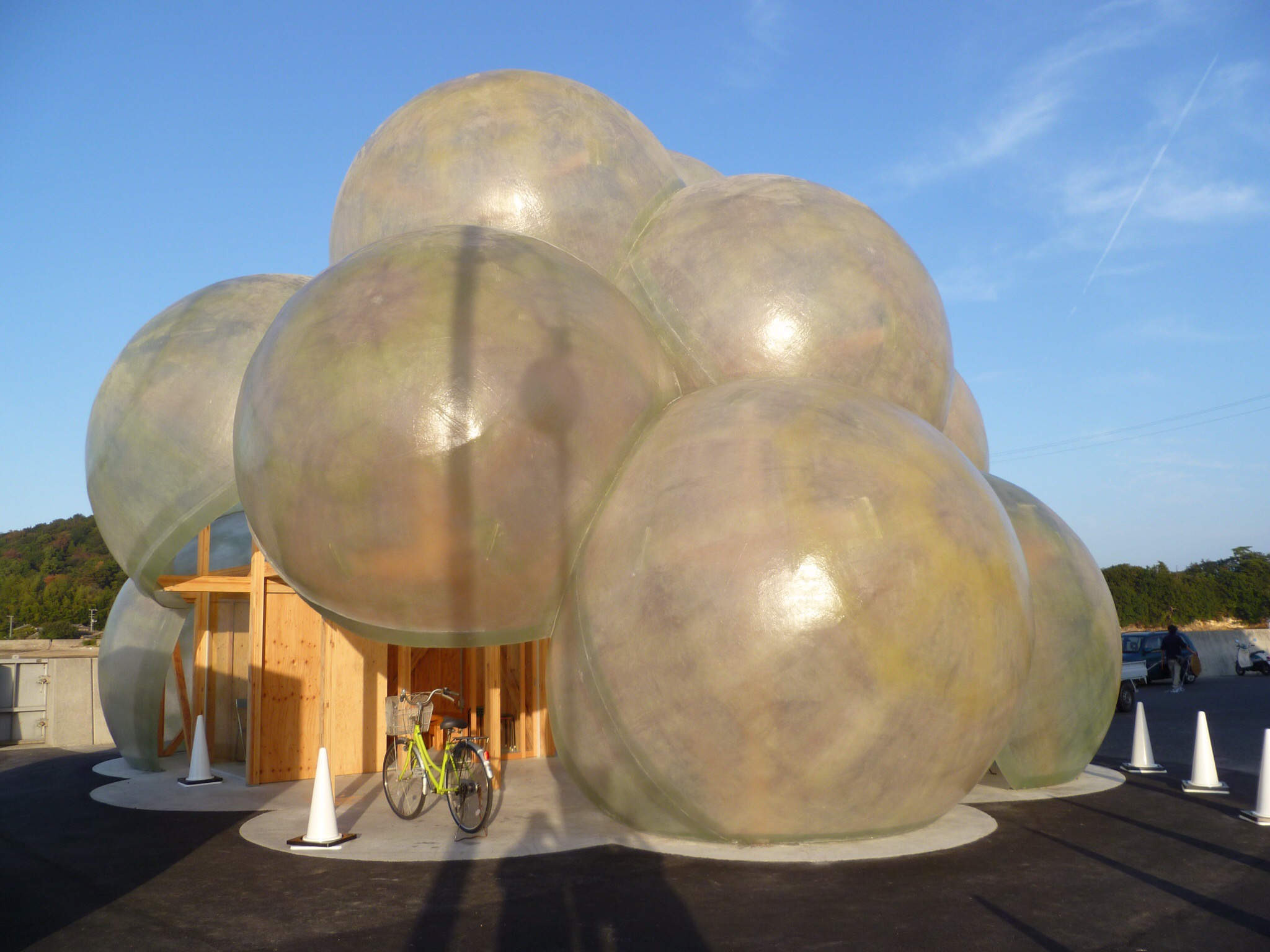
Naoshima Art Island

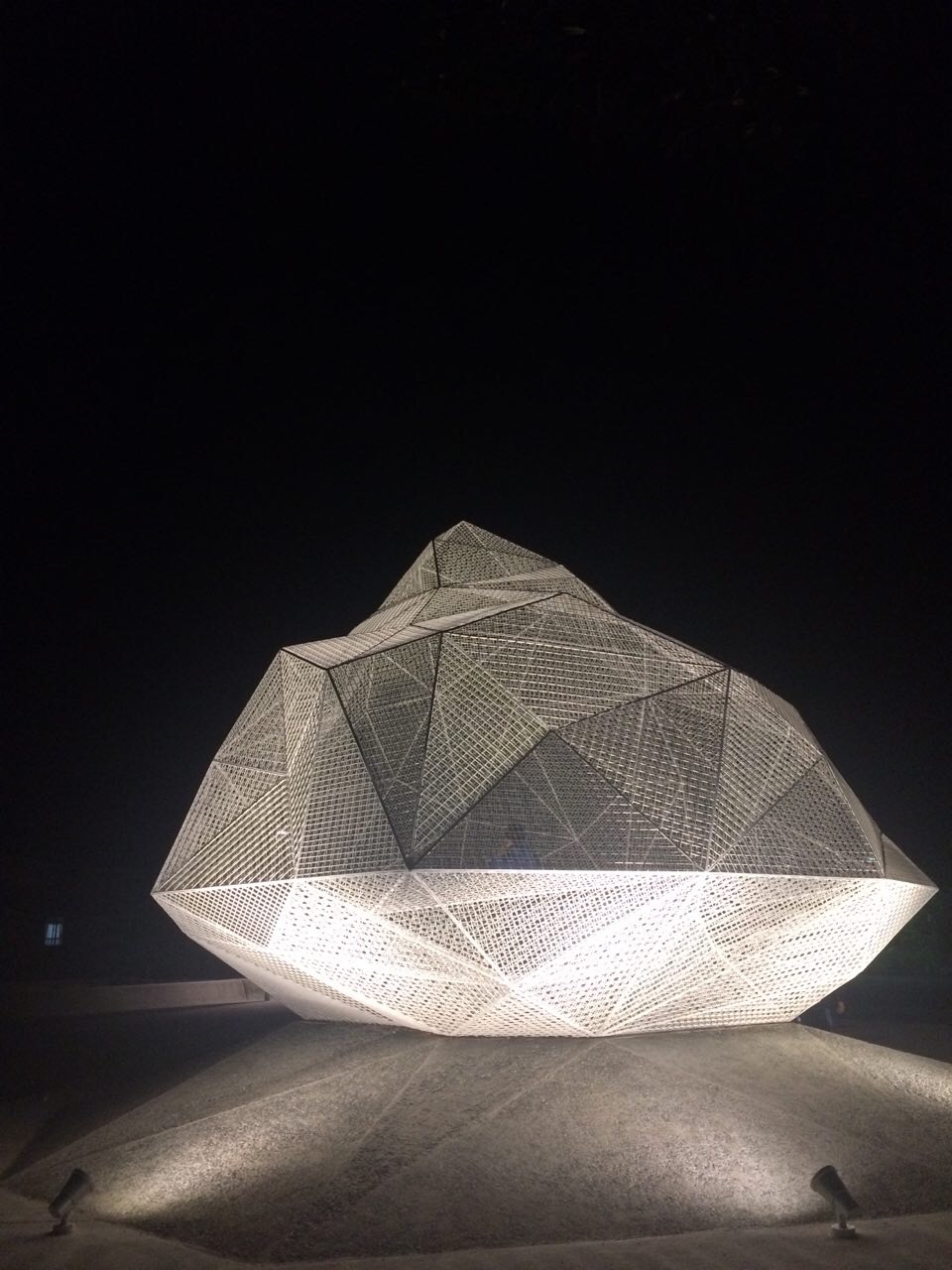
Much like visiting Olkhon Island in Russia, our visit to Naoshima was the experience I was most excited about in Japan. The three trains and one ferry we travelled on from Hiroshima felt a bit like Christmas Eve; the anticipation building as we got closer to the outdoor sculptures, quirky restaurants and beautiful scenery of the ‘art island’. Naoshima is an island in the Seto Inland Sea of Japan. It is best known for its art museums and outdoor art installations. It has a small population and two ports: Honmura on the east and Miyanoura on the west. 


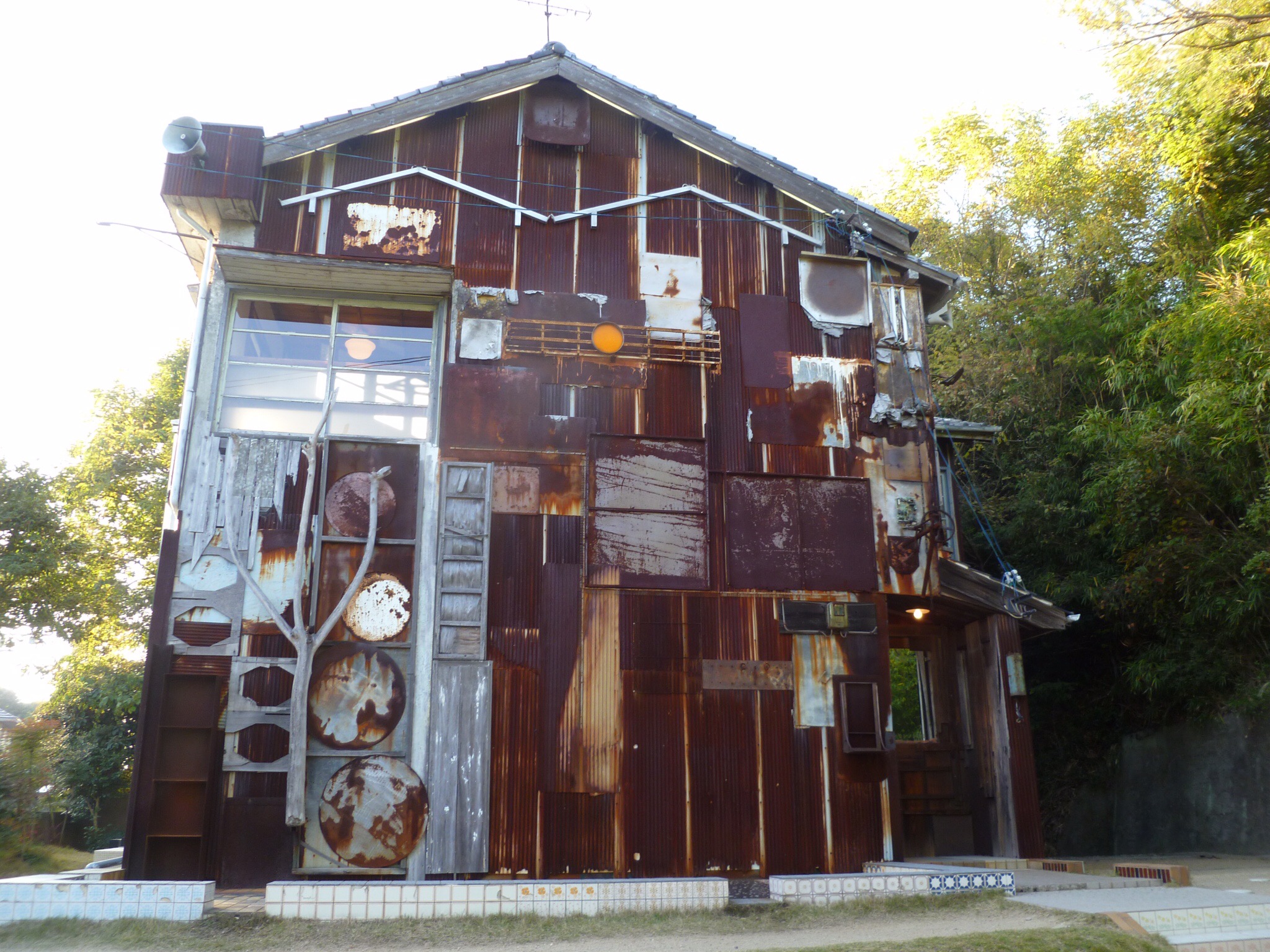
It was early afternoon when we stepped off the ferry at Miyanoura, and our accommodation, Little Plum, was a matter of metres away. We dropped off our bags, and, as the weather was surprisingly warm, removed a few layers of clothing. We walked the two kilometres to Honmura to visit the Art House Project. The project “involves the restoration of vacant houses into artworks by artists” (Art House Project ticket), and going there was a great way to spend the afternoon.


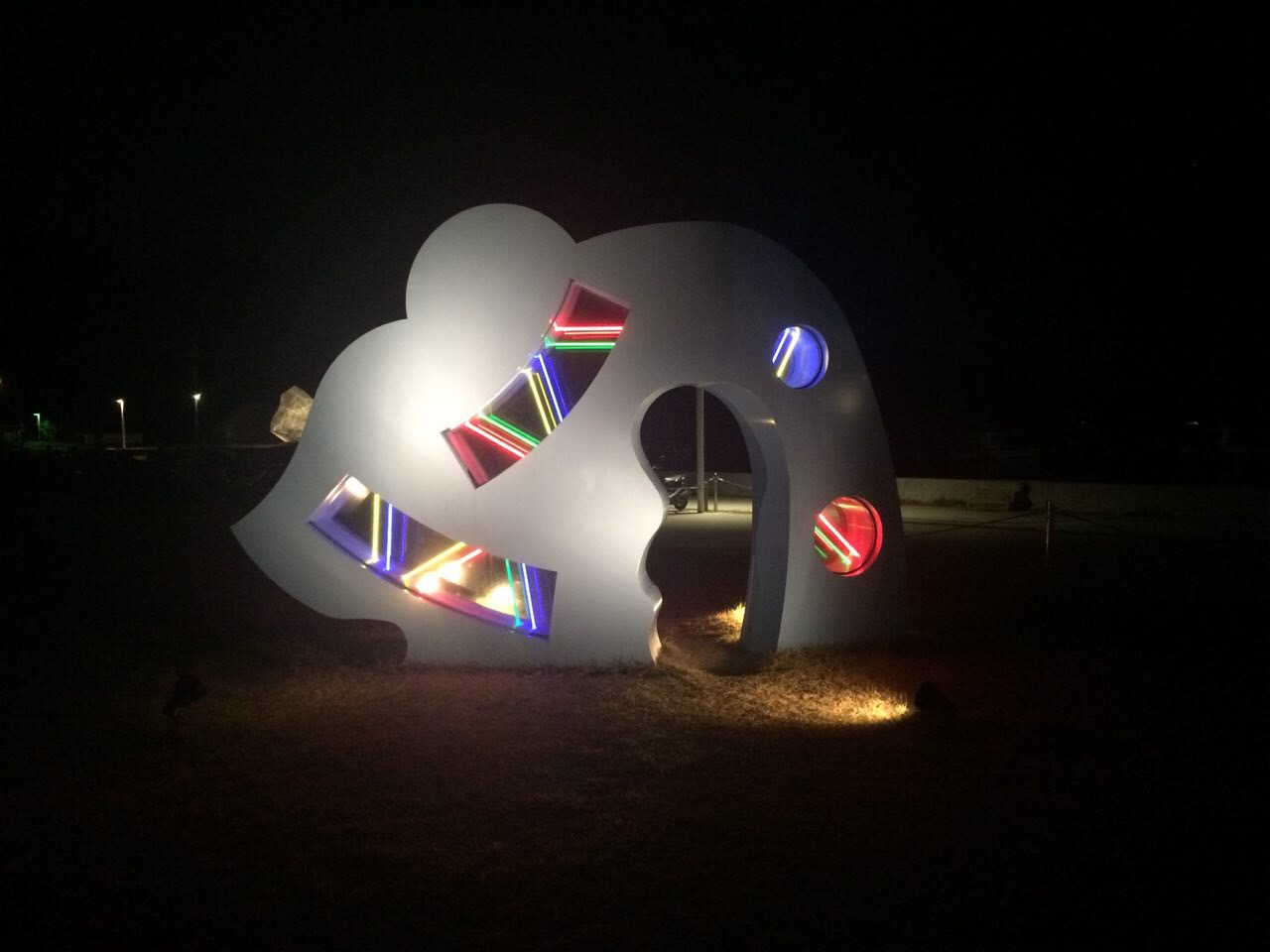
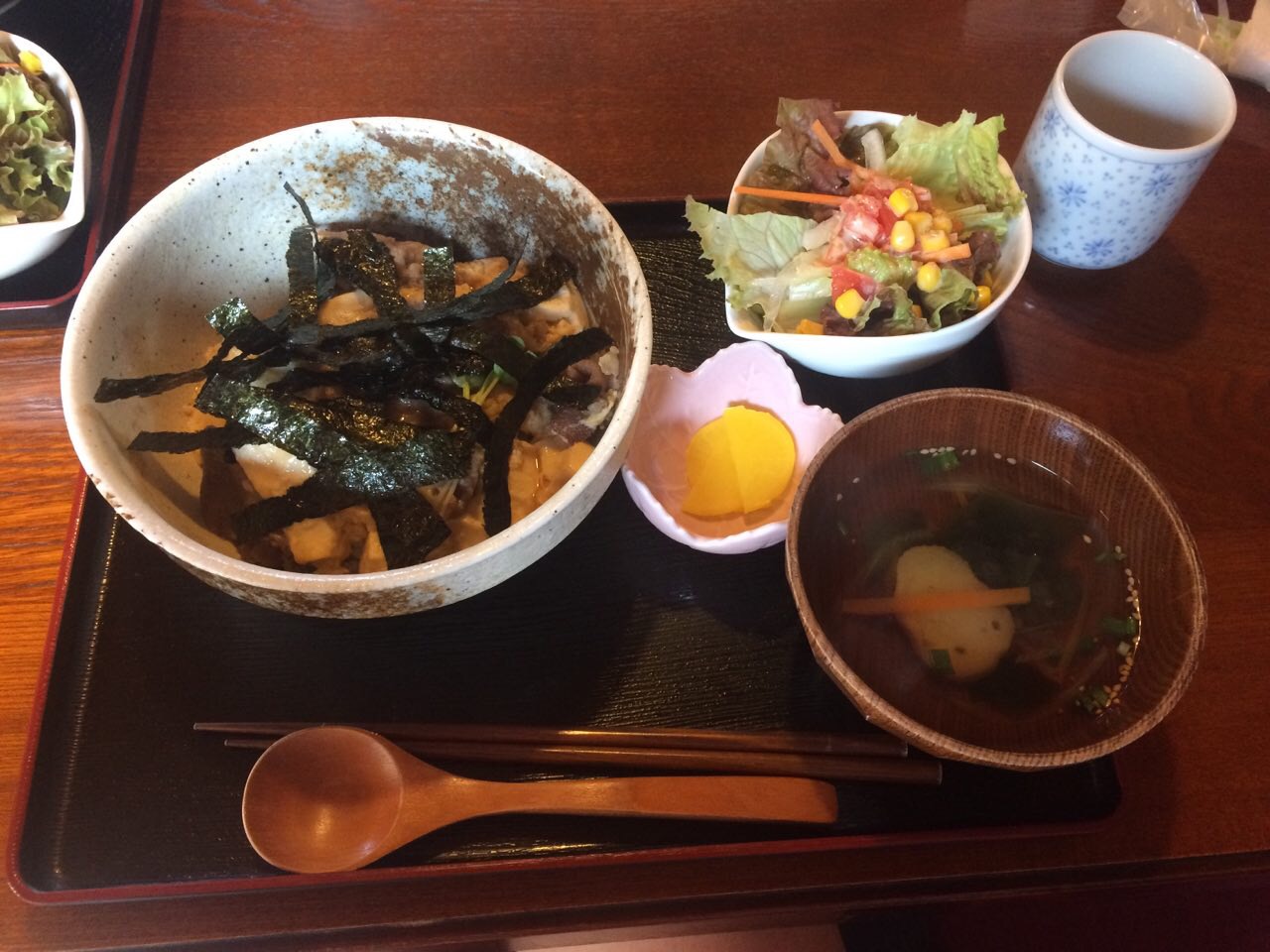
We had read several places that restaurants don’t stick to set opening hours on Naoshima, and the best way to find dinner is to walk around until you happen upon somewhere that is open. This proved to be the case, and we walked past several ‘closed’ signs before reaching a restaurant called Cin.na.mon. Getting served took a while as the restaurant was “crazy busy”, as one of the staff explained. After eating an excellent tasting, but far too small, meal, we walked down to the port and spent a while admiring two of the island’s outdoor sculptures.


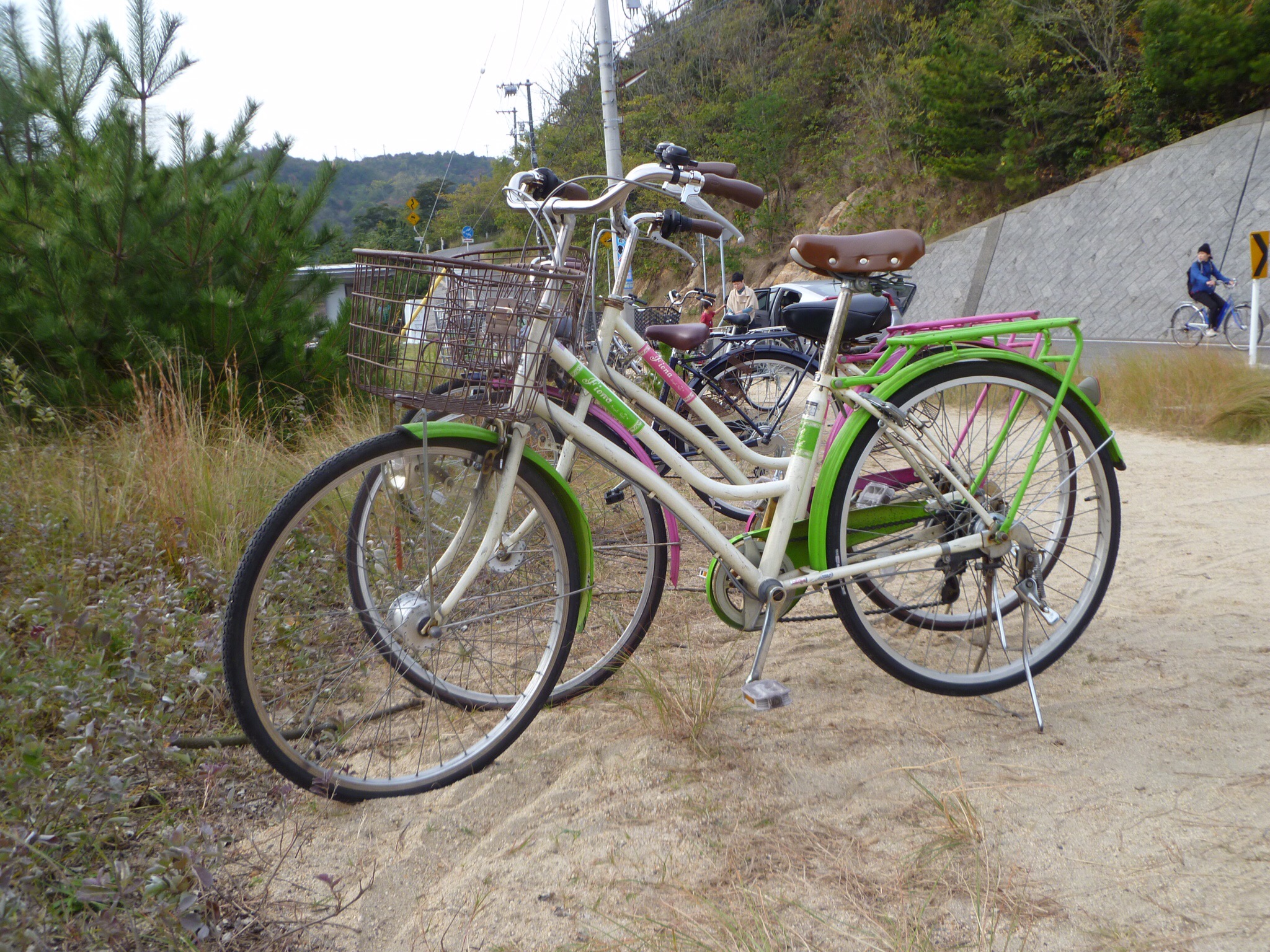
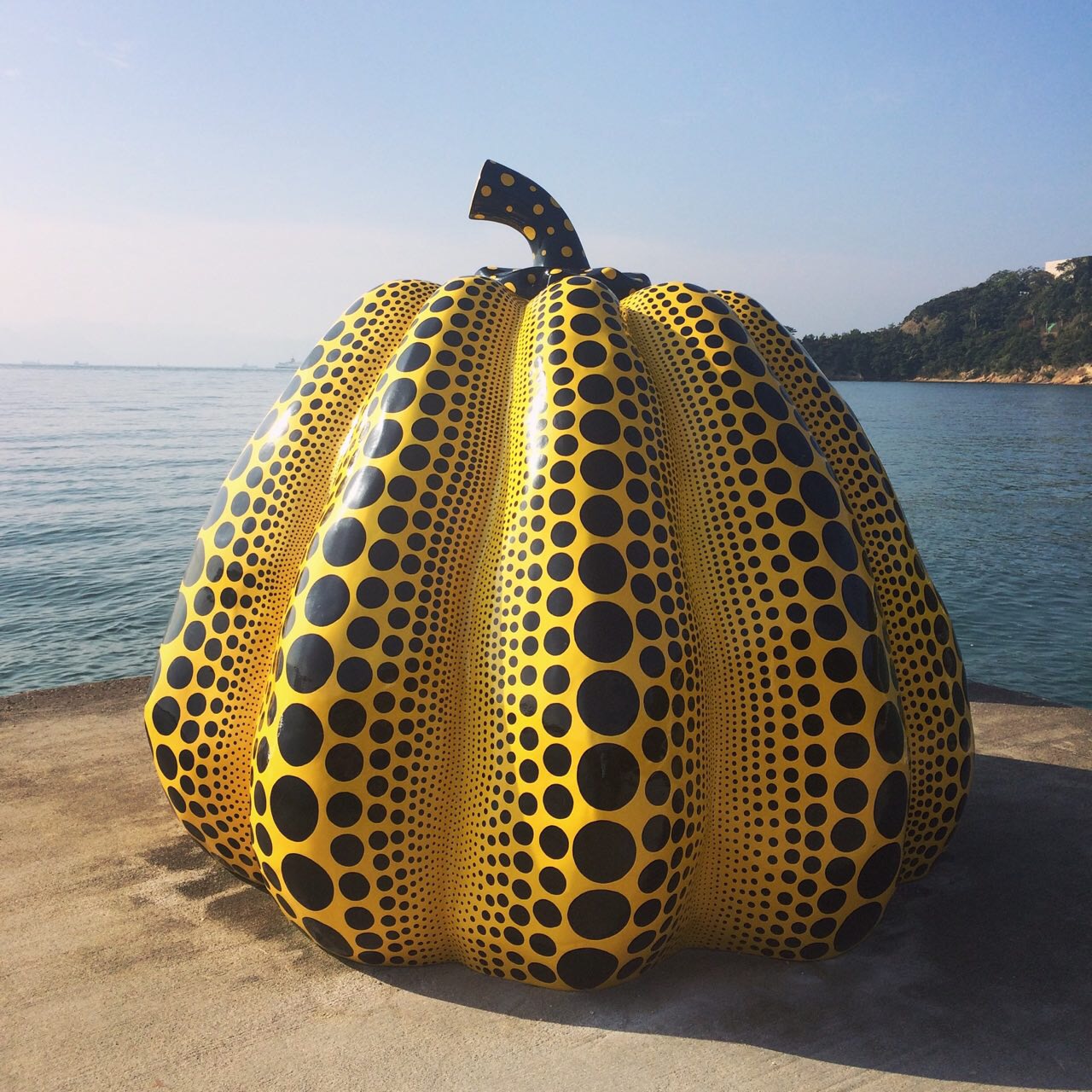
On day two, Sunday, we rented bikes from Little Plum and set off to explore the hilly roads of the island. There are several bike rental shops on Naoshima, where the majority of people hire electric bicycles. Of course, we couldn’t possibly accept such motorised assistance (that’s cheating!), and opted instead for two very heavy, human-powered, town bicycles. We began an anti-clockwise loop of the Island, and followed the coast up a ridiculously steep hill past the Chichu and Lee Ufan art museums, before riding to Yayoi Kusama’s iconic Yellow Pumpkin. After a look at the sculptures outside Benesse House, we parked our bikes and walked into Honmura for breakfast. Few places were open, but we found an excellent cafe that had just started serving lunch.


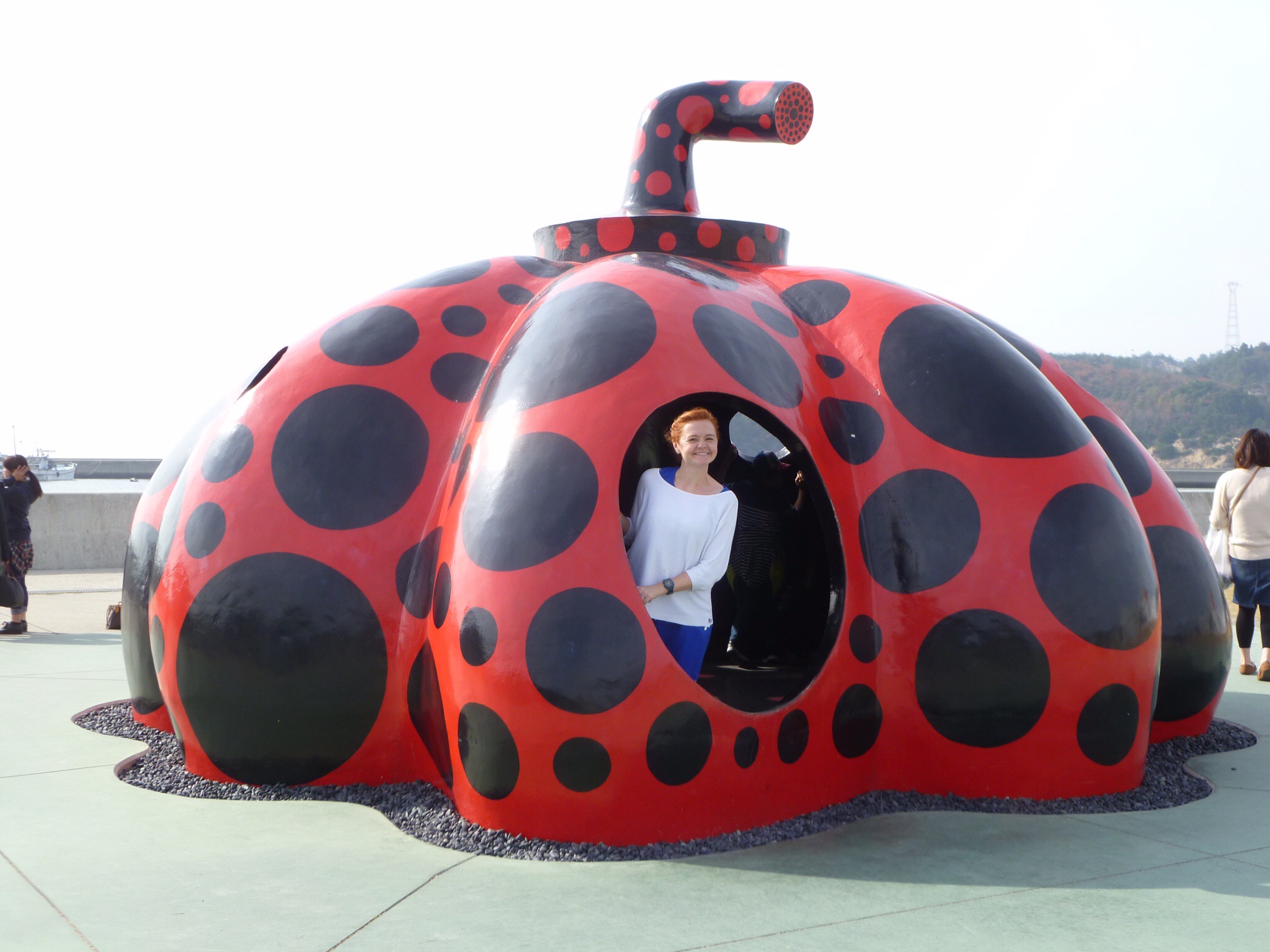
After eating, we continued our loop of the Island, returning to where we started. After a stop at Kusama’s Red Pumpkin, we cycled through the middle of the Island, back to the yellow pumpkin, and lay on a nearby beach. After some reading about the rest of the cities we plan to visit in Japan, we bought a coffee, and cycled back to Little Plum.


G

Hiroshima & Miyajima 

Japanese trains are very different to Russian ones! Our first train in Japan was from Fukuoka to Hiroshima and was a Shinkansen or ‘bullet’ train. They have big seats, smell nice, are extremely clean and go very fast 🙂 

An origami present from our Fukuoka hostel.

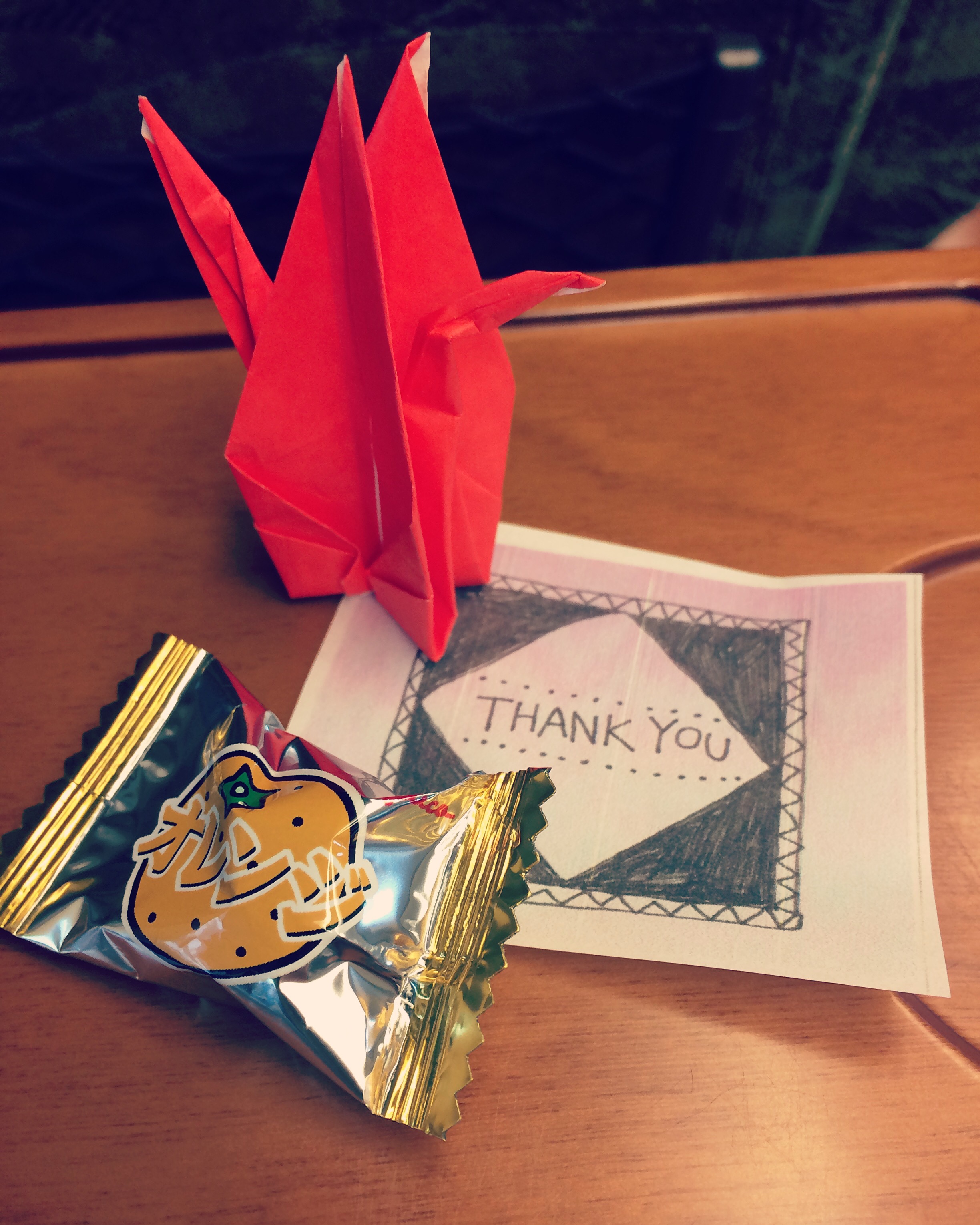
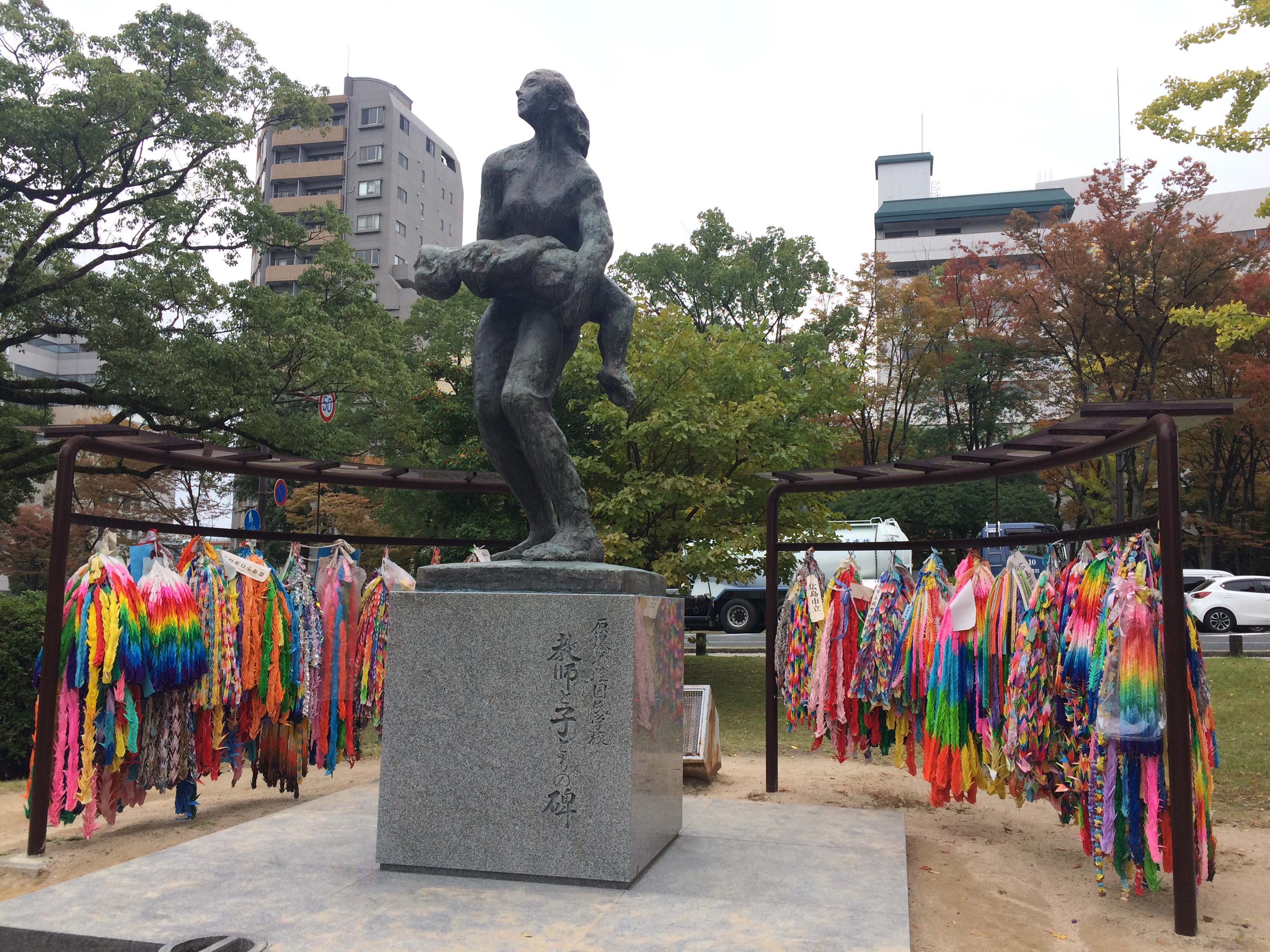
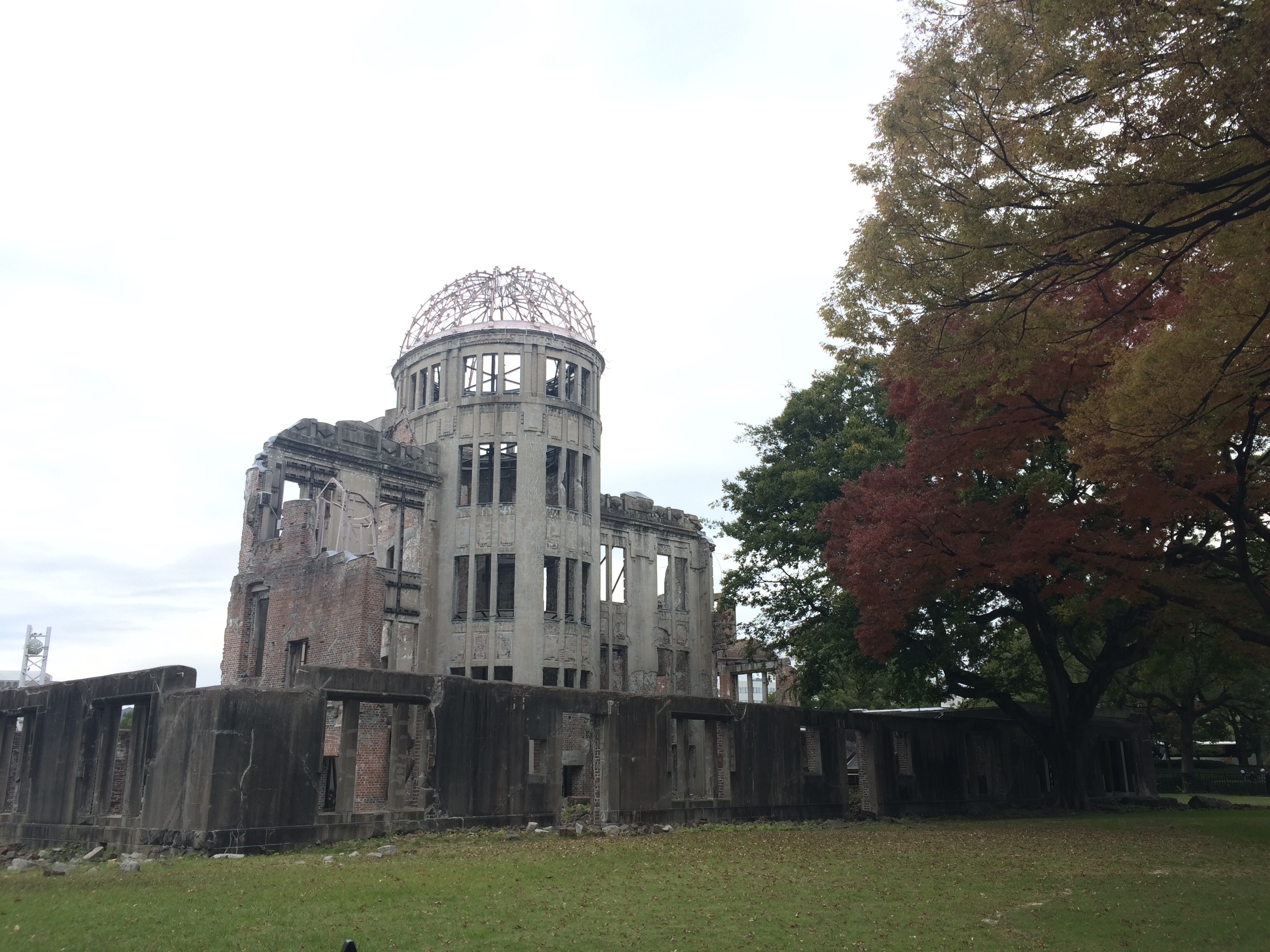
Hiroshima is of course well known as the city that was destroyed by the world’s first atomic bomb. At 8:15 on August 6th, 1945, the Enola Gay flew over Hiroshima city and dropped an atomic bomb that devasted the city. It instantly killed approximately 80,000 people and tens of thousands more died from radiation exposure. Today, Hiroshima is a city that represents peace and their Peace Memorial Park in the city centre stands as a reminder to all of the atrocities that have occurred and the importance to strive for peace in our mad world. It’s a beautiful, simple, yet somehow somber place that has hundreds of school children running about as they visit to learn about a huge event in their history. Also, we learned that they come to the park because of the many English speaking tourists and will ask if they can speak to you in English to complete the assignments they have been set for the day. We felt like celebrities. As we walked around, they shouted ‘Hi!’ to us, and one group asked us questions about ourselves as their teacher looked on and took pictures (of course!). We were then given an origami crane that they had made, which throughout Japan is a symbol of healing and peace. We listened to a group of kids singing as they were gathered around the Children’s Peace Monument, which was rather beautiful and then went to see the A-Bomb Dome. The structure of the building was one of the few that wasn’t completely destroyed, but all of the people who were inside perished. 
Origami cranes behind mother and child statue

A-Bomb Dome
 
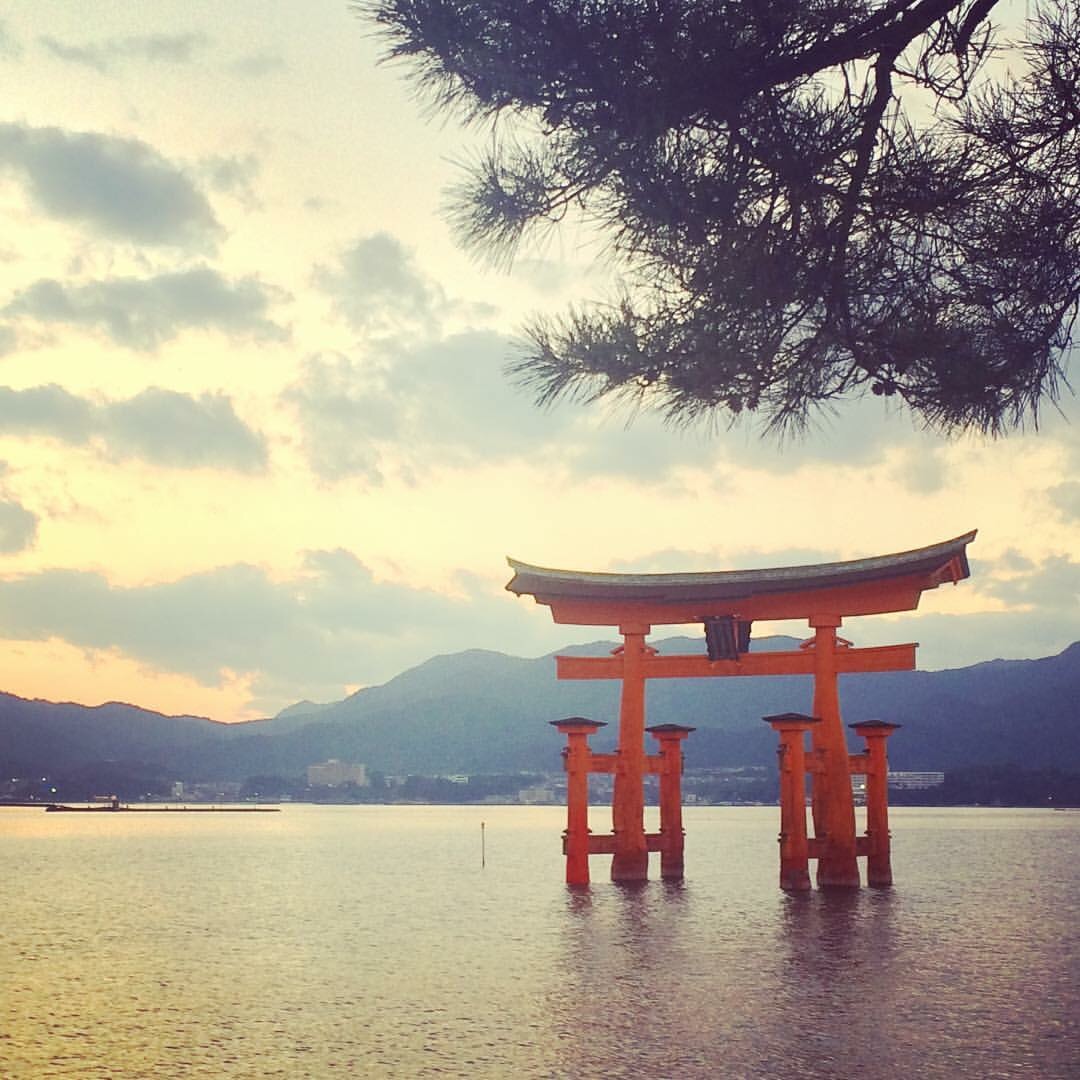
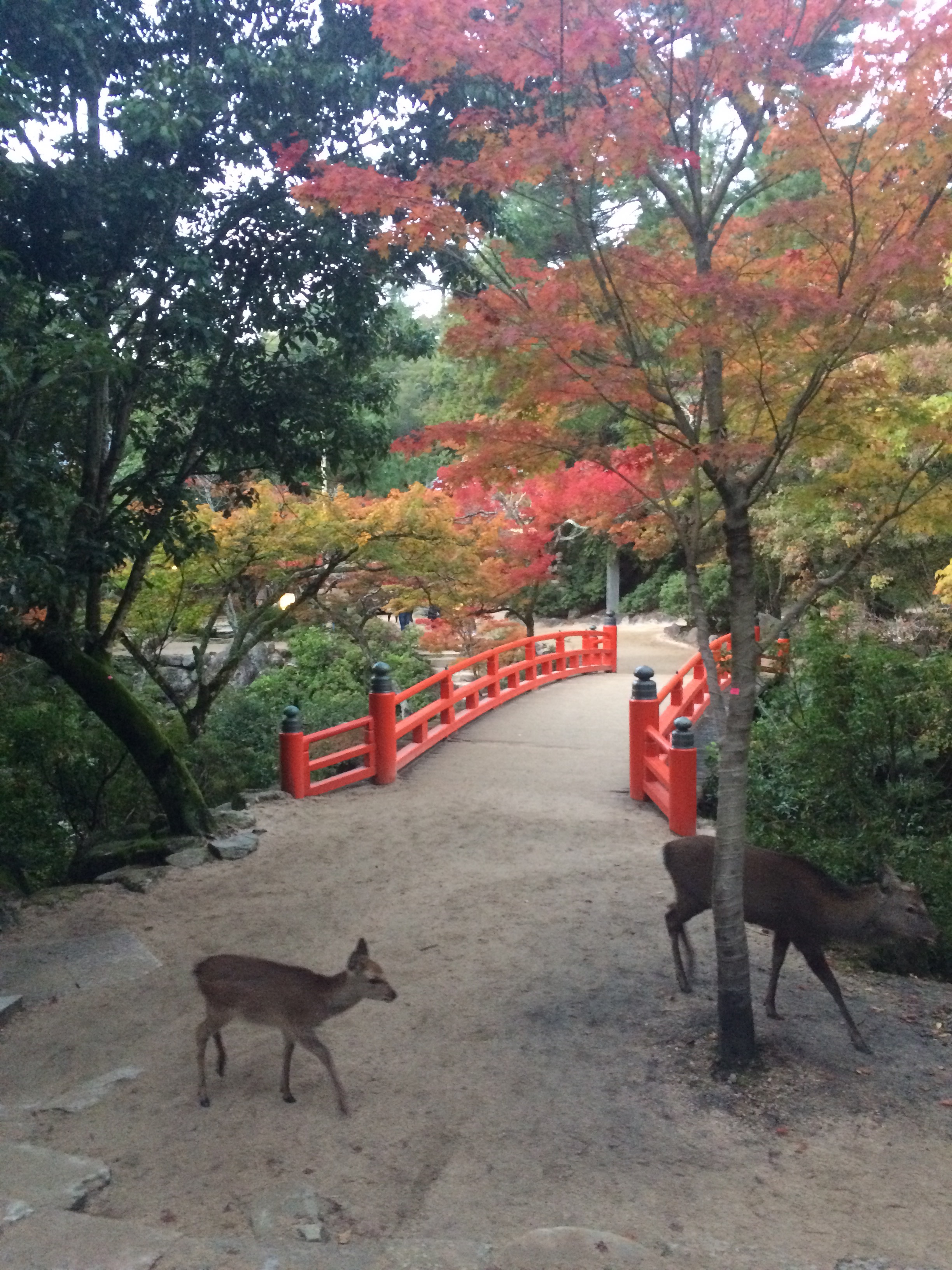
We went for a refreshing evening run in the rain around Hijiyama park and had a noodle dinner in the hostel to ready ourselves for a trip to Miyajima the next day. Officially called Itsukushima, the small island is home to the ‘floating’ torii gate, which appears to float in the water as the high tide comes in. It is an iconic Japanese image, a UNESCO world heritage site and is certainly a popular place to visit! The island also has wild deer that have become accustomed to the human visitors and wander around the streets, looking for snacks in handbags! Our lunch was Okonomiyaki, a Japanese omelette dish with cabbage, meat and vegetables. As oysters are a Miyajima specialty, I had those in my okonomiyaki. I’m still not sure I love oysters!!

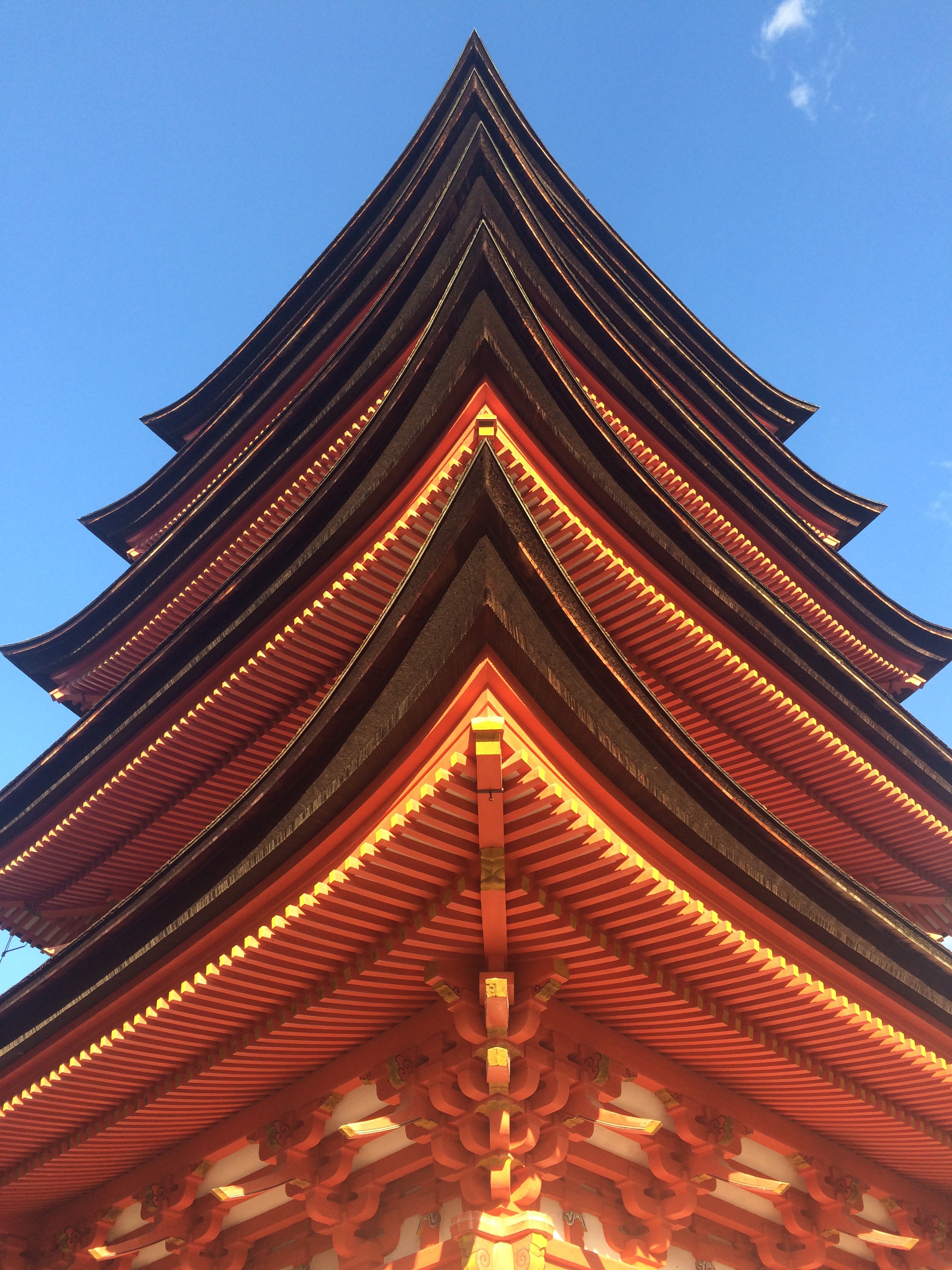
Pagoda in the afternoon sun

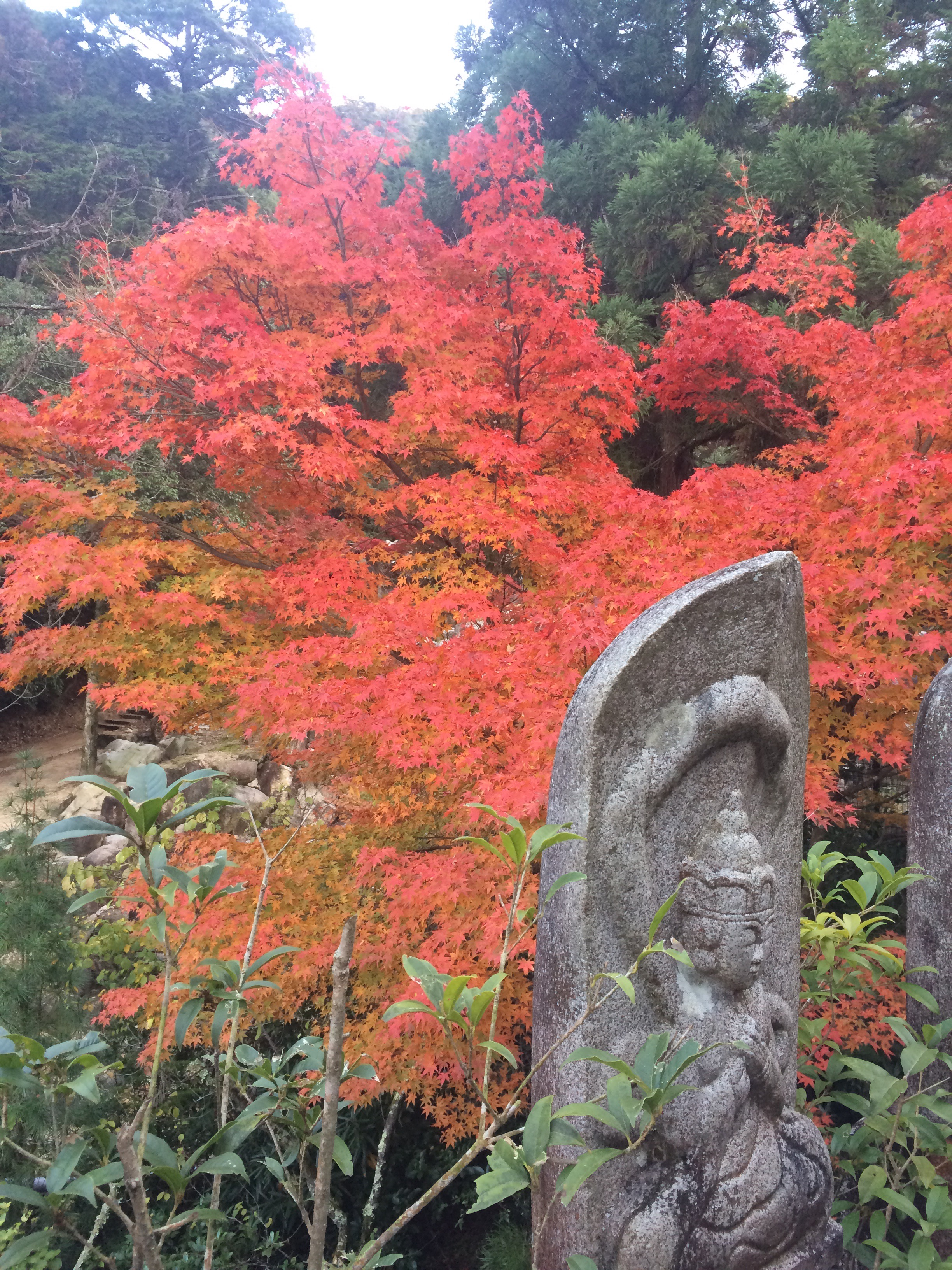
We visited the beautiful Daisho-In temple, which is one of the most prestigious Shingon temples in Japan. From our leaflet at the front gate, we learned more about Buddhism, the Shingon sect and the Buddhist Deities. As the sun was setting over the trees, the autumn colours on the trees were breathtaking, and a camera simply didn’t do the sight justice.

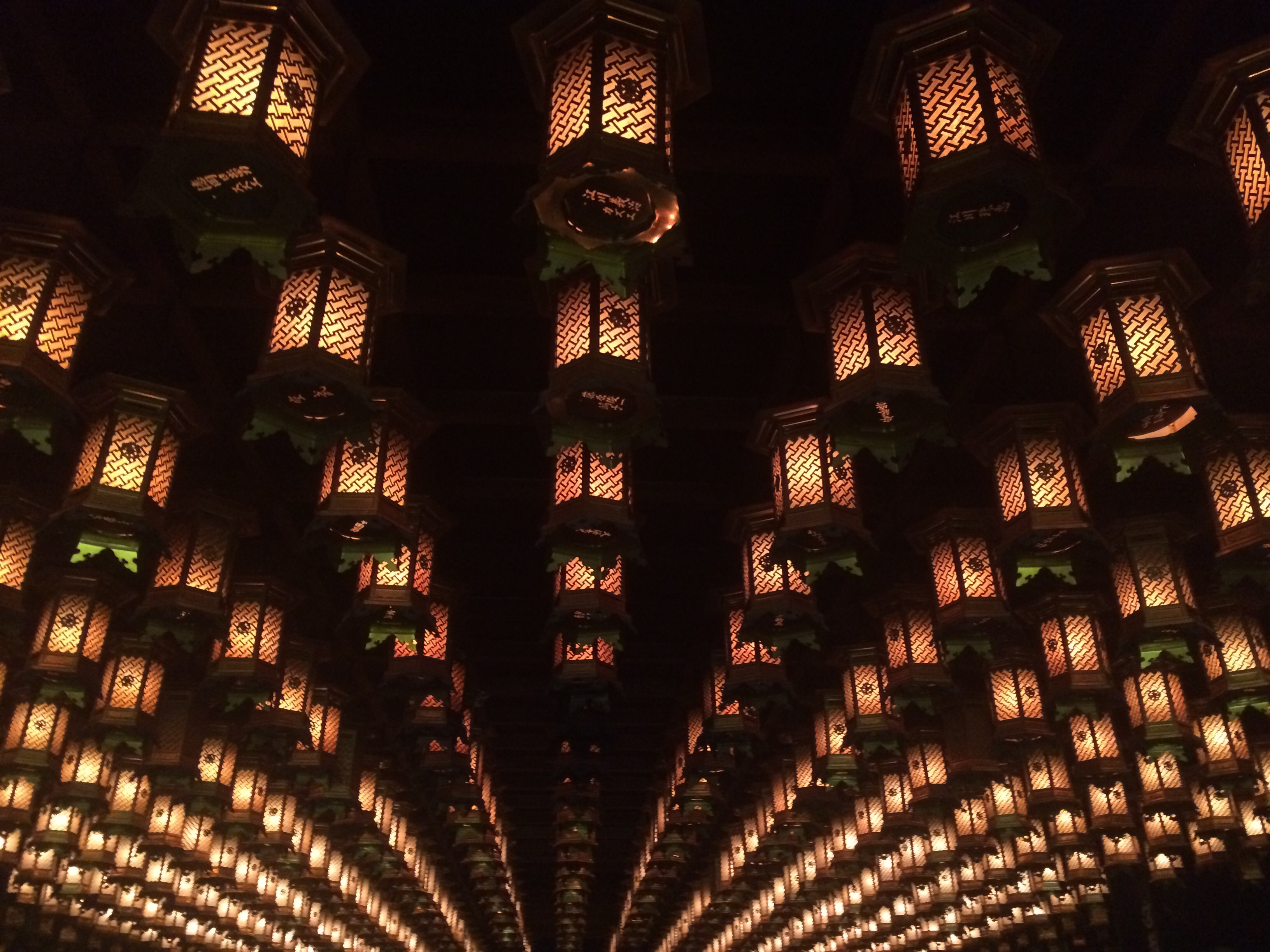
Lantern ceiling

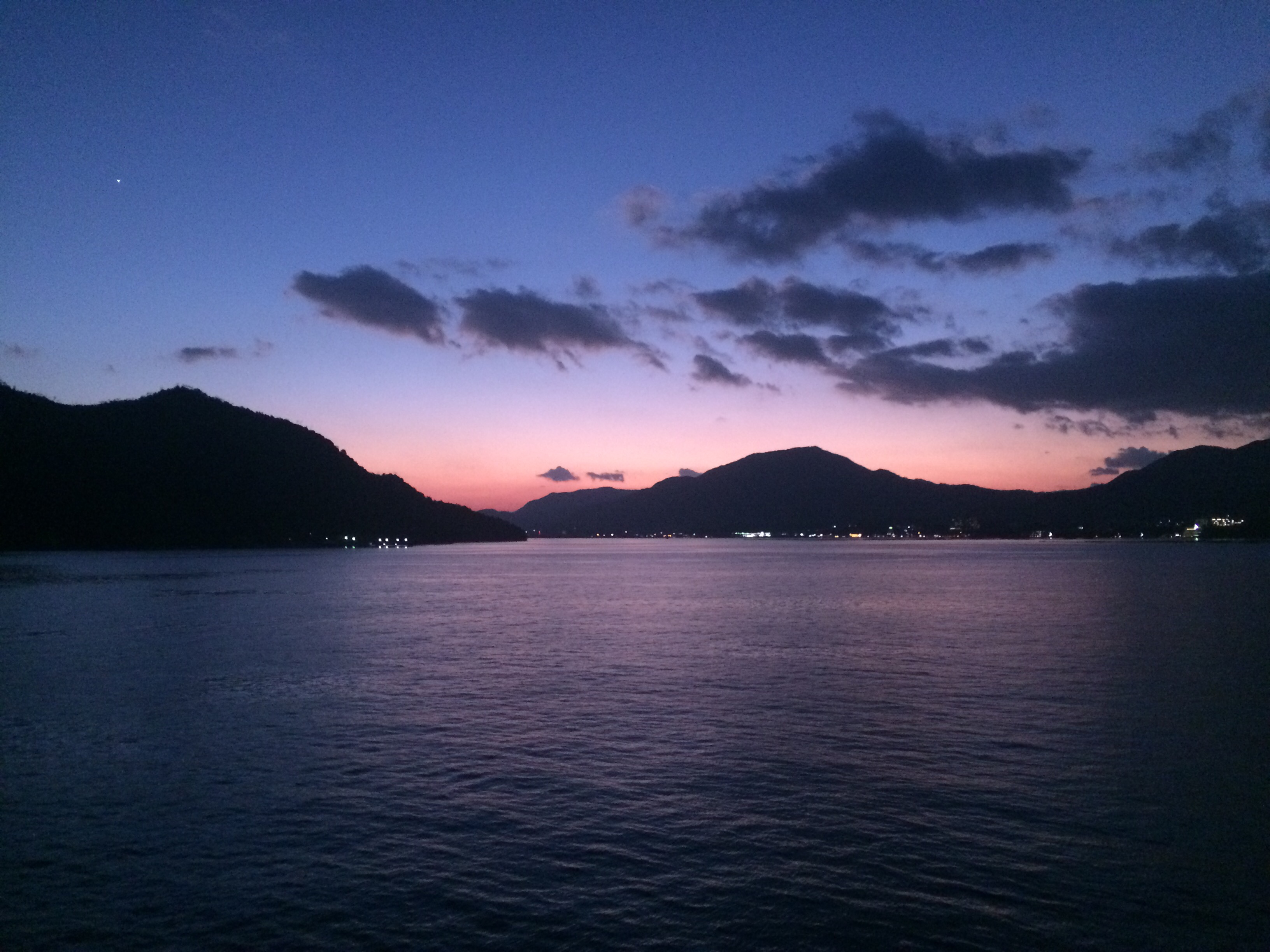
We hopped back on our ferry to the mainland as the sun set over the sea, a sight that never gets old!  


Next up: Naoshima island

-F xx
Fukuoka: One Sinkhole & Two Giant Buddhas

Tuesday began far too early. We checked out of the hostel in a Busan and made our way to the International Passenger Ferry Terminal. We were slightly surprised to find that our ferry was for foot passengers only, and rather small. Both of us spent the journey to Japan fast asleep. Following a quick bag check at customs, we attempted to withdraw some cash to pay for the bus ride into the city. As neither the ATM or currency exchange accepted foreign cards, our only option was to walk in the rain. Waterproof gear on, we headed towards Hakata Station. Neither of us mind a bit of rain, and walking is always a good orientation exercise.

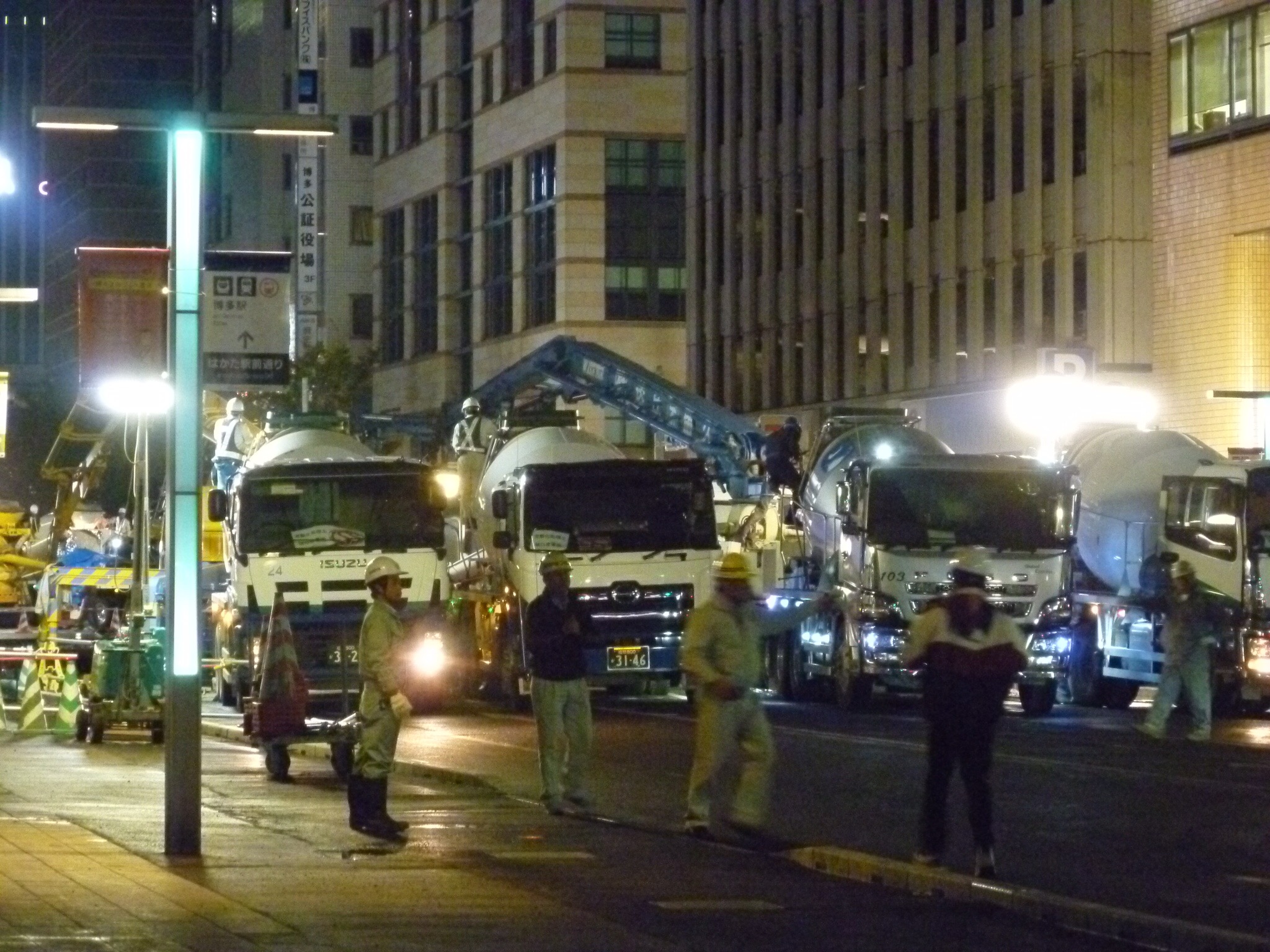
While looking for lunch in Amu Plaza, located above Hakata Station, we noticed several fire engines on one of the streets outside, and a number of people taking photographs. We later spotted helicopters flying overhead, and police preventing vehicles and pedestrians from entering one of the city’s central streets. We checked into our hostel and thought little more of the incident in the city centre.


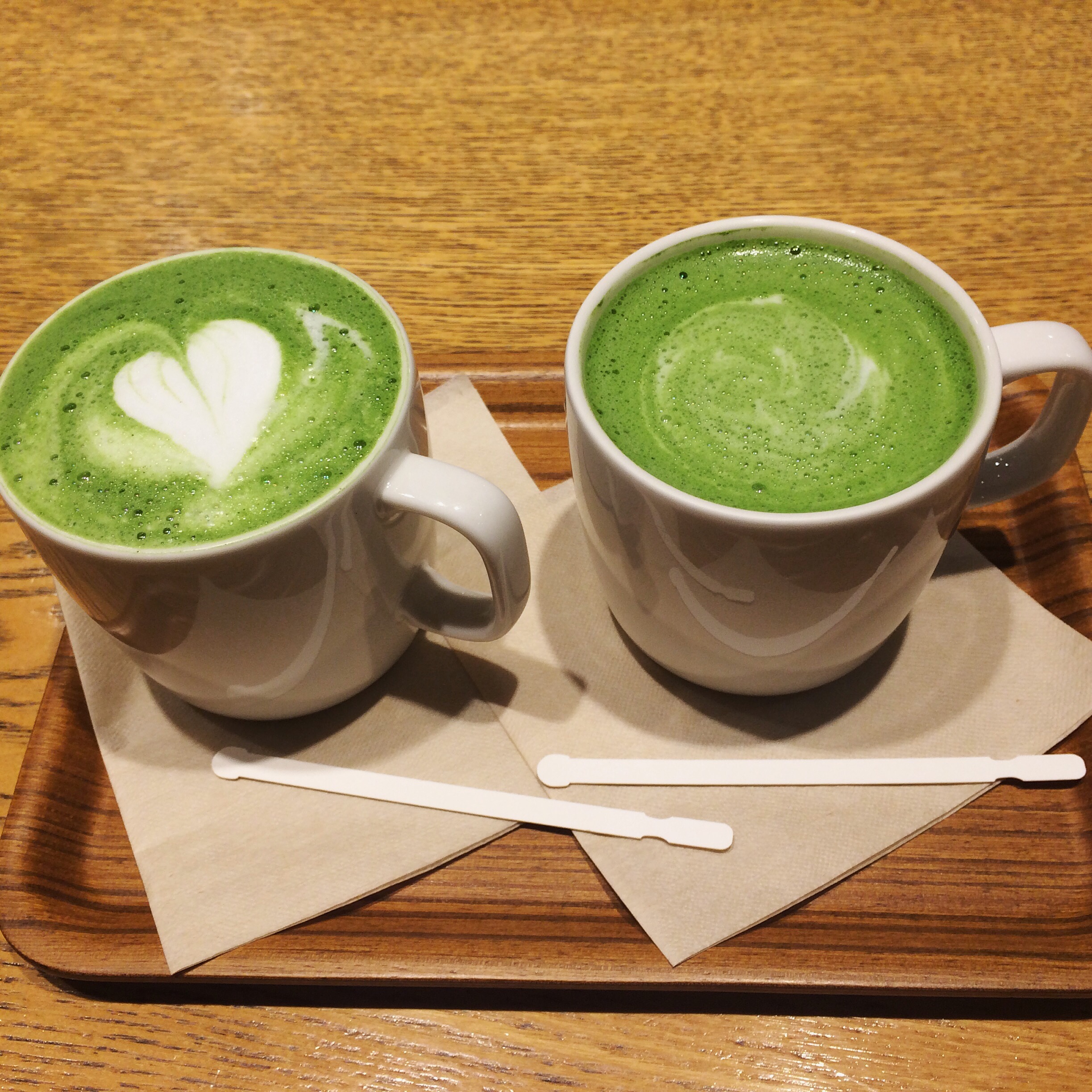
As the weather wasn’t great, we walked to an enormous shopping complex called Canal City. Having browsed a few shops, we stopped for a green tea latte in MUJI Cafe. With the helicopters still over the city, I Googled “Fukuoka news” and found that a sinkhole had swallowed part of a road a few hours prior to our arrival. (bbc.com/news/world-asia-37906065). After Canal City, we walked to Tenjin, an area containing a mixture of modern shops and traditional street stalls. We passed by the sinkhole again on our way back to the hostel, but the many work vehicles prevented a good view.


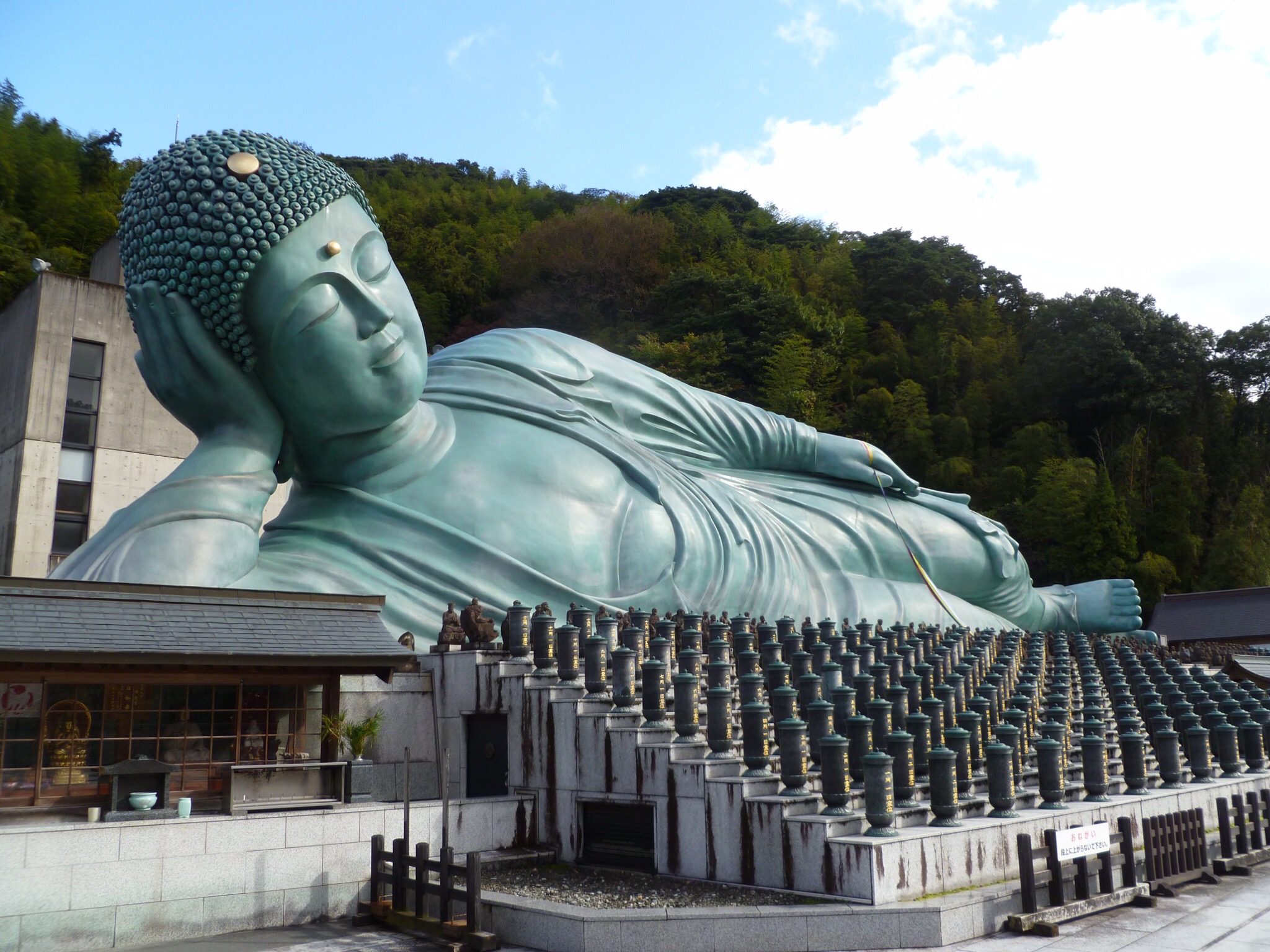
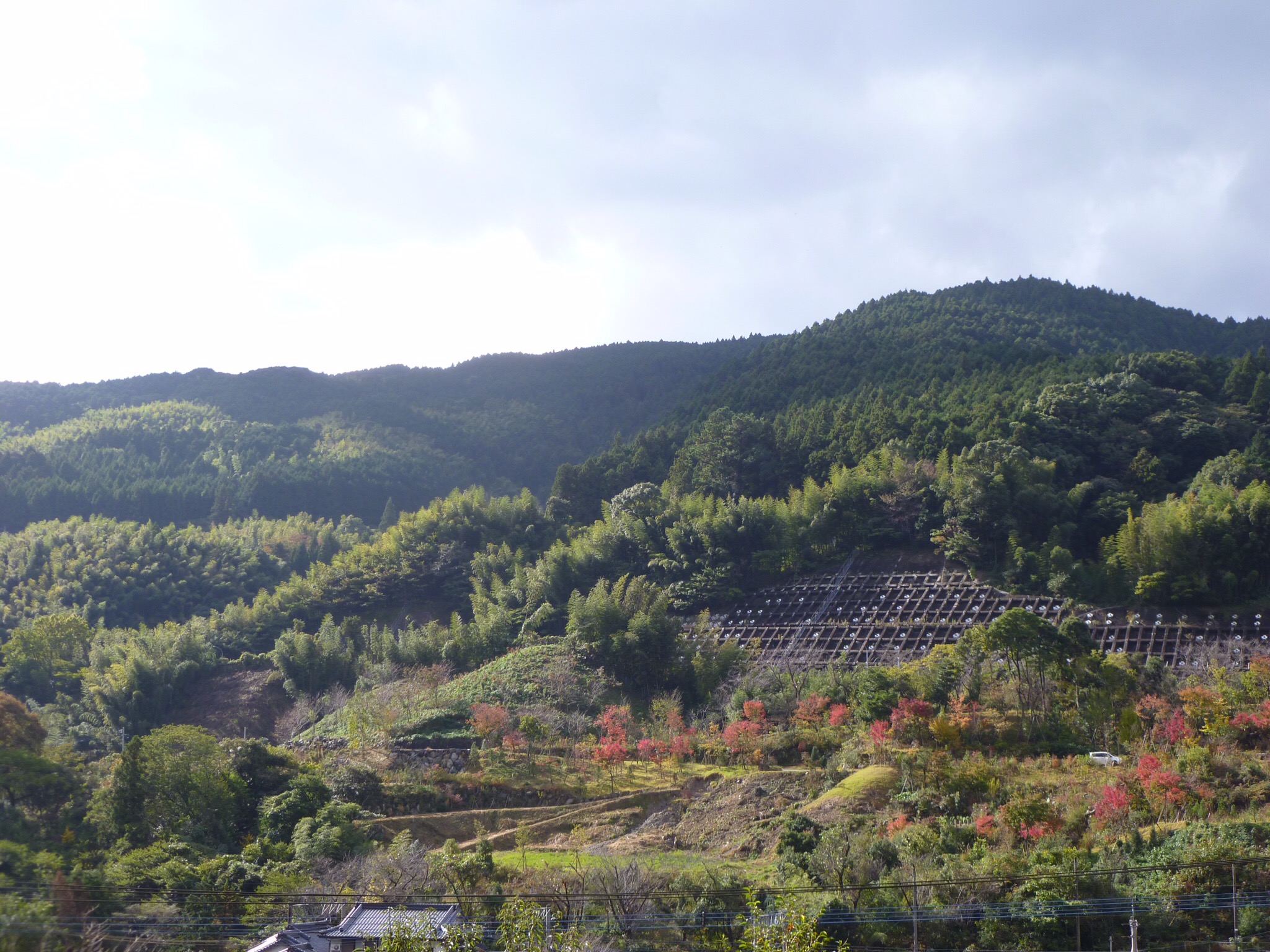
The weather was much better on Wednesday. Our first act was to take the train to Kido Nanzoinmae, in search of one of the world’s largest Reclining Buddha statues, located at Nanzoin Temple. Even without the giant Buddha, the temple would be well worth visiting. There are many shrines, statues and decorations, and the views of the surrounding hillsides are impressive. We left the giant Buddha until the end of our visit, and we were certainly not disappointed. It really is enormous! After viewing the statue from every possible angle, we walked back to Kido Nanzoinmae.

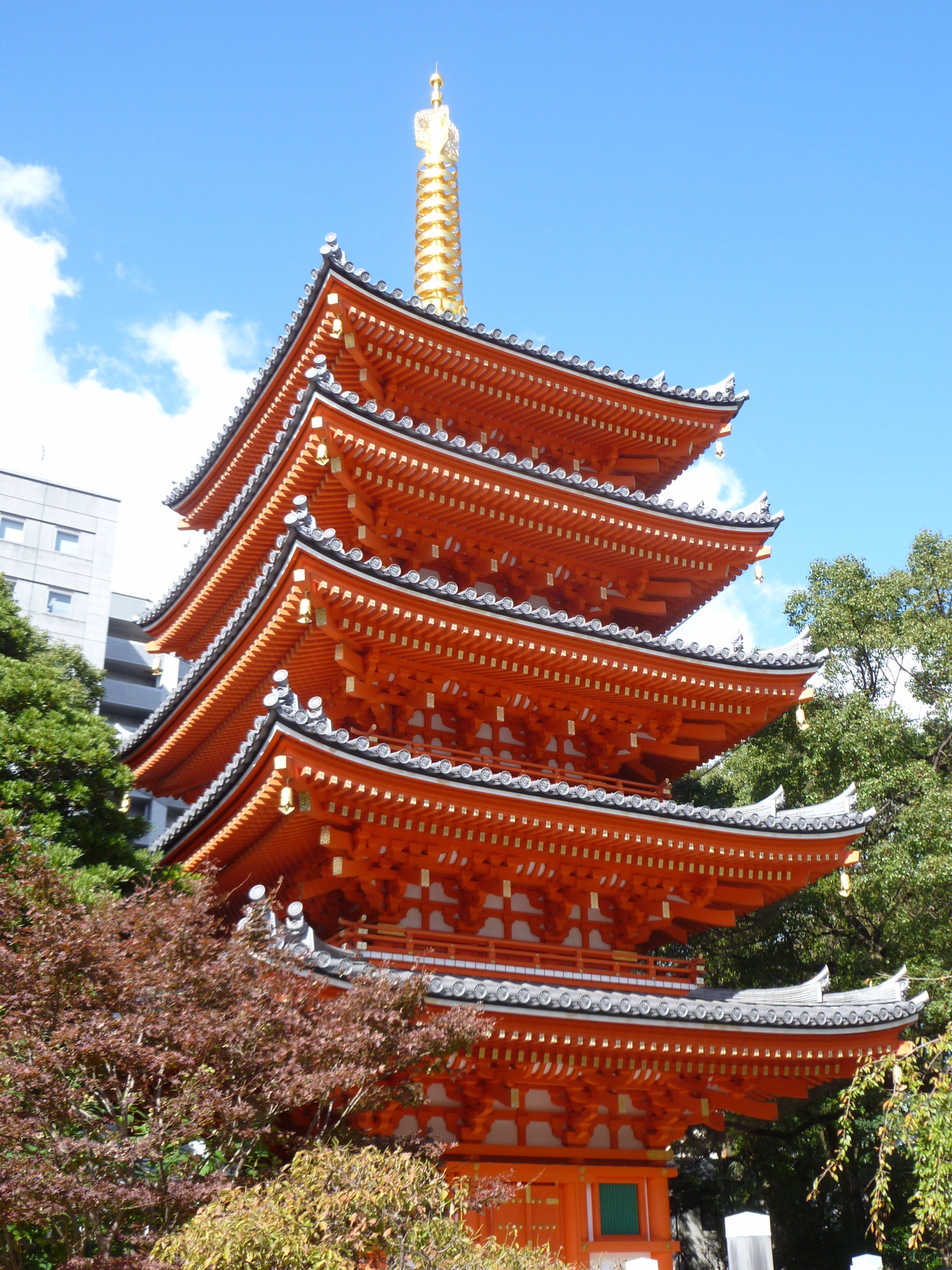
Having returned to Hakata Station, we walked to Gion, an area containing several shrines and temples. Kushida Shrine contains several buildings decorated in many colours. Several children in traditional Japanese costume were there, celebrating Shichi-Go-San or 7-5-3; a traditional rite of passage for boys and girls of those ages to celebrate the health and growth of young children (Wikipedia). Across the road, Tochoji temple included a five tiered tower, resplendent in bright orange. The main reason for tourists to visit this temple is to see Japan’s largest wooden seated Buddha (Wikipedia). Having looked up at the Buddha for a while, we were intrigued by a group being guided through a door underneath the Buddha. Feeling left out, we decided to follow. Inside was a passageway, decorated with several paintings depicting what appeared to be Gods and Demons. After that, we entered a lightless passageway, where the only way to navigate was by using the handrail. I don’t know the significance of the darkness, but I do know that it was a very eerie experience.

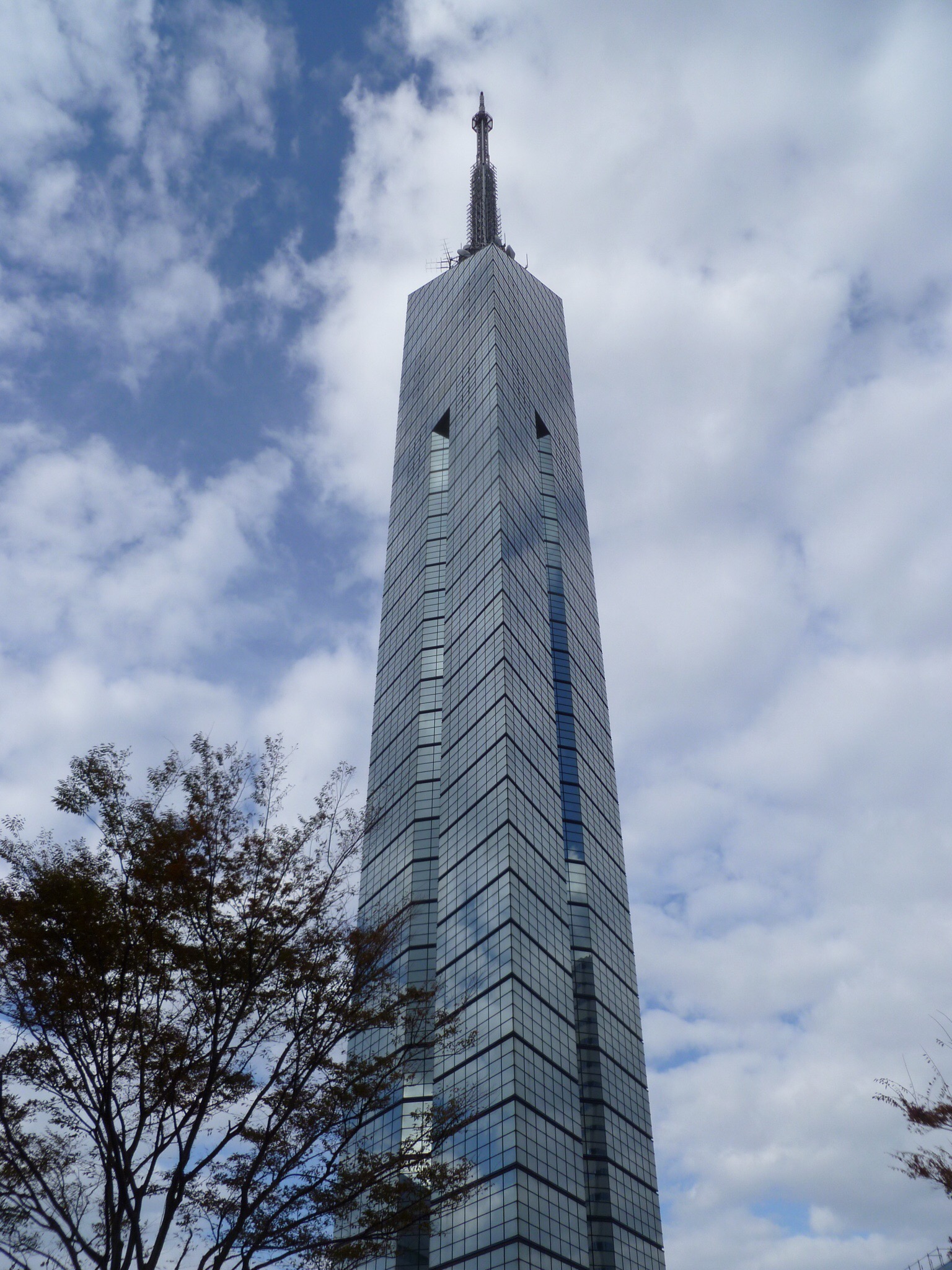
A trip to Fukuoka Tower followed for great views out to sea and across the city. Once down from the tower, we walked to Ohori park, where runners ran laps of a lake and we walked across to the central island, watching the sun go down. Tired from our sightseeing, we returned to the hostel, and packed for our trip to Hiroshima.

G

Bathing in Busan

We spent three nights in a Busan, and although it didn’t match the excitement of Seoul or the beauty of Jeju, there were several highlights during our stay. Days before we arrived in Busan, Fionnuala was struggling to contain her excitement about a visit to Spaland in Shinsegae Centum City – “the largest department store in the world” (english.shinsegae.com). Thankfully, Spaland lived up to expectations, and Beomeosa was a wonderful temple to visit.

After a short flight from Jeju, we took the underground to Haeundae to find our hostel. The hostel wasn’t far from the station, and our route led us through Haeundae Market, which was full of stalls selling Korean meals and snacks. The smell was amazing, but the tanks full of live eels and fish aren’t something I’m a big fan of.

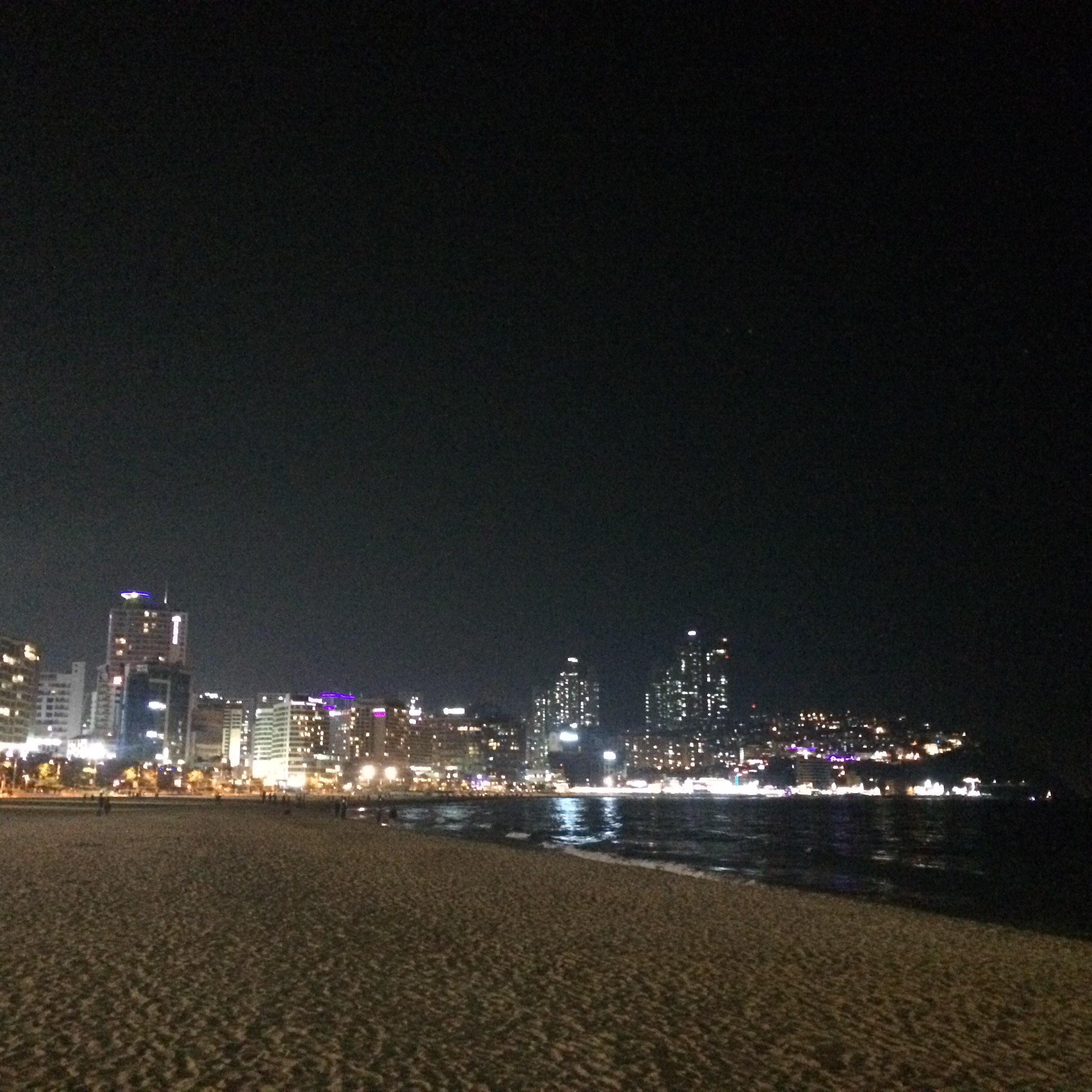
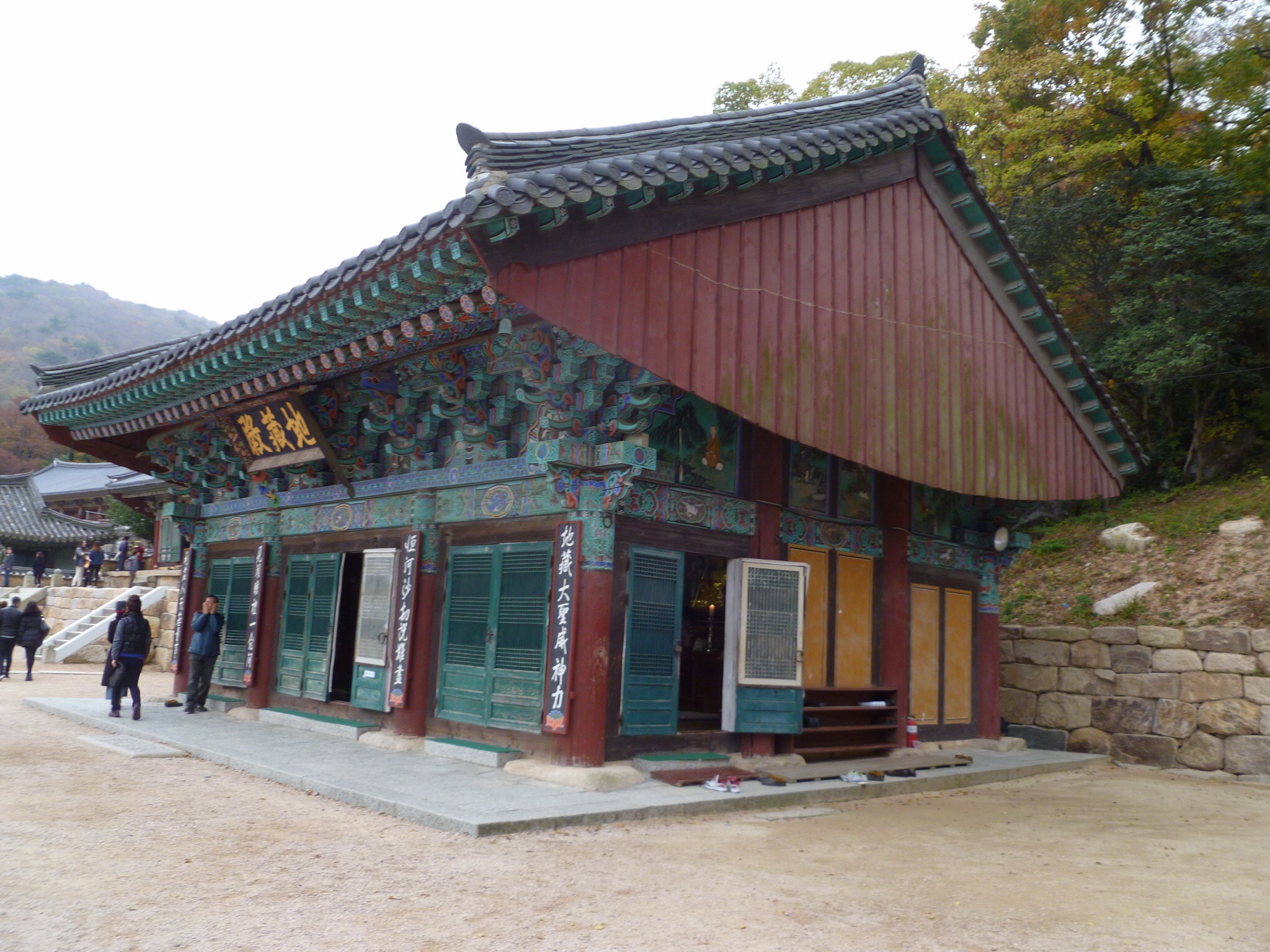
On our first night, we ate at a Japanese restaurant near the market and walked on the beach. The next morning, feeling refreshed, I ran around Dongbaek Park then towards the city, admiring the large tower blocks of apartments. After breakfast, we took the underground to Beomeosa station and walked to Beomeosa temple. As we stood looking lost, trying to figure out which direction to walk, a local man pulled up in his car and gave us directions. The temple was beautiful, and we spent some time listening to the prayers taking place in the main hall. We took a meandering route back to the underground, stopping for a while at one of South Korea’s many outdoor gyms.


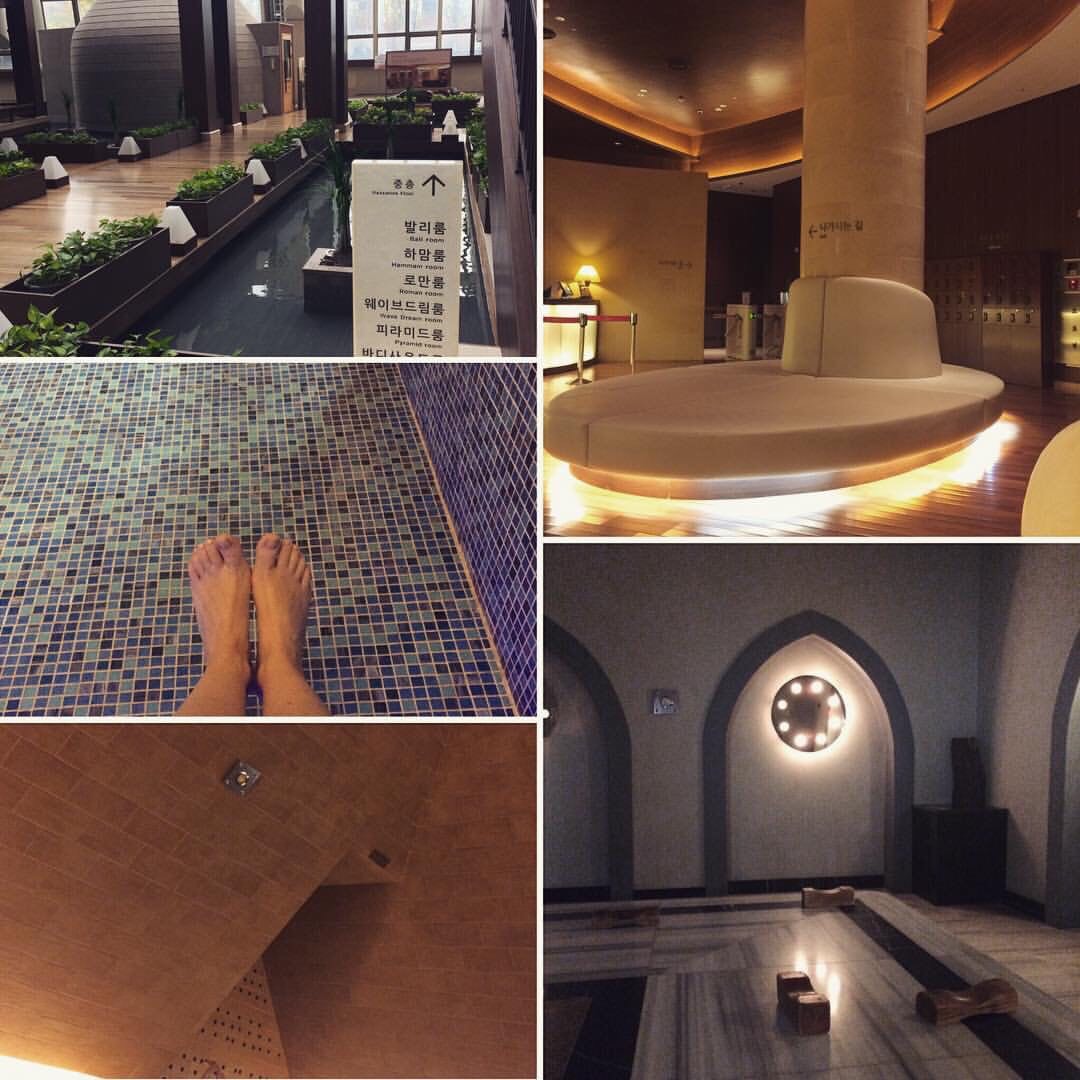
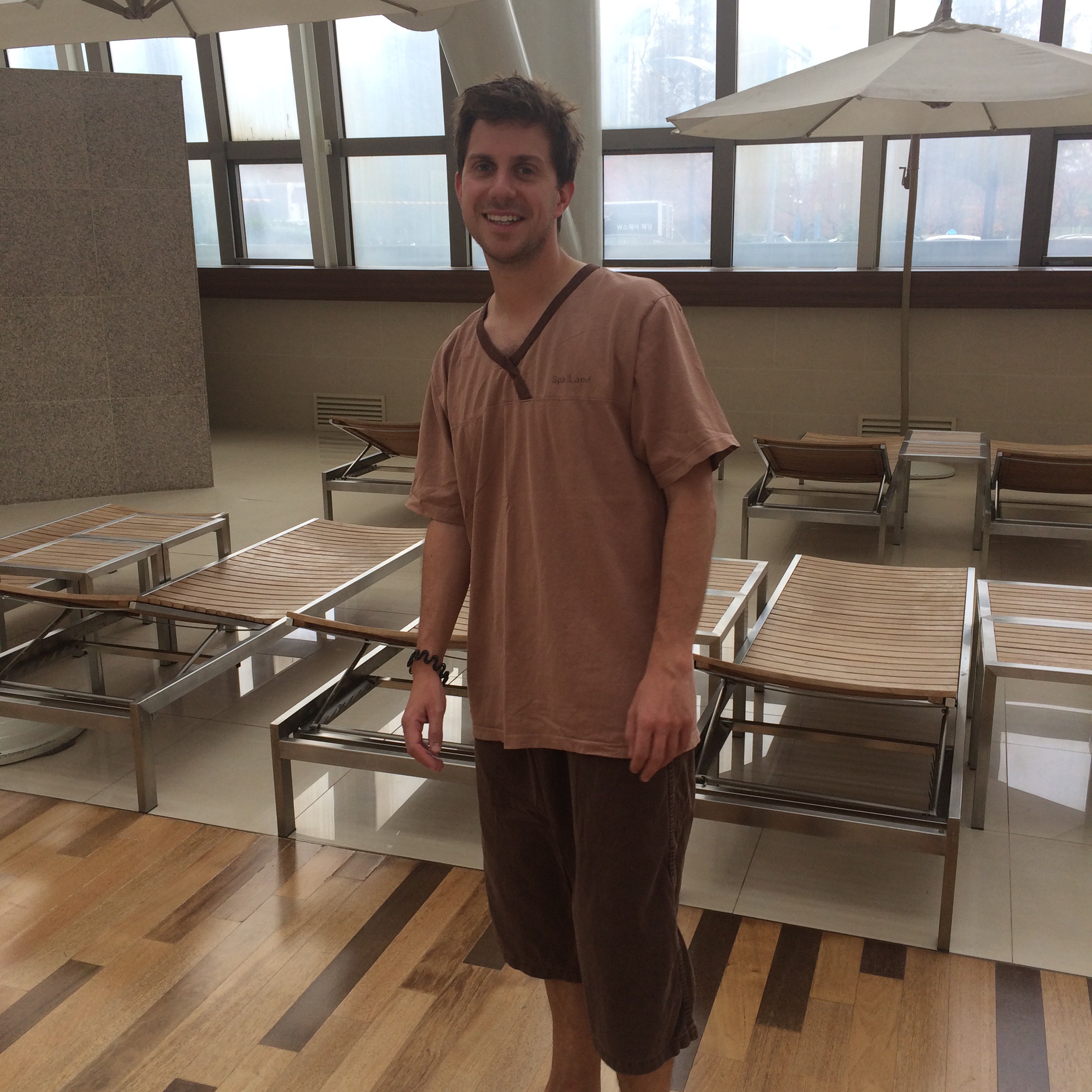
Monday was all about our visit to the “upscale, yet affordable playground for adults” (CNN) known as Spaland. We arrived just after 8am, and by 8:15, I was naked in a bath with a couple of Korean blokes! Although it seemed strange to me, this was perfectly normal for everyone else. Once I got my head around that, I tried out a few more baths, the steam room and the sauna. Next up, I dressed in my allocated shorts & t-shirt and met Fionnuala in the main spa area, where themed heated sauna and relaxation rooms awaited us. Having initially thought the four hour time limit was more than sufficient, I had changed my mind with only one hour remaining! Rooms we visited included the Ice Room, Body Sound Room, Pyramid Room and Roman Room. Despite my earlier apprehension, I couldn’t resist ending my trip to Spaland with another twenty minutes in the bath.

Post-Spaland, we ate lunch in Centum City’s food court, and browsed some of the shops. With an early morning ahead of us, we returned to the hostel, put our laundry in the machine and prepared for Tuesday morning’s ferry ride to Fukuoka.

G

Juicy Jeju Island

We were very sad to leave Seoul and our wonderful guesthouse, but it was time to move onto Jeju. We hopped on a flight to the island off the south coast of South Korea with our hiking gear at the ready. Jeju is known for its beaches, juicy tangerines, volcanic landscape and is home to Mount Hallasan, Korea’s highest mountain, and a volcanic tuff cone known as Sunrise Peak. We based ourselves in Seogwipo, on the south of the island. 

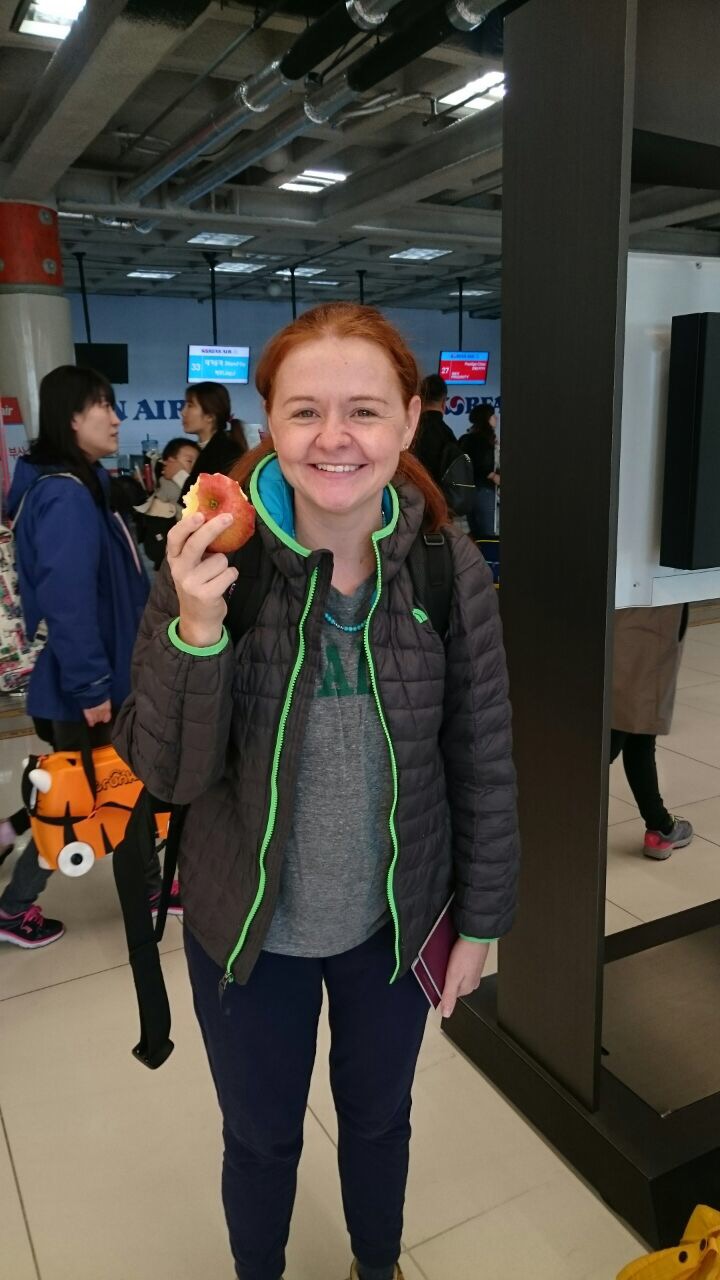
Off to Jeju with Mrs. Kim’s apples!

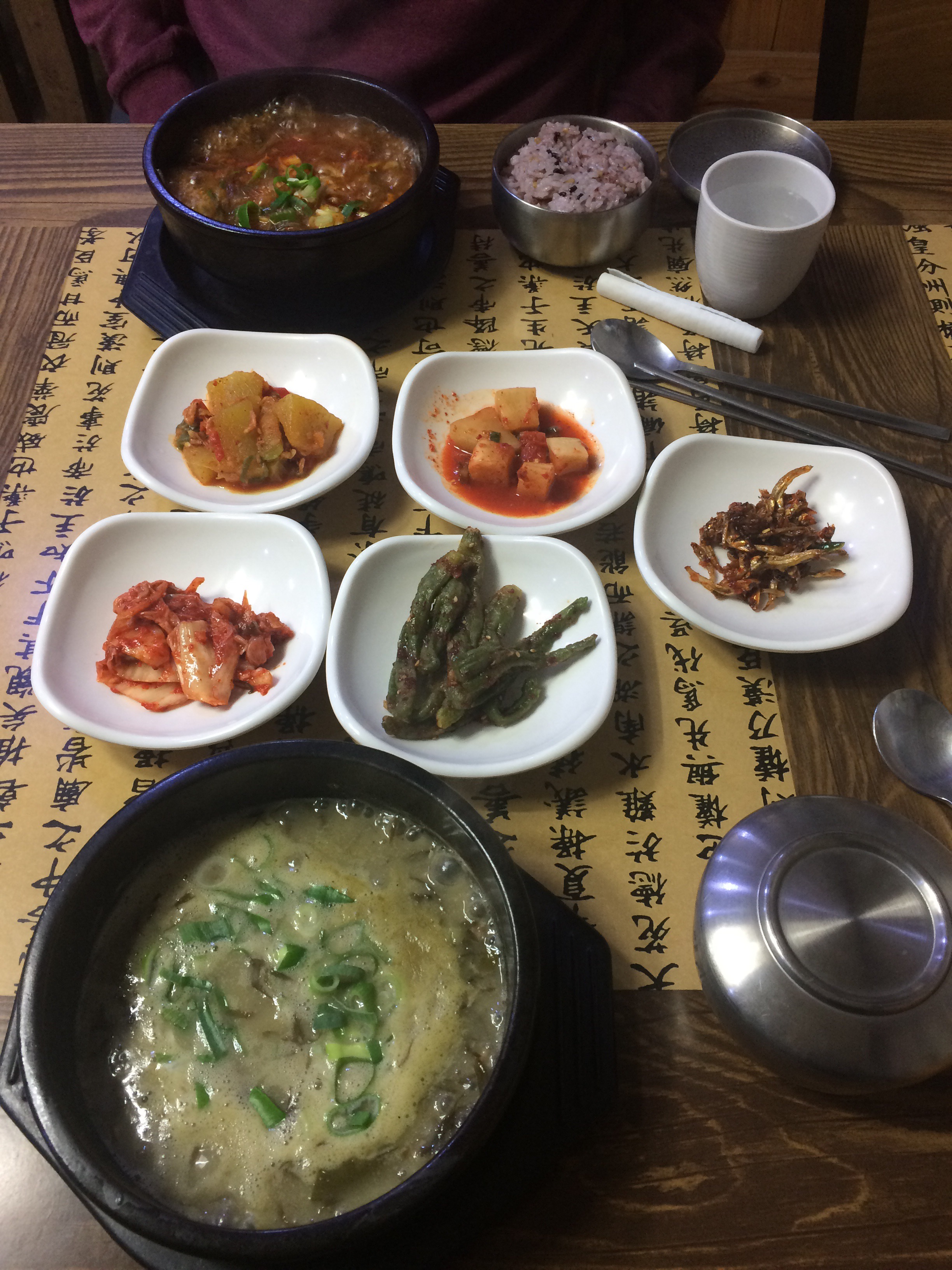
Our first evening led us to a small local restaurant that had no other customers, but 4 women who seemed keen to cook something for us! We weren’t entirely sure what we had ordered, but we had an absolute feast. Having passed many tanks of HUGE eels outside restaurants in search of dinner, we were glad not to be eating anything that had wriggled its way onto our plates. We prepared ourselves for an early start the next day to climb Mount Hallasan. 


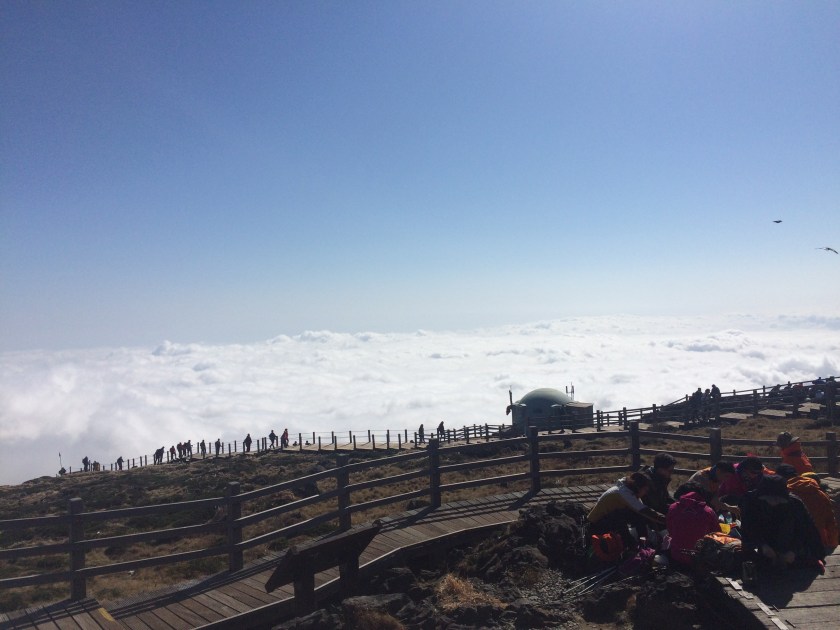
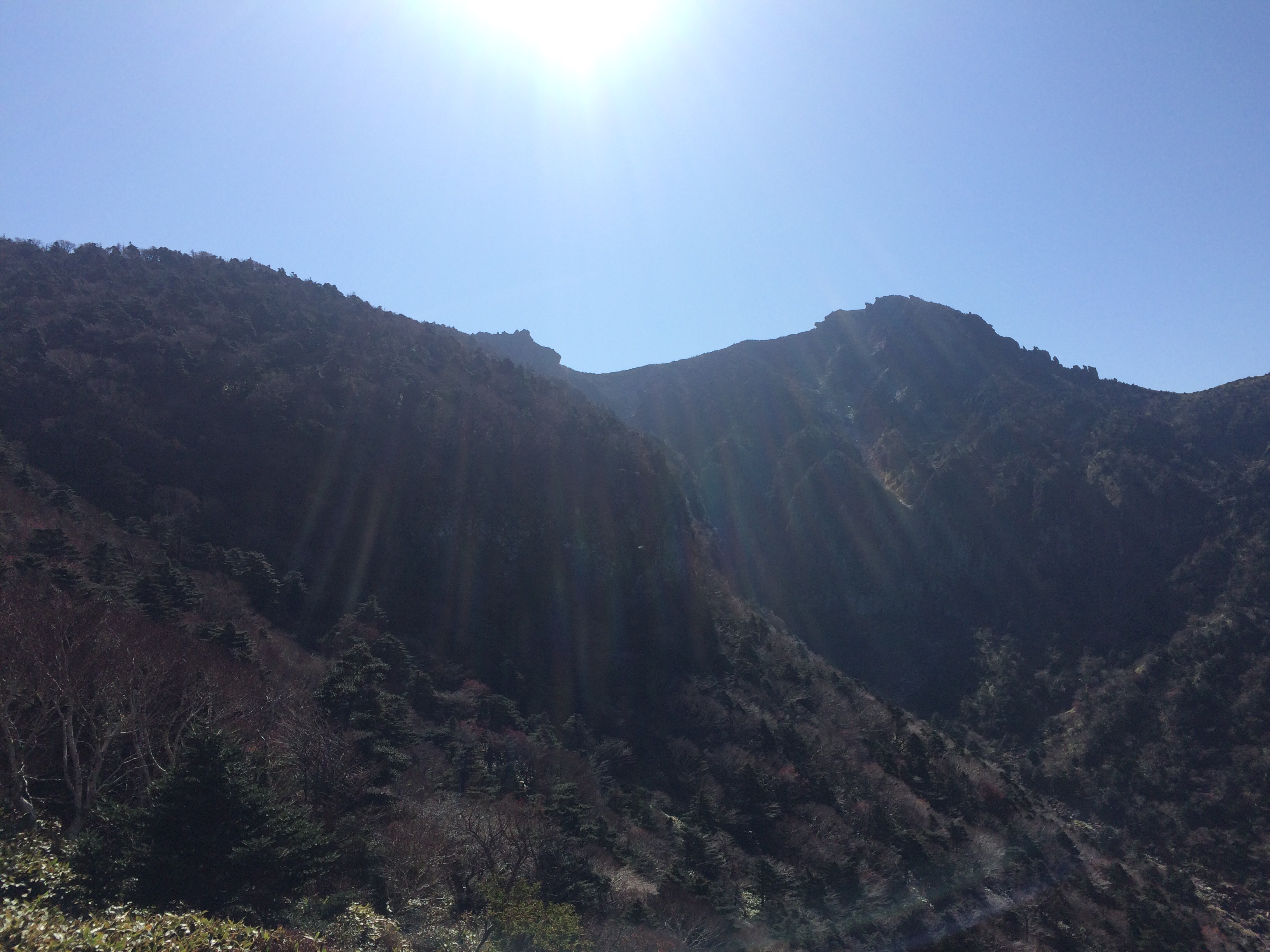
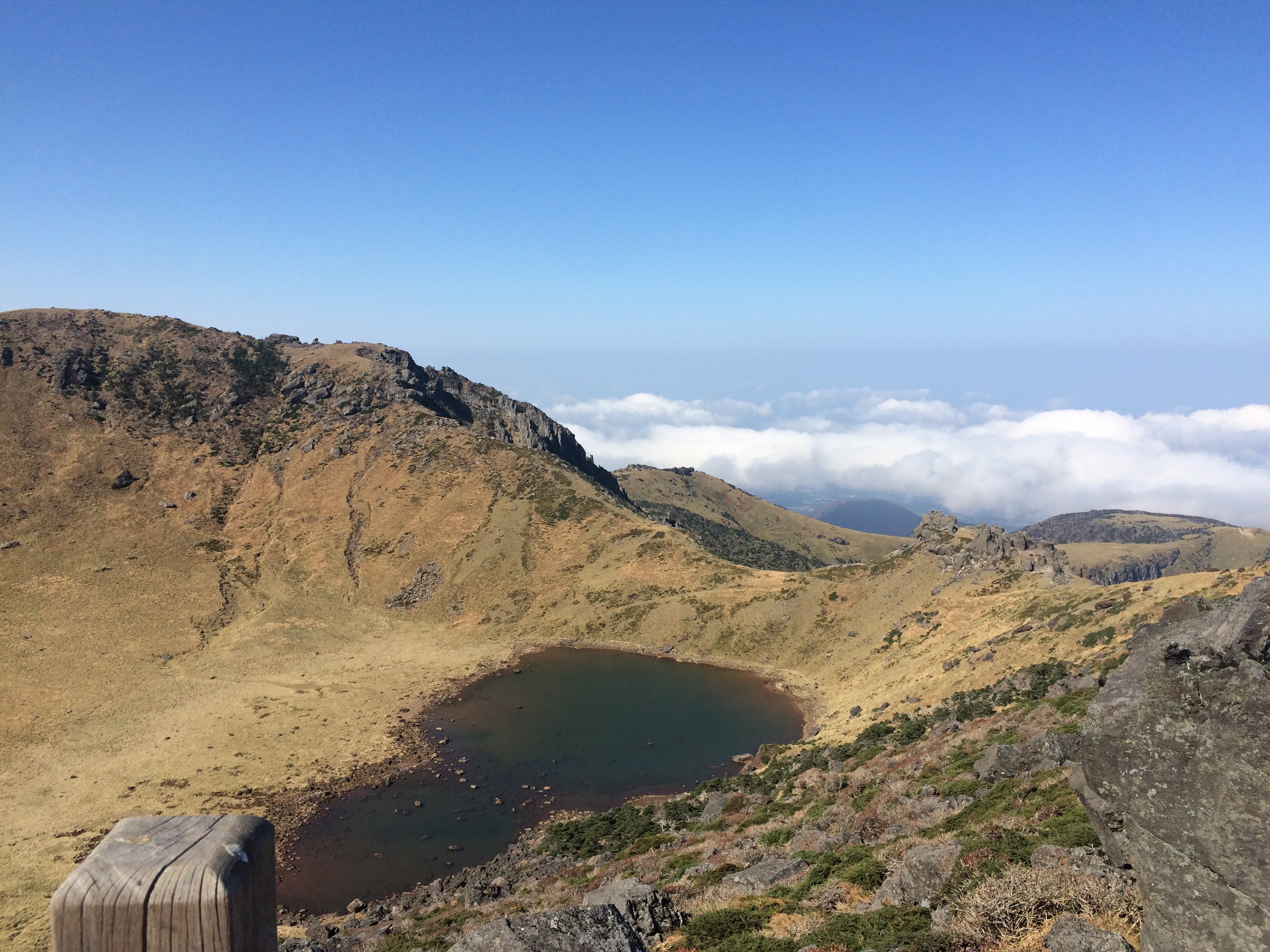
We boarded a local bus at 7:15 which picked up a few other keen hikers on the way. Again, we were amazed as big groups of middle aged and elderly Koreans in their brilliantly colourful gear hit the trail with us. We chose to ascend the easier side, as it’s the only place the bus brings you to (I was secretly delighted as I still had a horrible cough). The trail up, Seongpanak, starts out quite leisurely and has a few steep parts. The biggest problem was how crowded it was, but we manoeuvred our way through, stopping for some well deserved instant noodles at the main resting place. You have to reach this by 12 to be allowed to continue up to the summit. The view from the top was breaktaking, looking down at the clouds below from 1950 metres up! To our right we saw Baekrokdam, the lake-filled crater of this dormant volcano. We decided to descend on the harder trail and I’m so glad we did. Although a bit trickier in places, we saw far fewer people and the scenery of the peak was spectacular. 


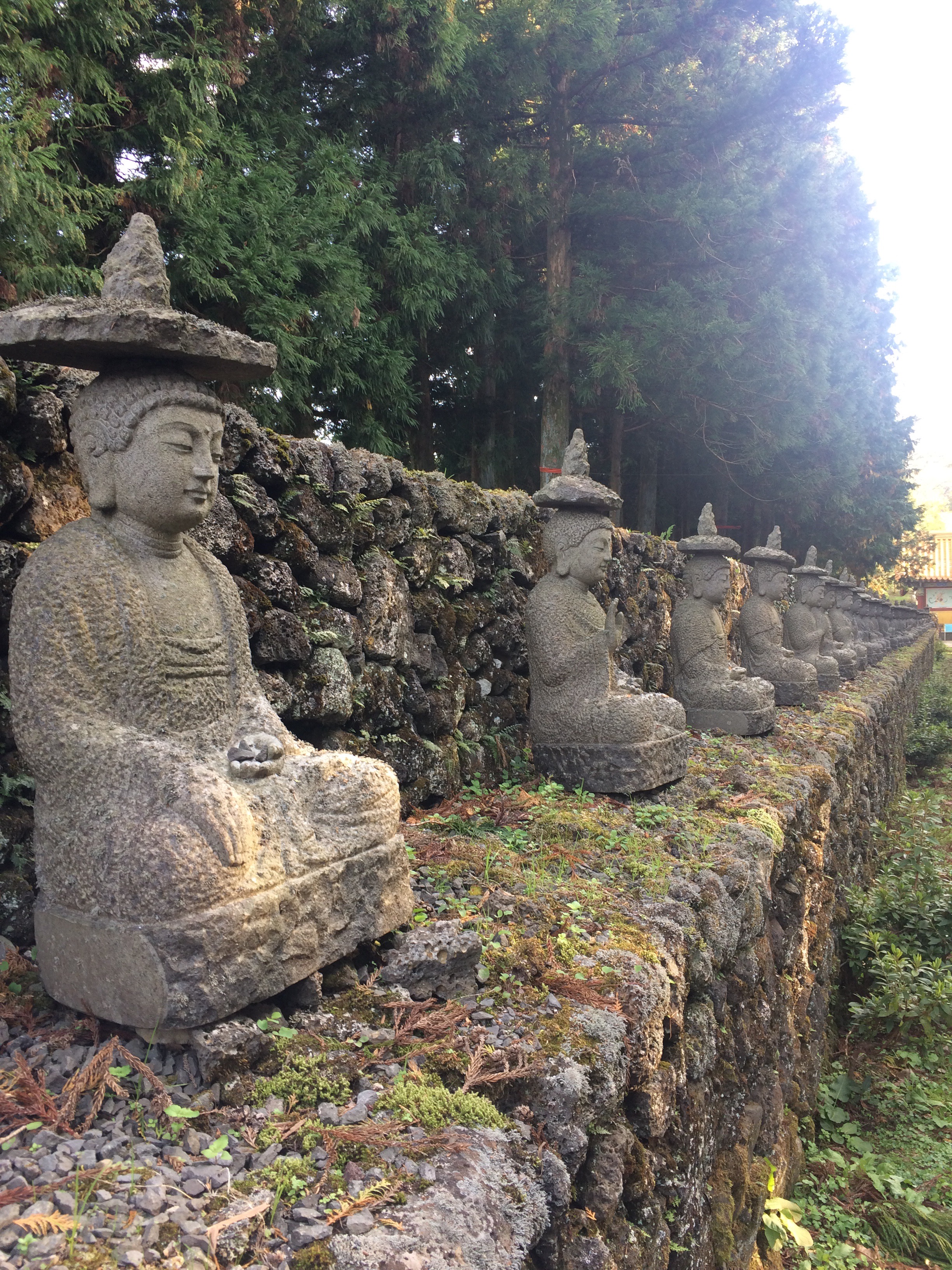
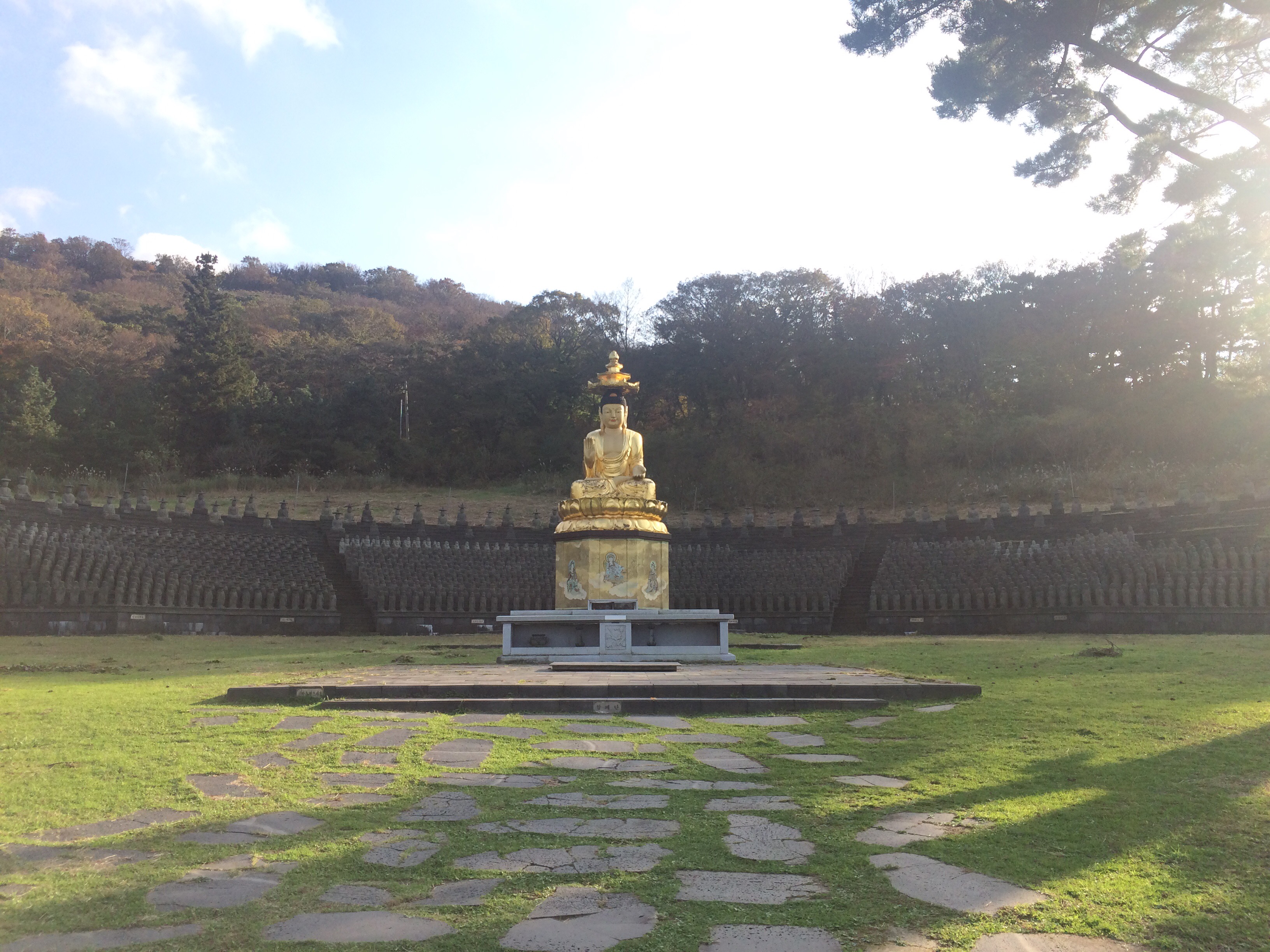
Once we reached the bottom, some hours later, we had to walk towards Jeju city, a few kilometres away, to catch a bus back to Seogwipo. We decided to stop at the Gwaneumsa temple, home to two beautiful Buddha statues, one stone and one golden. 


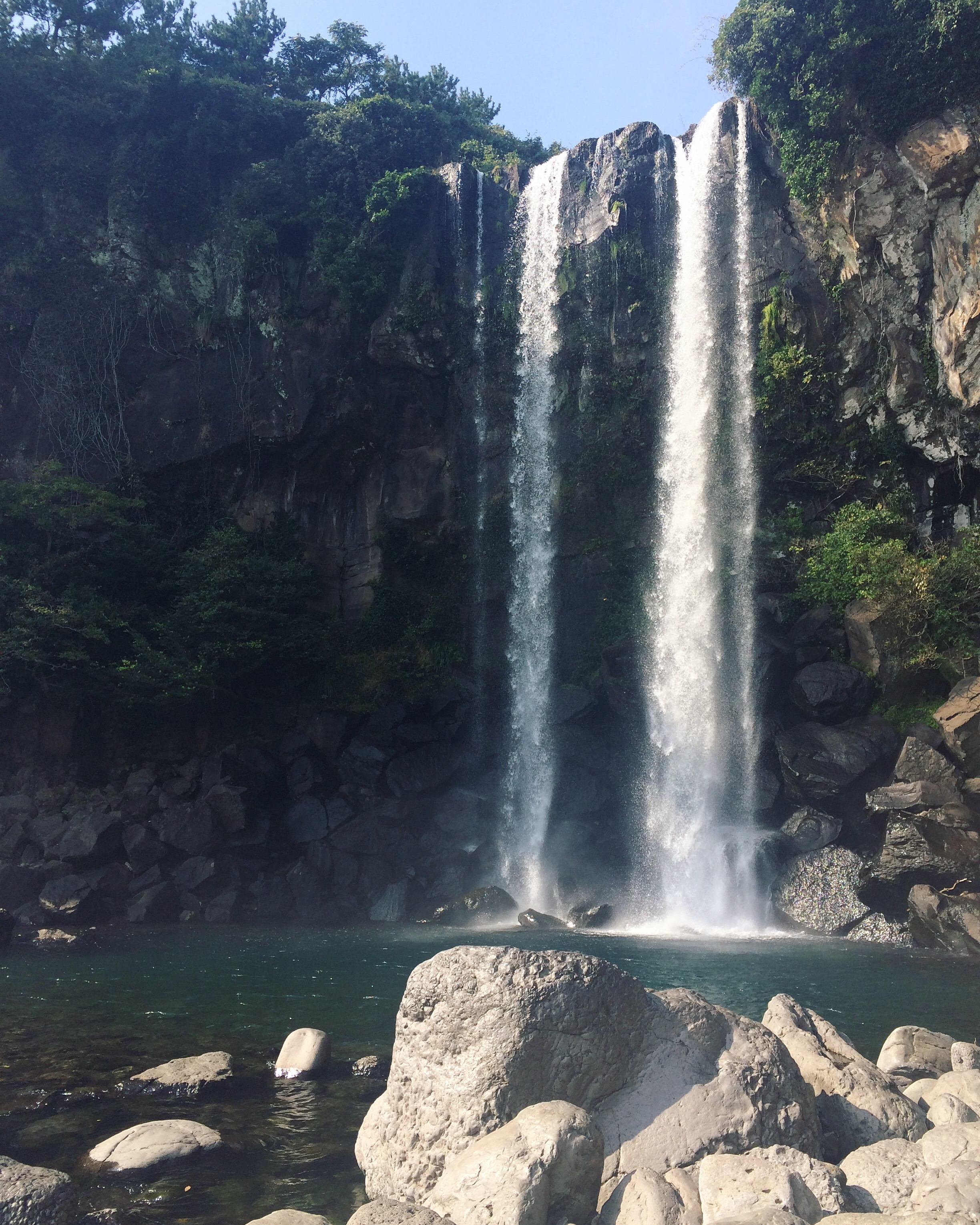
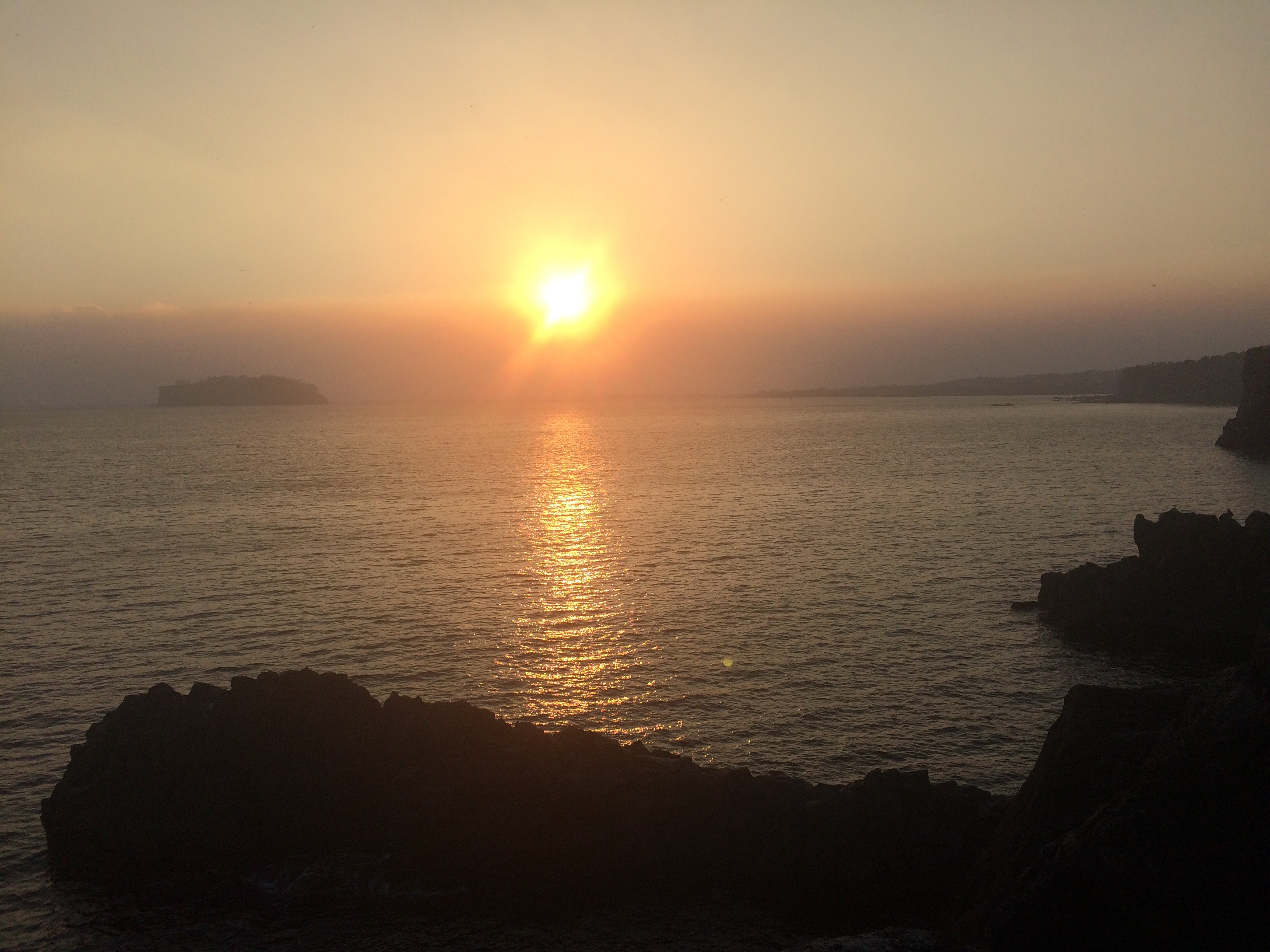
Jeju still had more to show us though, and the next day we visited not one, but three waterfalls. The most beautiful being Jeongbang, which is the only waterfall in Asia to fall directly into the sea. We followed about 10km of the coastal trail and sat to watch the sunset at Oedolgae rock. 


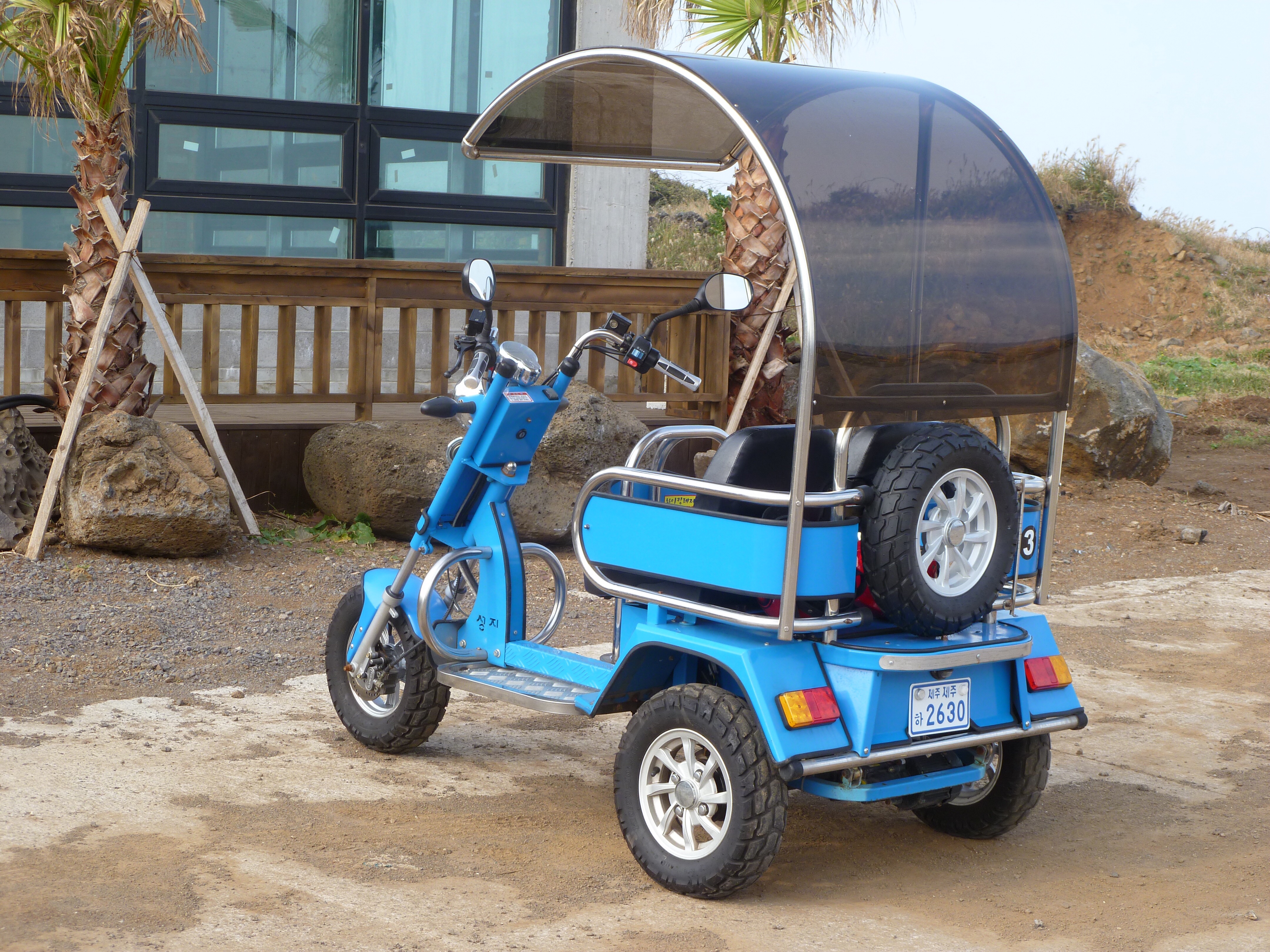
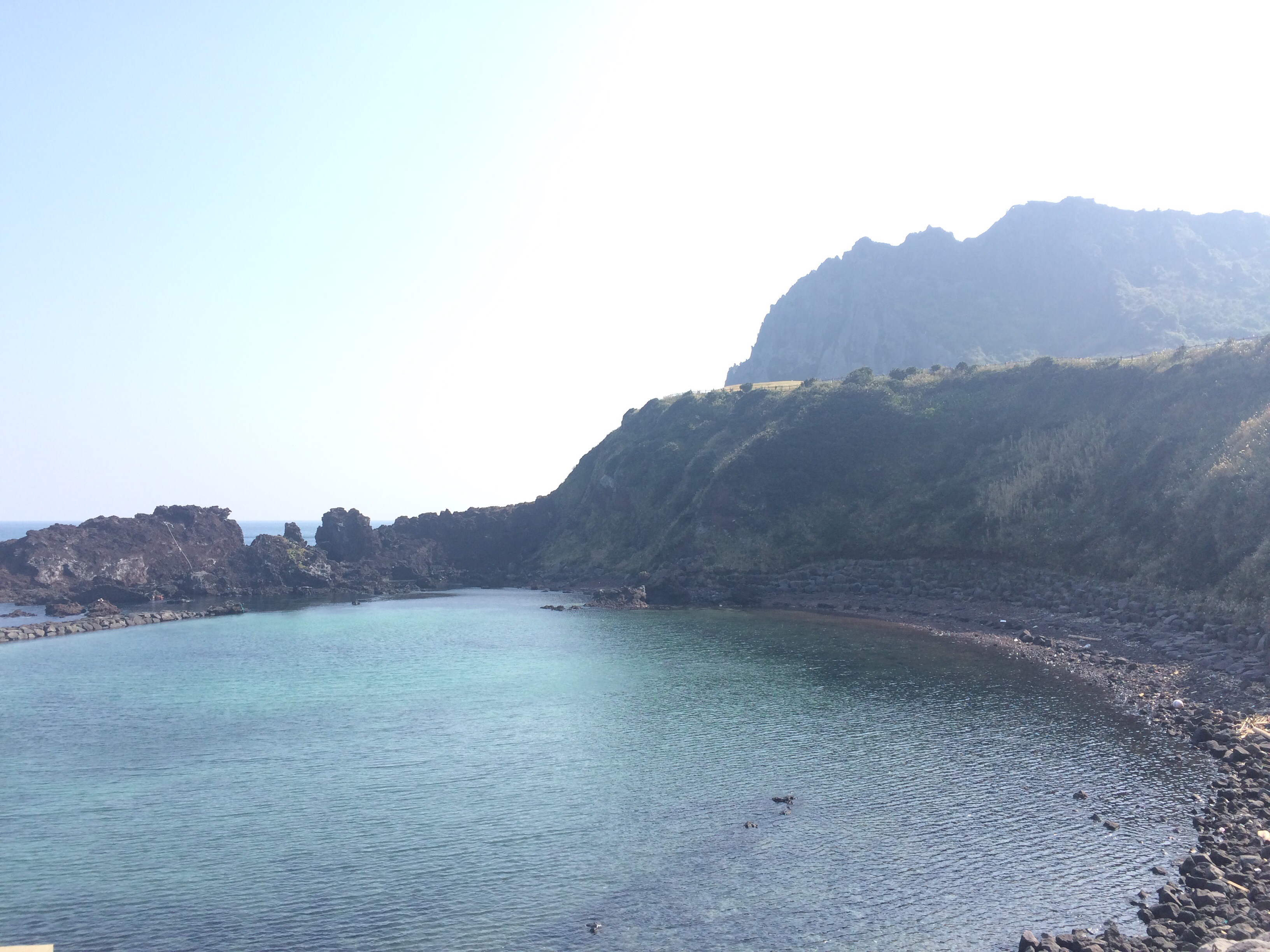
Another early start the next day saw us hopping on a bus to Seongsan on the east of the island, where the sunrise against the volcanic tuff cone, Seongsan Ilchulbong, is a World Heritage sight and one of the most photographed places on the island. Unfortunately the bus doesn’t bring you there early enough to see the sunrise, but a climb to the top was certainly worth the hour long bus journey! As we were in the east coast, we decided to get the ferry to a smaller island called Udo, where we rented some bikes to explore. Our gearless rust buckets did the trick, as we overtook some of the golf cart type things that the Korean tourists were whizzing about in. 

There was plenty we didn’t get to see on Jeju and in the summer time, when the water is warm, it is supposed to be a wonderful place for snorkelling and diving. We’ll have to put on the ‘to return’ list. Armed with a bag of juicy tangerines, we headed for Busan. 

-F xx
Seoul: Bongeunsa Temple and Gyeongbokgung Palace

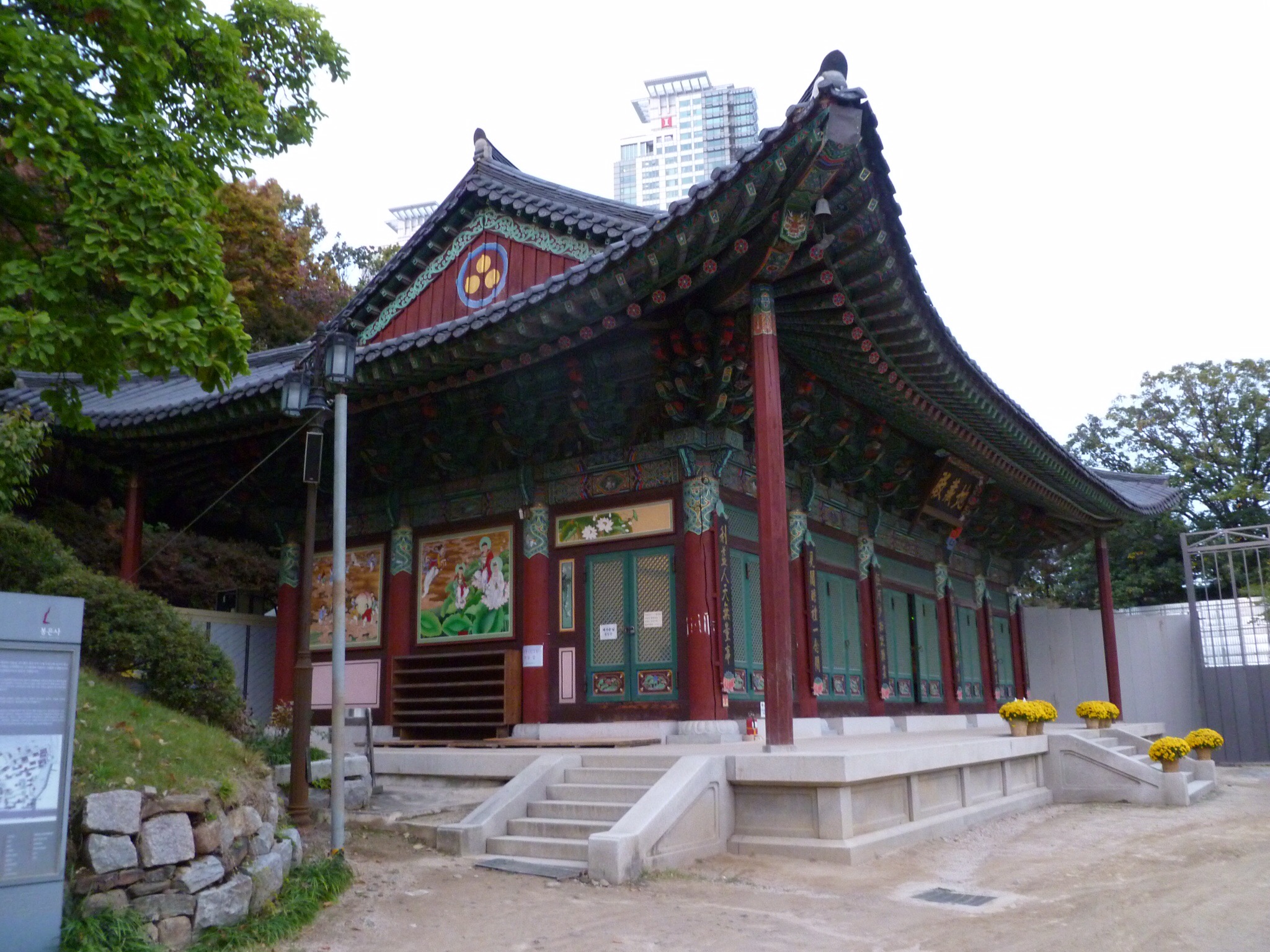
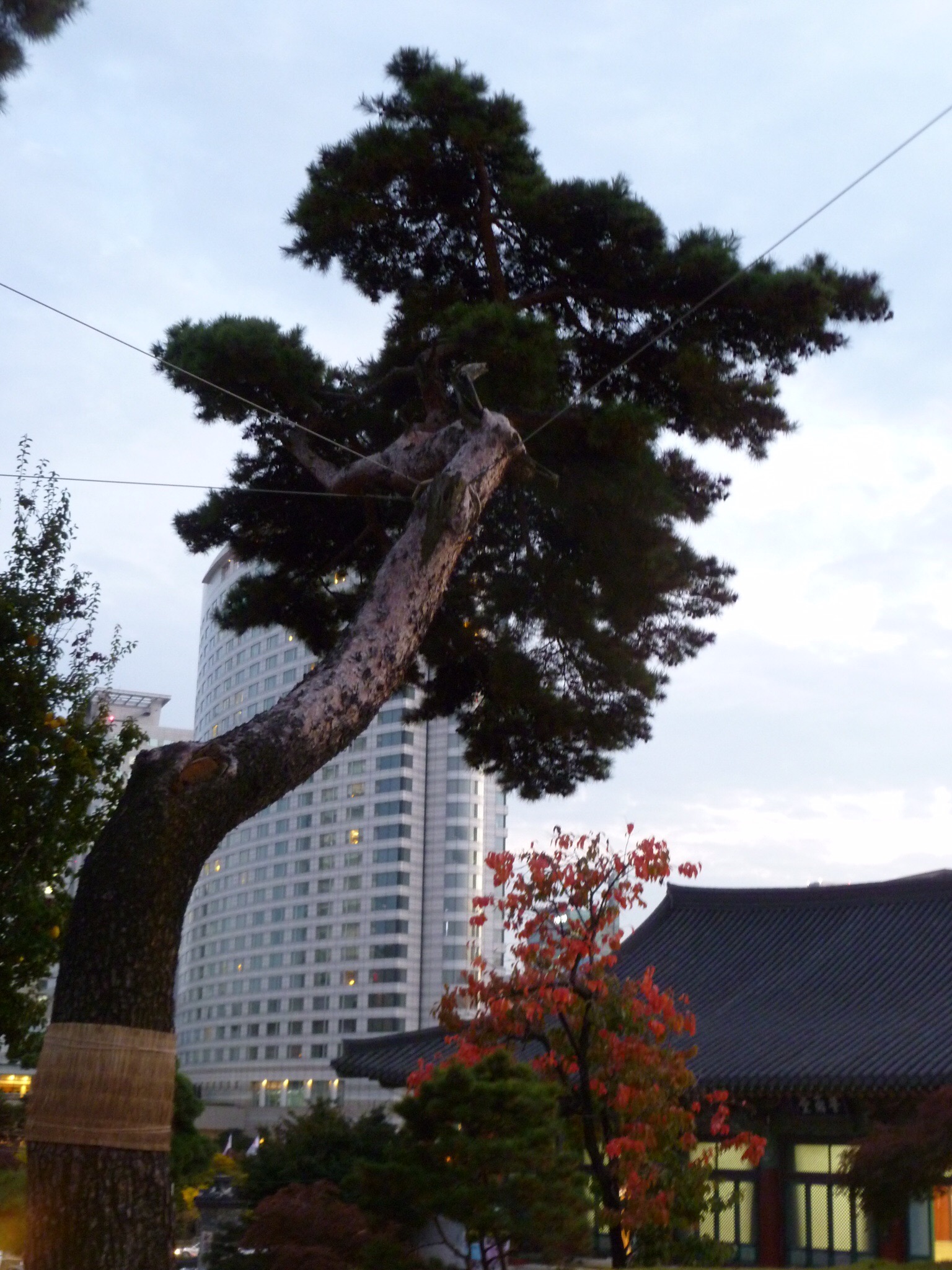
The entrance to Bongeunsa really doesn’t indicate the magnificence of this Buddhist temple in Gangnam. It was early evening when we arrived; several stalls were closing, a few tourists were taking photographs and a couple of ATMs flashed next to the entrance archway. We proceeded through the archway to find beautiful flowers lining the path to the main hall, and turning around, the archway we had walked through was brilliantly decorated.

As we walked through the main temple, a meeting was taking place, so we walked quietly into a courtyard containing two more halls. The air was sweet with the smell of incense, and prayer was taking place inside one of the halls. We briefly observed from outside, before our attention was captured by further halls on a tree-filled hillside. Having walked past those smaller halls, one of which was lit by candlelight, we made our way to the drum pavilion, where a monk had begun striking an enormous drum with a swinging pendulum. We listened to the drum ceremony before browsing the main hall. As it was dark, and we hadn’t researched the temple beforehand, we managed to miss out on seeing the 23 metre tall Buddha, which is apparently Bongeunsa’s main tourist attraction.

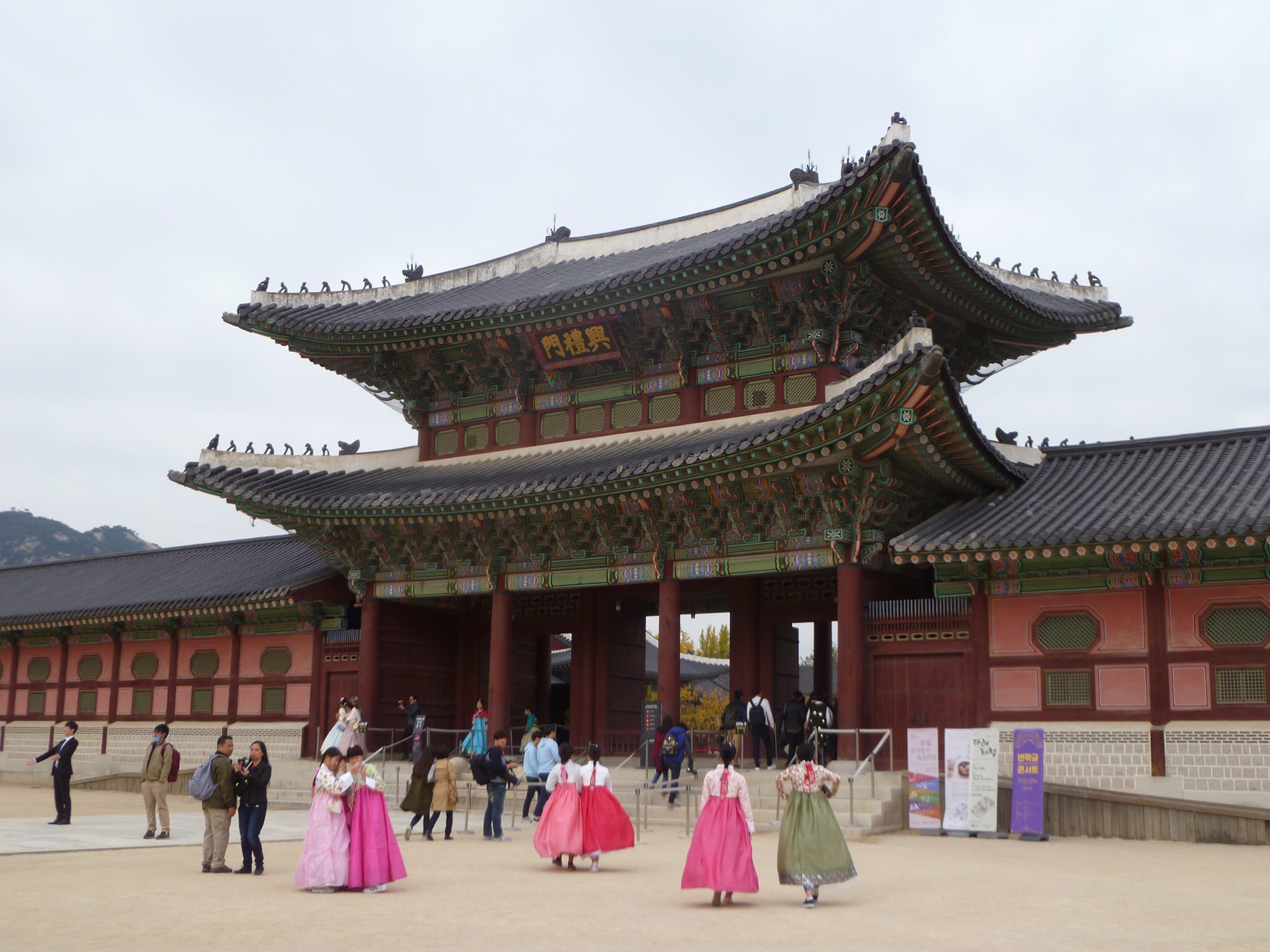
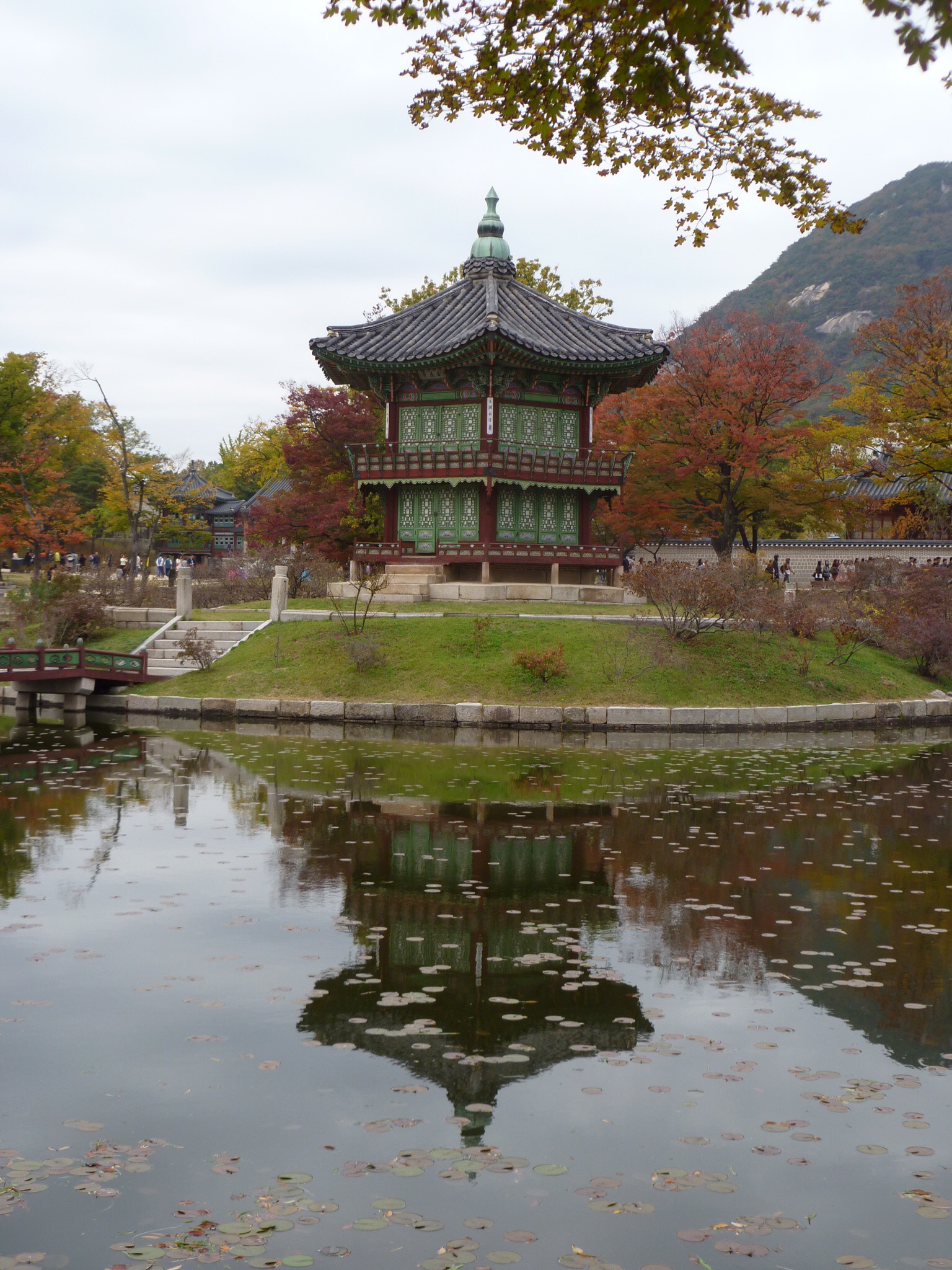
The first thing we noticed upon arrival at Gyeongbokgung Palace was the many young Koreans in traditional dress. On the guided tour we joined, it was explained that taking selfies at historic sites is how Seoul’s teenagers like to spend their Saturdays. They also get in free if in traditional dress, which seems a great idea. From this experience and others, it appears to me that young South Koreans are proud of their history and culture.

The guided tour was excellent. The guide explained the history of the palace, and the fact that almost none of it is original, due mostly to the Japanese destroying many buildings during their occupation. The contrast between the living areas of the King and Queen was excellently explained. I hadn’t considered that a King and Queen would not share a bedroom, or that the King would have multiple wives. The buildings were impressive, as was the scenery. In this extremely busy city, it was one of the places that felt really relaxed, even when full of weekend visitors.

Overall, Seoul was brilliant, and is definitely a highlight of our trip. I’m pretty sure we’ll visit again – we really need to see that Buddha!

G