First thing on Friday, we made our way to Camp Kim, the United Service Organisation’s (USO) meeting point for tours of the 4km wide Demilitarised Zone (DMZ) between North and South Korea. We arrived even earlier than the 7:45am meeting time, so, having signed-in and met our guide, Dana, we headed out for some breakfast.
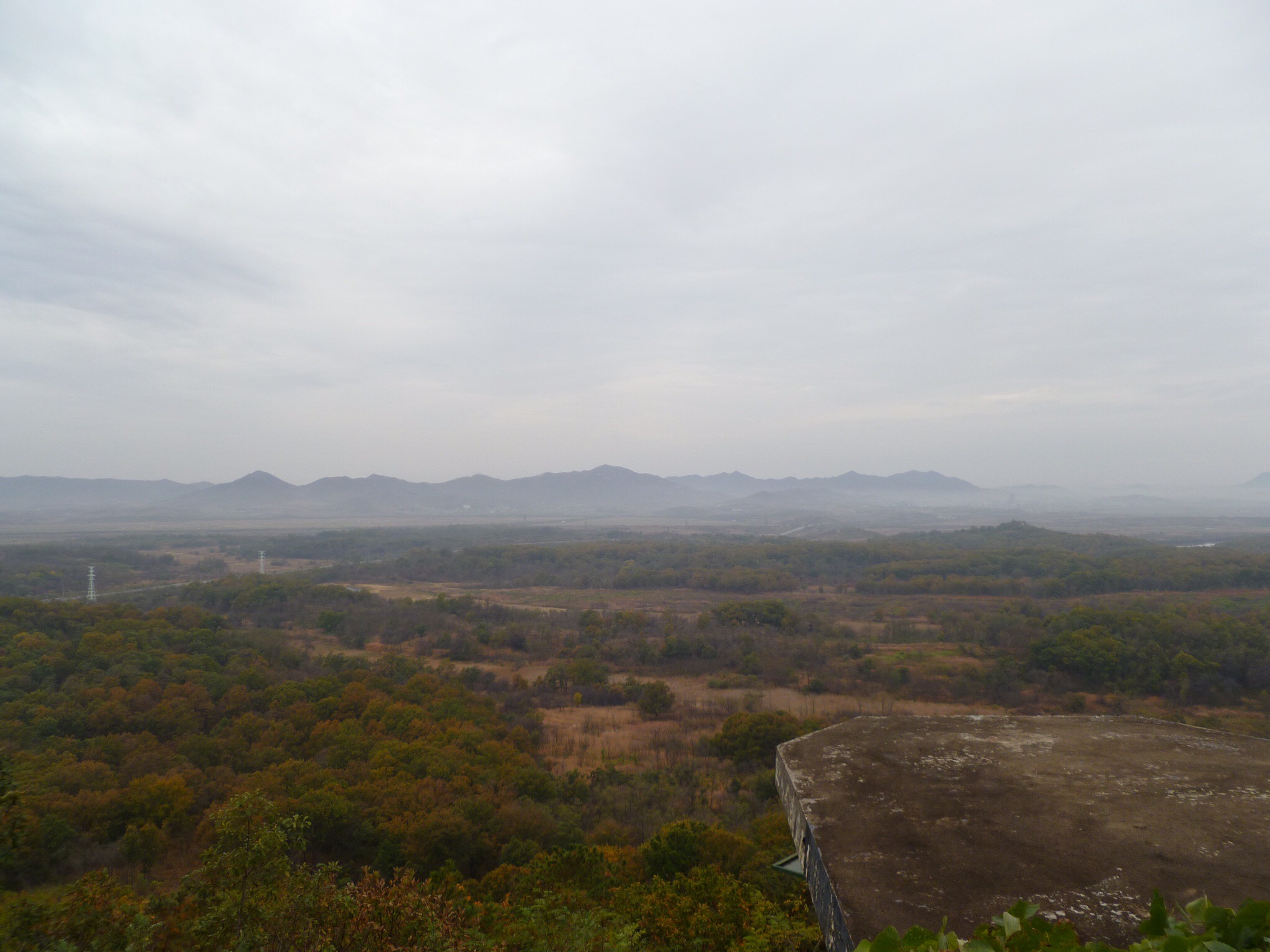
Coffee consumed, we boarded the coach for the hour long journey to the DMZ. Dana provided us with some Korean history, and explained the itinerary for the day. Upon arrival at the DMZ, Dana took the sign-in sheet to a military official, as the nationality of all visitors needs to be checked before entrance is permitted. Formalities complete, we made our way to Dora Observatory. As the propaganda of both North and South played out across the DMZ, a South Korean soldier described what we could see in front of us as we looked towards North Korea. The village of Kijong-dong was definitely the most intriguing. Having heard many times on TV about the luxurious buildings that, upon closer scrutiny, have no inhabitants, windows or lifts, it felt surreal to stare at them through binoculars.
Four infiltration tunnels have been found close to the DMZ, and it is believed that there are many more. The museum at the site of the third infiltration tunnel explains that they were dug by North Korea as passages via which soldiers could attack Seoul. Fortunately for South Korea, none of the discovered tunnels reached anywhere near the capital. The only tunnel open to the public is number three. After the short bus journey from the Dora Observatory, we put on hard hats and followed a steep ramp down into the tunnel. There’s not a lot to see in the tunnel, but it was a good opportunity to reflect on what we had been told about the history of this divided country.
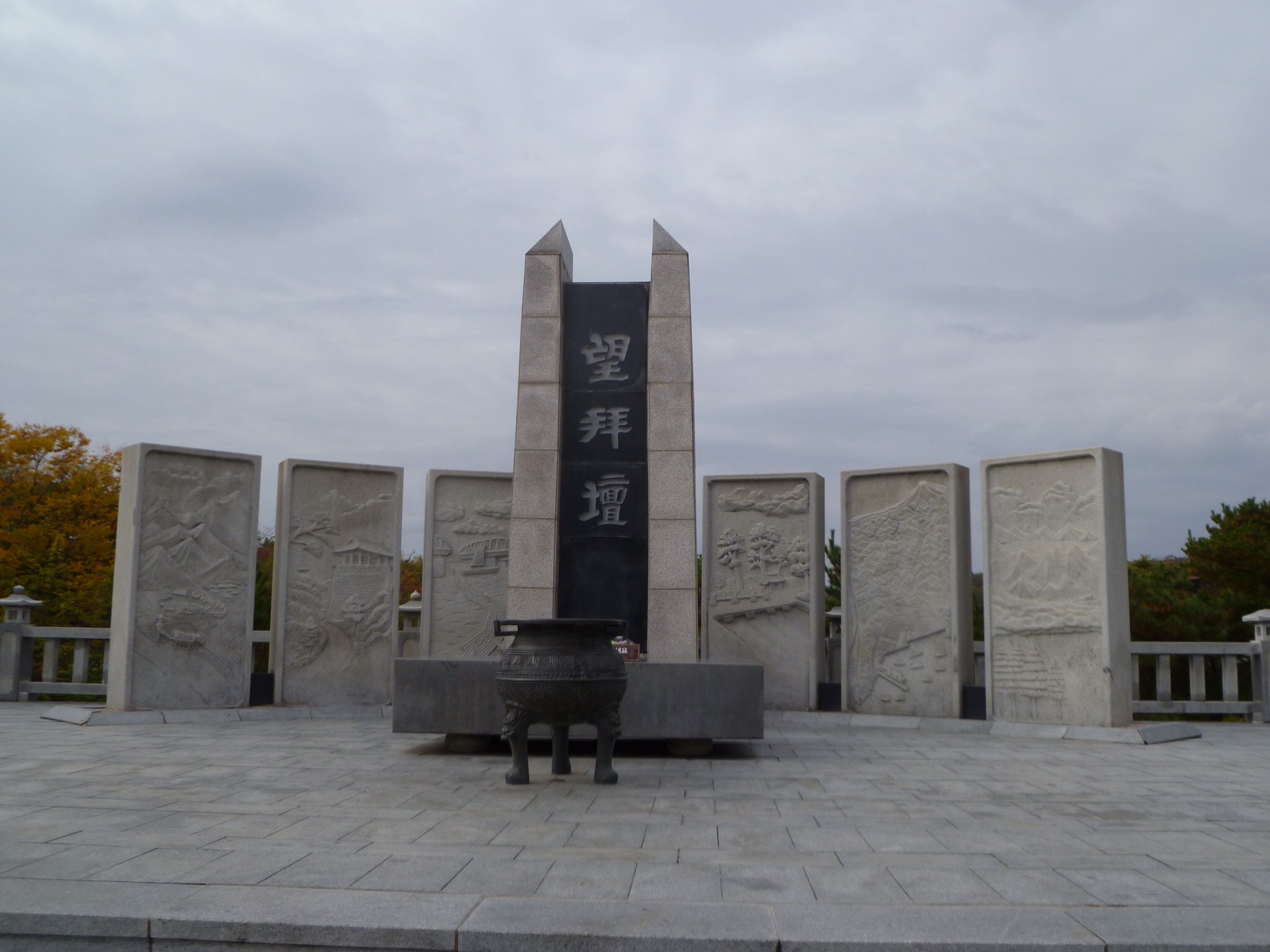
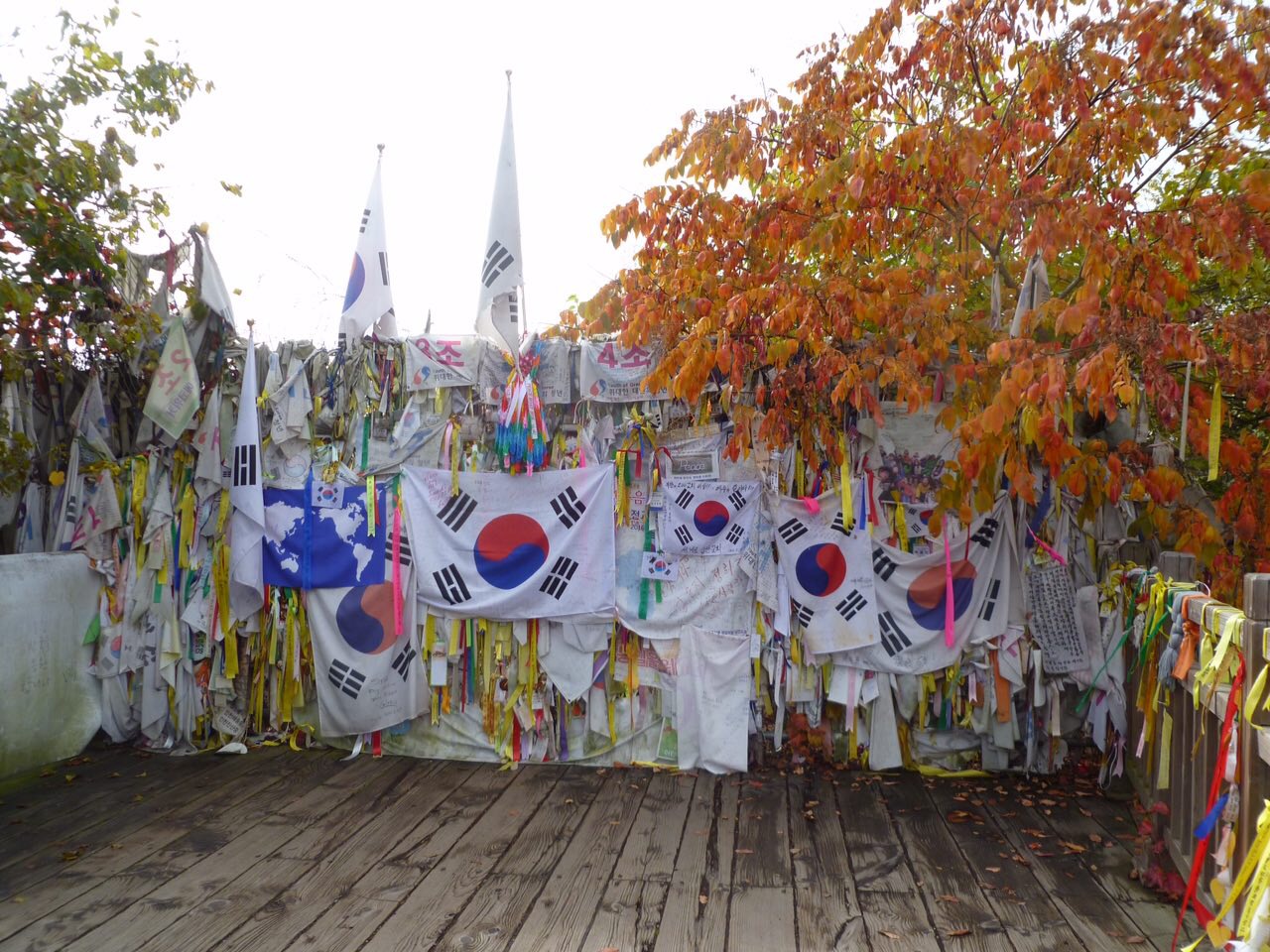
Our penultimate stop was Dorasan Station, a railway station which once connected North and South Korea. As it was restored in recent years, it looks just like a modern train station. The only difference is the lack of trains. There’s a map there showing the railway line across Europe. It was disappointing, and probably selfish, to think about how easily we could have reached Seoul from Vladivostok if trains were running from North to South Korea. Our final stop was the Peace Park. Seeing the Memorial Altar and Bridge of Freedom made me remember that despite the DMZ having become a tourist attraction, many Korean lives have been lost, and the divide between North and South has had terrible consequences for a lot of Korean families.
G
 Travel in Trainers